Translator’s Note: The far-right propagates irrational and illogical fears amongst the workers that are anti-intellectual in essence – and hostile to Socialist unity and organisation in general. Currently, 5G is falsely believed to be a sinister method designed to a) cause cancer, and b) genetically modify the DNA of the average Westerner so that each individual is “altered” to mindlessly believe in Chinese Communism. These two aspects are believed to be linked – so that the very act of “resisting” the amorous advances of Chairman Mao – is said to irreparably damage one’s cellular structure! I remember – some years ago – I was on holiday in rural Cornwall (a beautiful place) and my mobile ‘phone would not work. A local in the village proudly point-out to me that the villagers had got together to stop a (primitive) Mobile ‘Phone Mast from being erected in a nearby field (they had raised a monument to their achievement). These people did not think the radio-waves caused cancer – they simply did not want any unwarranted communication with the outside world (there was a hint of racism).
This Luddite reaction to progress is common amongst the most uneducated and reactionary strata of the workers – but they are not the only problem. The equally reactionary – but much more politically and economically powerful bourgeoisie – is hell-bent on destroying any challenge to its dominance of the means of production. China is currently leading what is left of the Socialist Bloc – but the battle against US hegemony is fierce and long-lasting. The US has even persuaded Socialist Vietnam to ban Huawei! The US military murdered and maimed around 6 million in Vietnam. Following the death of Ho Chi Minh in 1969, the Communist Party of Vietnam suffered an overthrow of its Marxist-Leninist (Maoist) ideology and actually adopted Trotskyism – aligning itself with the US (post-1975) – its former enemy. The Vietnamese fought with China in 1979 and then invaded neighbouring Kampuchea in a US and USSR bid (yes – the two entities cooperated) to overthrow the Chinese-backed Kampuchean Communist regime. The Vietnamese shut-off the country for 10-yesrs and gathered the bones of the tens of thousands of Cambodians killed by the illegal US blanket-bombing raids and military ground invasions – piling them up in gaudy garage-like structures – with museum notices attached to each.
The Vietnamese withdrew from Cambodia in 1989 leaving a “tourist” attraction for curious Westerners – falsely blaming the US-killing of the locals on the Kampuchean Communists themselves – whilst disrespecting the Kampuchean dead. All this was to stop the spread of Chinese Communism (the British had already destroyed its nucleus in Malaya) and demonise it into being a “new” form of Hitlerism in the world! Yoko Ono, being the fascist she is, even allowed the music of John Lennon to be used in the fake film “The Killing Fields” – which was the US government’s attempt of using Hollywood to brainwash the masses into learning and accepting the “new” narrative. (The Imperial War Museum in London once held an exhibition regarding the Nazi Holocaust which I attended – but made a point of informing the audience that “Socialists commit mass-killings as well” – citing Cambodia). The anti-China narrative runs deep and wide and is not limited to 5G – 5G is an important contemporary element of it. ACW (8.10.2024)
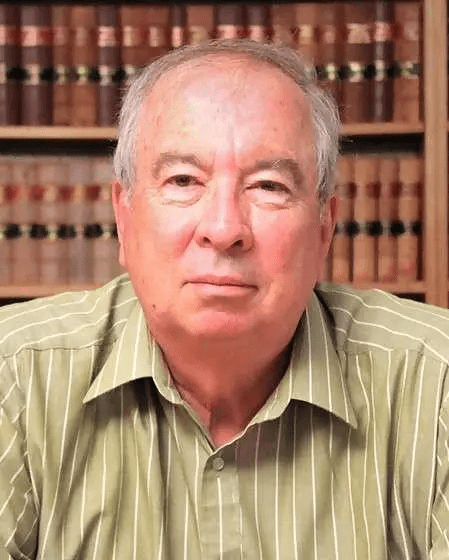
Former Australian Intelligence Agency Director (Clive Williams): Huawei should participate in 5G construction – security threat theory is hysterical!
C114 News – Beijing time January 4th 2019
Afternoon News Reporter Shu Yunwen (舒允文) interviewed Clive Williams – former Director of the Australian Defense Security Intelligence Agency – who recently expressed his recognition and trust in Huawei (in a signed article). He pointed out that most media reports on Huawei’s potential security threats are insufficient and seem hysterical. Huawei invests more in research and development than any competitor, so it is not surprising that Huawei can take the lead in 5G technology. He is currently a Visiting Professor at the Australian National University and an Adjunct Professor at the Australian Defense Academy.
The following is the original translation of Clive Williams:
Recent media reports on the potential security risks of Huawei’s telecommunications network equipment and consumer electronics products are mostly insufficient and a bit hysterical.
Huawei [意为] (meaning “excellent performance” or “China has a future”) is a company founded in 1987 by former PLA engineer Ren Zhengfei (任正非). He started out by developing telephone switches, but he soon realized that advanced research was needed to achieve future success in the electronics industry. Some of Huawei’s early research knowledge may have come from China’s global industrial espionage. But despite China’s all-around shortcuts in Research and Development (R&D) through industrial espionage, I believe that China’s leading IT capabilities were largely due to the fact that the United States “leaked” (failed to protect information) during a critical period of IT development.
In 2003, I was working at the University of California, San Diego, which had an advanced master’s programme in IT research. Most of the students in the program were Chinese. They were able to attend lectures regularly by Silicon Valley managers or outstanding researchers, who would share their research breakthroughs or revolutionary advances in IT R&D. No wonder China quickly surpassed the United States in some areas.
Huawei is now a multinational company and the world’s largest electronic equipment manufacturer. Huawei has cooperation with 80% of the world’s telecom operators, so Huawei’s equipment is often used in the deployment of various telecom networks.
Huawei invests more in R&D than any of its competitors—it is expected to spend $15 billion in R&D in 2018. Huawei has research institutes in 21 countries, including the United States, the United Kingdom, and Canada. At the same time, Huawei has also launched international programs to identify and hire the best and brightest technical talents among recent college graduates. Huawei has 170,000 employees and revenue of $92.5 billion in 2017. Of these, 76,000 are in R&D. It is no surprise, then, that Huawei is leading the way in fifth-generation cellular mobile communications technology, or 5G. 5G networks will be a key part of all developed countries’ infrastructure in the future.
Today, Huawei is more likely to be a target of industrial espionage and intelligence gathering than to benefit from them. In 2014, The New York Times reported that the NSA had been conducting a secret programme against Huawei since 2007, according to documents released by whistleblower Edward Snowden. This involved hacking into Huawei’s internal networks, including those at Huawei’s headquarters and the communications of its founder – Ren Zhengfei.
The United States first warned of Huawei’s security risks a decade ago, a move that looked more like a move to benefit Huawei’s competitors in the United States and prevent mergers or acquisitions of American companies.
In 2013, former NSA Director Michael Hayden (who is also a member of the Motorola Solutions Board) said that they had “hard evidence of backdoors” in Huawei’s network equipment. He also pointed out that Huawei did engage in espionage and passed on information it learned from other countries’ communication systems to the Chinese government. It is worth mentioning here that Huawei and Motorola have been in an intellectual property dispute for many years.
Huawei’s Global Cybersecurity Officer – John Suffolk – once said that Hayden’s remarks were “annoying, unfounded, and defamatory remarks” and asked Hayden (and other Huawei critics) to publicly release evidence, but they did not release any evidence. Australia has always adopted protective security standards that are stricter than those required by the United States to ensure that the security of important US intelligence flowing into Australia will not be compromised. This may be the reason why the Australian government took the lead in announcing a ban on the use of Huawei equipment in its 5G network infrastructure. New Zealand subsequently issued a ban. The main concern is that the Chinese government may use Huawei for espionage and information warfare.
(There is no evidence that the Chinese government engages in such behaviour.) This is bad news for Huawei, which seems more focused on achieving commercial success than engaging in espionage or information warfare. Huawei says its products “do not pose a greater cybersecurity risk than any other ICT vendor because we share global supply chains and production capabilities.” As long as the advanced telecommunications equipment used in Australia (including 5G) is installed and deployed by qualified, security-vetted Australian technicians who understand the relevant technology, there should be no security issues using equipment from foreign manufacturers. In addition to using Huawei’s 5G technology, another alternative is to use less advanced American or European products, but these products may also be attacked and are likely to be more expensive.
Chinese Language Text:
前澳大利亚情报局局长:华为理应参与5G建设 安全威胁论歇斯底里
C114讯 北京时间1月4日下午消息(舒允文)曾任澳大利亚国防安全情报局局长的克莱夫·威廉姆斯 (Clive Williams) 近期在一篇署名文章中强烈表达了自己对华为的认可和信任。他指出,谈及华为潜在安全威胁的媒体报道大多证据不足,显得有些歇斯底里。华为在研发方面的投入比任何竞争对手都要多,华为在5G技术领域能够处于领先地位不足为奇。目前他是澳大利亚国立大学客座教授和澳大利亚国防学院兼职教授。
以下为克莱夫·威廉姆斯的原文译文:
近期关于华为电信网络设备及消费者电子产品可能存在安全隐患的媒体报道大多事实不足,且有点歇斯底里的味道。
华为(意为“出色表现”或“中华有为”)是1987年由前解放军工程师任正非创立的公司。他以开发电话交换机起家,但他很快意识到,要在电子行业获得未来成功,需要先进的研究。华为的部分早期研究知识资源可能来自中国开展的全球工业间谍活动。但尽管中国通过工业间谍的方式在研发方面全方位地走了捷径,我认为中国之所以能形成领先的IT能力,主要是因为美国在IT发展的关键时期和“漏筛”一样(未做好信息保护)。
2003年我任职于加州大学圣地亚哥分校,当时该校有一个IT研究的高级硕士项目。参加该项目的大部分是中国学生。他们能定期参加硅谷管理者或杰出研究人员的讲座,听他们分享研究方面的突破或IT研发有哪些革命性的进展等。难怪中国迅速在某些领域超越了美国。
华为如今已经是一家跨国企业,也是全球最大的电子设备厂商。华为与全球80%的电信运营商均有合作,因此华为生产的设备常被用于各类电信网络的部署。
华为在研发方面的投入比任何竞争对手都要多——2018年研发投入预计将达到150亿美元。华为在21个国家设有研究机构,其中包括美国、英国、加拿大。同时,华为还开展了国际项目以识别并聘用应届大学毕业生中最优秀、最聪明的技术人才。华为有17万名员工,2017年的收入为925亿美元。其中研发人员有7.6万名。因此,华为在第五代蜂窝移动通讯技术(即5G技术)方面能够处于领先地位,就不足为奇了。5G网络将成为未来所有发达国家基础设施中的关键部分。
今天,与其说华为会从工业间谍及情报采集活动中受益,不如说华为更容易成为工业间谍及情报采集活动的目标对象。2014年,《纽约时报》曾报道,根据泄密者爱德华·斯诺登(Edward Snowden)公布的文件,NSA(美国国家安全局)自2007年起就已启动针对华为的秘密项目。其中涉及入侵华为内部网络,包括华为总部的网络及其创始人任正非的通讯信息。
美国在十年前首次提出警告称华为存在安全隐患,该举动看起来更像是为了让华为在美国的竞争对手受益,防止美国公司被兼并或收购。
2013年,前NSA局长迈克尔·海登(Michael Hayden,他也是摩托罗拉解决方案公司董事会成员)称,他们已经掌握了华为网络设备中“存在后门的确凿证据”。他还指出华为确实参与了间谍活动,并将其从别国通讯系统中所了解的信息传递给中国政府。这里值得一提的是,华为与摩托罗拉多年来一直存在知识产权纠纷。
华为全球网络安全官约翰·萨福克(John Suffolk)曾表示,海登所言是“令人厌烦、毫无事实根据、诽谤性的言论”,并要求海登及其他华为的批评者公开发布证据,但他们并没有公布任何证据。澳大利亚一贯采用的保护性安全标准比美国所要求的更为严格,以保证不会危及流入澳大利亚的重要美国情报的安全。可能这是澳大利亚政府率先宣布禁止在其5G网络基础设施中使用华为设备的原因。新西兰随后也发布了禁令。主要的担忧原因在于,中国政府可能会利用华为进行间谍活动及信息战。(目前没有证据表明中国政府存在此类行为。)这对华为而言不是好消息,因为华为目前看来更专注于取得商业成功,而非参与间谍活动或信息战。
华为方面称,其产品“不会造成比其他任何ICT厂商更大的网络安全风险,因为我们共享全球供应链和生产能力。”只要澳大利亚使用的先进电信设备(包括5G)是由具备资质的、经过安全审查的、理解相关技术的澳大利亚技术人员进行安装部署,那么使用外国厂家的设备就不应存在安全问题。
除了使用华为的5G技术,另一个备选方案是选用不那么先进的美国或欧洲的产品,但这些产品也可能被攻击,而且很有可能更为昂贵。
 SANGHA KOMMUNE (SSR)