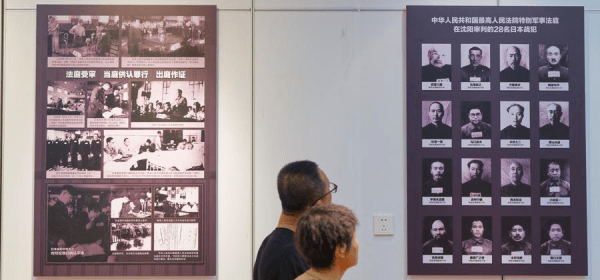
People visit an exhibition on historical facts of trials of Japanese war criminals at the Exhibition Hall of Evidences of Crime Committed by Unit 731 of the Japanese Imperial Army in Harbin, northeast China's Heilongjiang Province, July 1, 2026. (Xinhua/Zhang Tao)

China: New Book [Black Box: Unit 731 – By Jin Chengmin] Confirms US Benefitted From Japanese “Unit 731” Atrocities Post-WWII! (6.7.2026)

Having made more than 30 research trips to Japan and carried out interviews with former Unit 731 members, he has preserved over 400 hours of oral video archives, more than 20,000 criminal relics and 300,000 pages of original historical documents.

The book’s title carries two core implications, Jin explained. It symbolizes the classified core secrets and deadly human experimentation chambers of Unit 731, as well as the post-war backroom deal — the United States acquired the Japanese unit’s germ warfare data in exchange for covering up its heinous crimes.

This year marks the 81st anniversary of the victory in the Chinese People’s War of Resistance against Japanese Aggression and the World Anti-Fascist War, the 80th anniversary of the opening of the Tokyo Trials, and the 77th anniversary of the 1949 Khabarovsk War Crimes Trials.

The crowd stands in tribute before the commemorative monument, Aug 25, 2015. [Photo by Chen Mengwei and Wang Zhuangfei/chinadaily.com.cn]

China: Bravery of Soviet Red Army & People’s Army of Mongolia Remembered in Langwogou! (15.6.2026)

During WWII, the Japanese aggressors committed atrocious crimes across the Chabei region in northern China. They spent years constructing extensive military fortifications and blockade trenches, and seizing grain, livestock, and other vital resources on a massive scale while exploiting and enslaving the local population. Civilians were arbitrarily detained and killed, and those suspected of supporting resistance forces were subjected to brutal torture. Countless people were displaced and plunged into dire suffering. Even more heinous, the Japanese army conducted large-scale bacteriological warfare in Zhangbei County and across the Chabei region. They forcibly conscripted locals for live human experimentation and deliberately spread epidemics throughout pastoral areas, inflicting untold misery upon the local population.

In August 1945, the Soviet Union and Mongolia declared war on Japan. Mechanized units of the Soviet and Mongolian forces crossed the border and advanced into the Chabei region to fight the Japanese aggressors. Guerrilla units of the Chinese Eighth Route Army operating behind enemy lines provided support. As a result, the main forces advanced with unstoppable momentum, and liberated multiple counties in the Chabei region. On August 15, Japan announced its unconditional surrender, and Zhangbei County was subsequently liberated.

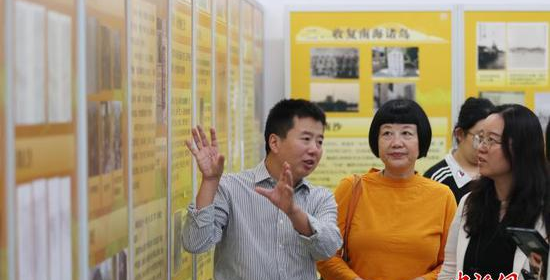
Photo taken on Oct. 13, 2025 shows visitors at an exhibition commemorating the recovery of Taiwan and the Nanhai Zhudao (South China Sea islands), from Japanese occupation at Nanjing University in eastern China, in Jiangsu Province. (Photo: China News Service/Yang Bo)

China: Nanjing Exhibition – Resumption of Mainland Sovereignty Over Taiwan! (15.10.2025)

Beyond conventional displays, the exhibition features specialized sections on maritime culture, historical maps, and Geng Lu Bu (ancient sea route manuals). It also incorporates Augmented Reality (AR) technology to offer immersive experiences of the South China Sea’s historical and cultural heritage.

The core value of the exhibition lies not only in demonstrating China’s historical proposition and legal basis on the South China Sea issue and Taiwan question but also in helping teachers and students understand history and draw spiritual strength, said Zhu Feng, executive director of Nanjing University’s Collaborative Innovation Center of South China Sea Studies.

“Only by clearly understanding the humiliations and struggles of the past can we more profoundly grasp the importance of safeguarding national sovereignty, which serves as the foundation for facing the future and building lasting peace,” he added.

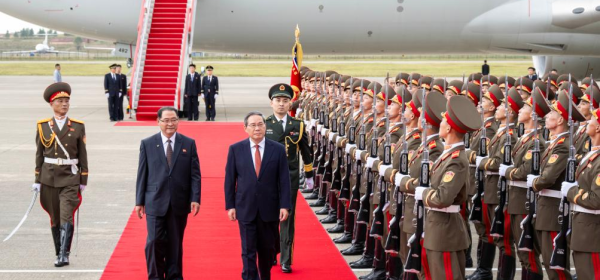
Chinese Premier Li Qiang, also a member of the Standing Committee of the Political Bureau of the Communist Party of China Central Committee, reviews the guard of honor with Pak Thae Song, premier of the cabinet of the Democratic People's Republic of Korea (DPRK) and presidium member of the Political Bureau of the Workers' Party of Korea (WPK) Central Committee, during a welcome ceremony at Pyongyang Sunan International Airport in Pyongyang, DPRK, Oct. 9, 2025.

DPRK: Chinese Premier Arrives to Mark Founding of Workers’ Party of Korea’s 80th Anniversary Celebrations! (8.10.2025)

In September, General Secretary Kim came to China to attend the commemorations marking the 80th anniversary of the victory in the Chinese People’s War of Resistance against Japanese Aggression and the World Anti-Fascist War and the top leaders of the two parties and the two countries held another successful meeting and reached a series of important consensus, charting the course for the development of bilateral relations, he said.

The Chinese premier pointed out that China stands ready to work with the DPRK to follow through on the important consensus reached by the two top leaders, strengthen strategic communication, maintain close exchanges and push for friendly cooperation between the two countries, so as to make greater contributions to regional and world peace, stability and prosperity.

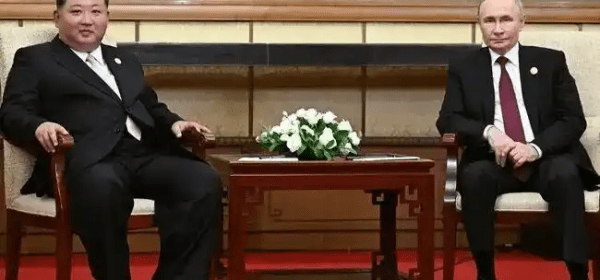
Vladimir Putin and Kim Jong-un met for talks in Beijing

China: Putin Meets DPRK’s Kim in Beijing! (4.9.2025)

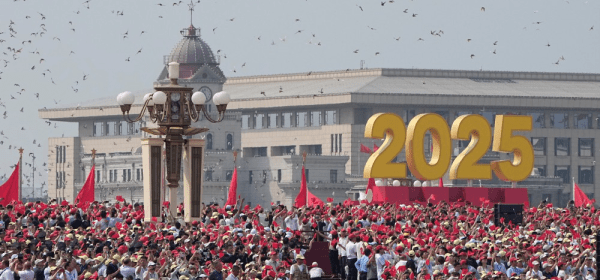
The two leaders met formally at the Diaoyutai State Guesthouse after attending a military parade in the Chinese capital that marked the 80th anniversary of the victory in the Chinese People’s War of Resistance Against Japanese Aggression (1931-45) and the World Anti-Fascist War.

Putin and Kim traveled from a formal reception to the negotiations in the same car, the Kremlin said in a post on social media.

After a bilateral meeting between Russian and DPRK delegations, the two leaders held a one-on-one meeting, the Kremlin said.

Putin also invited Kim to visit Russia again, following on from the DPRK leader’s last visit to the country in 2023.

In his remarks, Kim said the cooperation between Pyongyang and Moscow has “significantly strengthened” since the two countries signed a strategic partnership pact in June last year during a summit in the DPRK capital.

1 2