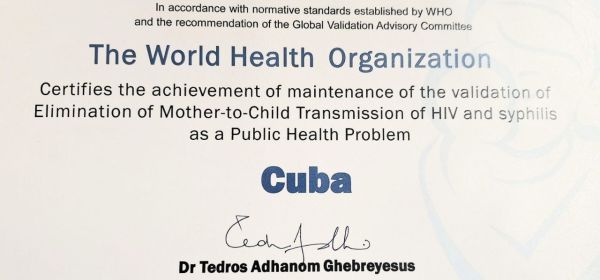
WHO Recognises Cuba's Contribution To World Health"

Cuba: WHO Award – Free of Mother-to-Child Transmission of HIV & Syphilis! (20.5.2026)

Cuba, which in 2015 became the first nation in the world to reach this milestone, continues to demonstrate that universal health coverage, firm political commitment, and robust primary care are fundamental pillars for protecting pregnant women and their children.

With this result, the country remains in the group of some twenty nations and territories that guarantee the elimination of these diseases in newborns, which is the result of decades of dedication by our health professionals, amid the worst economic blockade ever suffered by any nation.

I always wonder how much more we could do for our people and for the world, without the noose of the #GenocidalBlockade around our necks.
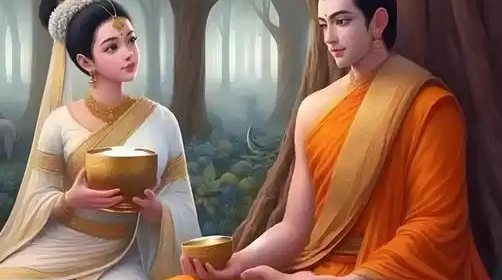
The Buddha's Enlightenment is Secular!

The Buddha & Secular Enlightenment! (3.7.2025)

If this was the case, why did the Buddha reject Brahmanism? Why did the Buddha bite the hand that fed him? Well, he practiced all the available meditative paths, mastered them all, and realised none of them expressed the ultimate truth. He carried-on training in meditation as the Upanishads advised – and saw through all the conditioning of his mind, body, and environment. He gave up caste privilege and all work for money. He knew that this would lead to starvation, homelessness, and nakedness. He resolved these issues by dressing himself in rags found in the charnel grounds (the clothing of dead who were to poor to be cremated), he acquired the skull-cap of a dead person and used it as a begging bowl as he walked from village to village quietly requesting waste-food on a daily basis, and he sat under the foot of a tree when he meditated. The Buddha left society and lived on the forested outskirts of Hindu society. Of course, the Buddha still physically lived in India, and interfaced with Hindu society, but he did this under a completely new contract of understanding.

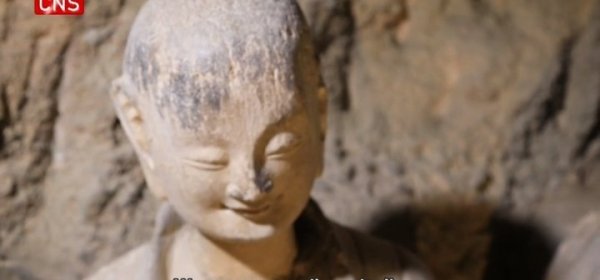
China: Gansu Buddhist ‘Smile of the Orient’ Said to Equal That of the ‘Mona Lisa’! (5.9.2023)

The early Buddhist groups in China mirrored that of the extant Confucian scholiastic system – often forming around married laymen – with disciples taking the surname of the teacher as their ‘Dharma-Name’ and essentially becoming an extension of his family. Grottoes such as that featured below were places where Buddhists could meet, share and practice their understanding of Indian Buddhist philosophy. An understanding of Buddhist monasticism started to arrive and distinguish itself in China from the existing lay-practice around the 5th century CE – the date I believe this ‘smiling’ monk appears to date from. Whereas Buddhist lay-practitioners did not shave their heads (like Daoists and Confucians) – monastic Buddhists (male and female) were required to shave their heads – indicative of their ‘rejecting’ of the desire-laden conventions that define, guide and justify the external world.

1 2