
Where Buses Go To Die!

UK: Weird News from England – Eerie Aerial Images Show “Britain’s Biggest Bus Graveyard”! (21.4.2026)

The spot has become popular with urban explorers, something which the landowners have condemned, saying they are ‘wrongfully’ breaking into the site. Barnsley has been dubbed the ‘bus scrapping capital’ of the UK following the success of entrepreneur Paul Sykes, 82, who is one of Britain’s richest people, being worth a cool £775m, according to The Sunday Times Rich List.

Aged 19, he started his own business dismantling buses for scrap metal and later evolved into exporting engines and parts, which were fitted in fishing junks in The Far East, Hong Kong, Penang and Singapore. He also exported complete buses to Australia, New Zealand, Africa and other commonwealth countries, which he did profitably for over 20 years.

One of his companies also became the largest distributor of buses in the UK.
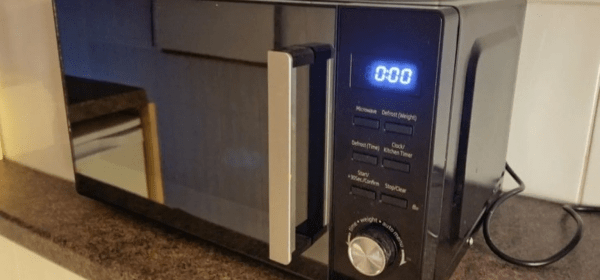
Plugging in a microwave does not make a room a flat, a judge has ruled

UK: Judge Johns KC – “A Room Cannot Be Turned into a Flat Simply by Plugging in a Microwave!” (1.1.2026)

The owners also challenged that decision, but judges at another tribunal ruled in the council’s favour again, according to the Local Democracy Reporting Service.

Judge Johns KC said a room could not “be turned into a flat simply by plugging in a microwave.”

He added there was “no relevant storage, no food preparation area” and that planning laws were supposed to “protect people in the occupation of their homes, not to encourage them to cook their own meals”.

Despite the second rejection, the company has now sought to appeal the verdict.

A hotel spokesman said the building stopped housing homeless people about two years ago.

Paul Wells, the council’s Conservative portfolio holder for licensing, said the authority was “delighted” with the ruling, which “sets a precedent for all local authorities that want to improve housing standards for residents”.

“Our teams worked exceptionally hard to achieve this result and deserve real credit,” he added.

Prototype hydrogen ion battery

China: Scientists Unveil World’s First Hydrogen Anion Battery Prototype! (19.9.2025)

Hydrogen anions are highly reactive and polarizable, offering unique energy storage potential. But until now, no electrolyte had combined the high conductivity, thermal stability, and electrode compatibility needed for a functioning battery.

In tests, the prototype used sodium alanate as the cathode and cerium dihydride as the anode. It reached an initial discharge capacity of 984 mAh per gram and maintained 402 mAh per gram after 20 cycles. A stacked version delivered 1.9 volts and successfully powered an LED light, proving its feasibility beyond the lab.