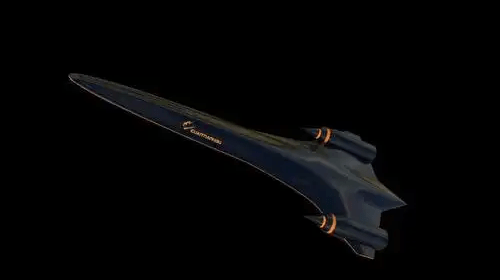
Supersonic Aeroplane!

China: Socialist Technology Develops “Super-Sonic” Aeroplane”! (21.1.2025)

Concorde, the first supersonic passenger-carrying commercial airplane, was built jointly by aircraft manufacturers in the United Kingdom and France. It was first flown in 1969 and was put into commercial operation in 1976. However, the epochal jetliner did not fit well in the civil aviation industry due to its loud noise, high fares, stringent requirements for airports and environmental impact.

If everything goes according to plan, the prototype for a commercial-use supersonic airliner named Dasheng — or Monkey King, a legendary hero in Chinese mythology — is expected to conduct its maiden flight in 2030. If that becomes reality, Dasheng will revolutionize the global air transportation sector, he added.

“Just imagine making an intercontinental flight within just two to three hours that you would now spend 10 hours or longer on,” Deng said.

Internationally, enterprises in the United States and Europe have been racing to design and construct a new generation of supersonic airliners to meet the potential demand of fast intercontinental travel.

Main Street - Forest Hill (Oxford) - OX33 1EB

Oxford: John Milton’s “Mounting Stone” – Forest Hill! (29.8.2024)

As to “why” Oxford Council resorted to this tactic is a matter of conjecture considering how overgrown the bank and stone is – and how difficult it is to actually locate the stone (there is virtually no signage). Perhaps a flat stone was becoming easily obscured by dirt, leaves and over debris – and an upright position rendered it better protected. John Milton (1608-1674) was a literary genius and esteemed poet who lived across the road from this stone and was a supporter of Parliament (and Oliver Cromwell) during the English Republic (1649-1660). His thinking was both progressive and Revolutionary! He (and his wife) were wealthy landowners in the area of the stone – owning property either side of St Nicholas Church in Forest Hill.

King Arthur May Well Have Been a Historical Personage!

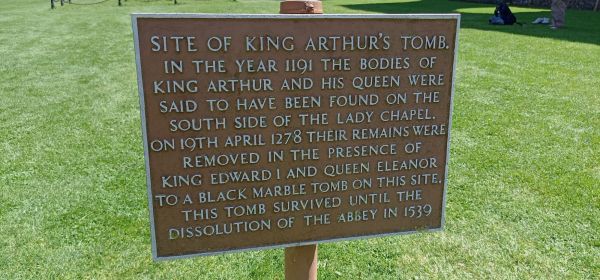
Glastonbury Abbey – King Arthur’s Grave! (29.7.2024)

The Celtic Church (from Egypt) was probably in Britain from the 2nd century CE onwards – with it being destroyed by the incoming Roman Catholic Church by the 11th century CE. Its monastic nature encouraged not only cloistered monks who lived in draughty stone cells – but also Hermits who lived in natural caves or various other meditation cells. Celtic Christianity did not persecute – but encouraged and accommodated the Pagan beliefs of indigenous people. There was a mutual respect between both groups of believers and this explains why leaders like King Arthur would strive to protect the Church – and the Church to honour him in death. This type of Asiatic respect does not require a slavish attachment to belief to be functional. Freedom of belief equates to respect for difference. There are many theories dating King Arthur from the 6th, 7th and 8th centuries, etc, which include many geographical areas associated with his life and death. We favour Tintagel in Cornwall – a place we have visited many times. King Arthur was a wise man, a compassionate man, and a great warrior!

St Albans - St Germain's Block - 2024

St Albans: St Germain’s Block! (30.5.2024)

We walked to the Verulamium Museum through the “Verulamium Park” – from St Albans Abbey. This boundary wall was built using Roman materials – but not until the 11th century. It was part of St Germain’s Chapel – an element found within the grounds of St Albans Abbey. Today, around 30-feet of what is left of this wall forms an isolated structure situated in the middle of the park. This was part of the original Roman Fortifications (designed to keep the British Celts out) – which were abandoned during the early 5th century – with the ruins incorporated into the later buildings of St Albans Abbey. Indeed, there is little evidence of Christianity being present in Verulamium during Roman times.

East Germany Guards JV Stalin!

JV Stalin Says “Happy Workers’ Day”! William Shakespeare Says Soviet Beauty Shines On! (1.5.2024)

Toppled statues lay in deconstructed heaps – but the meaning such devices represent carries-on regardless into the uncharted future. Objects can be smashed – that is easy – but equally new objects can be designed and constructed – this is a matter of collective action and progressive thought. It does not really matter what William Shakespeare had in mind when he wrote Sonnet 55 – when I heard it today in both Old and New English – it struck me that he had perceived a deeper (hidden) meaning in passing outward structures. Structures that by there very nature, must, at one point or another, pass away into oblivion. But there is hope of a re-birth – even if the Bard couches this reality in the terms of “Judgement day”!

Inside the Castle!

Torbay: Berry Pomeroy Castle – Tudor Ruins! (2.4.2024)

During the 1500s, Elizabeth I was an absolute monarch (as was her father – King Henry VIII) – who preferred to live in and around the Nonsuch Park area – including Hampton Court Palace (which is no longer used by the royal family). However, there was once a “Nonsuch Palace” which does not exist today. After Elizabeth I died (1603 CE) – many of the castles she frequented were no long favoured by the royal family – leading to these buildings falling into neglect and ruin. This was the case with Nonsuch Palace which was so badly dilapidate that what was left of it had to be demolished in 1683 CE – for safety reasons – with the ruins being recycled into the constructon (or maintenance) of local buildings.

1 2 3 4 5 6