Hindu Balathal (2006) Page 61

UK: Email – What Do I Think About the Balathal Skeleton? (22.9.2026)

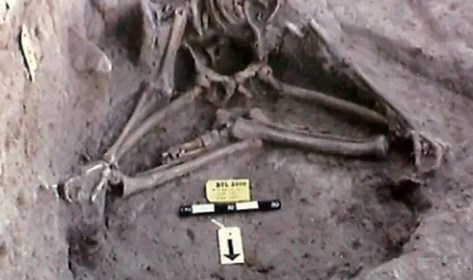
Although 700 BCE is touted around the internet – the remains could be as late as the 4th century CE (well within the date for Yoga). The site is not Indian – the skeleton is Indian. My own view is that if this is a holy man – we are probably talking about the disciples of the Buddha who dwelled at the base of trees – a “root-dweller” no-less. Of course, this is just speculation on my part and I am running with the “meditating in isolation” angle. There is absolutely no evidence for the “holy man” interpretation except for the conveniently positioned hands and fingers (the academic authors of the second paper go out of their way to insert an elaborate Hindu origin for this). This seems unprofessional to me. There is no surrounding (qualifying) evidence for the holy man hypothesis. What should usually happen is that a note would be added that draws the reader’s attention to the fact that these remains, when viewed in a certain light, possess a passing similarity to certain well-known religious postures found within the practices of a number of religious and spiritual paths. Whatever the case, more evidence is needed and none has been forthcoming (these are not “new” digs). 
Deconstructing the Balathal “Samadhi” Skeletal Remains!

BMA (UK): India – Deconstructing the Balathal “Samadhi” Skeletal Remains! (21.9.2026)

Such hate-filled ignorance is the modus operandi of the Hindutva ideologue. Christianity was in India long before the British came. In Pakistan – formerly North India – the Muslims preserve a tomb said to be that of Jesus Christ (who supposedly lived-out his life in India following the survival of his crucifixion). Then there is the story of St Thomas who is believed to have been martyred whilst praying in a cave in Tamil Nadu. Even if neither of these stories are true – Christianity probably arrived in India long before it arrived in England. The Buddha, of course, was “Indian” and born a high caste Hindu (Kshatriya). Buddhists are reformed Hindus and were not foreign (or violent) invaders (Marx refers to Buddhists as practicing “rational Brahmanism”). Muslims did invade a “Buddhist” India, and did use violence against the Buddhists who refused to fight back. Only the followers of Brahma took to the field before being defeated. Yes – followers of Brahma still existed in Buddhist India – being a manifestation of Buddhist tolerance.

Master Shao Yun (1938-2022) - Disciple of Master Xu Yun (1840-1959)

Ch’an Buddhism – Sit But Do Not Wobble! (5.5.2025)

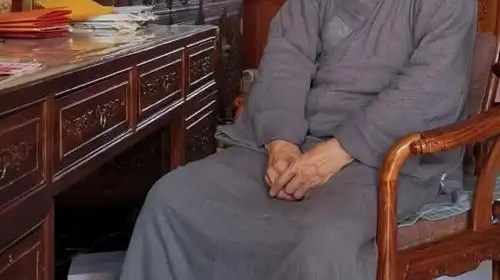
Nowadays, the situation of Ch’an Buddhism in China is precarious. This is because the Ch’an Path is difficult to follow and is not easy to practice. Of course, there are many people who chant the Buddha’s Name and practice Tantric Buddhism – but there are very few who are truly able to practice Ch’an. Many temples focus on building Buddha Chanting Halls which are popular – with the required practice relatively simple to perform – whilst the establishment of disciplined Ch’an Halls are rare. Even if some temples have established Ch’an Halls, but these places often lack dedicated teachers and practitioners who will sit in meditation for long periods of time – and forget about the body and environment. It should be noted that the inheritance of Buddhism in China is largely due to the talents cultivated in Ch’an Halls.

Giant Mao Zedong Statue Tongxu County, Henan, PRC

China: Chairman Mao Zedong – Giant Statue Built By Villagers! (18.5.2024)

Chairman Mao Zedong is in a seated position (facing “South”) and is made of steel bars and cement. The outer layer is painted with golden paint and there is scaffolding next to it. From time to time, people come by car to take pictures in front of the statue of Chairman Mao. The front of the statue faces south – the back faces North (the traditional Chinese alignment), with Chairman Mao in a seated position. It is made of steel bars and cement. The outer layer is painted with golden paint and there is scaffolding surrounding the structure.