The Buddha's Smile of Unbearable Compassion!

UK: The Buddha’s Path of Simplicity! (15.11.2026)

However, whilst managing his body in this manner, the Buddha applied the science of meditation and stripped the mind of all aspects of greed, hated, and delusion. He uprooted the “asava” (ignorance, delusion, belief in self, and sensuality), and fully perceived the empty nature of the underlying psychic fabric of the mind. A body sustained through its minimal daily requirements was all the Buddha required – as no further karma was created via the operating of the desire mechanism. Desire (burning), by its very nature, is never ending, and can never be realistically fulfilled regardless of what experiences of comfort and material goods are amassed. Desire, by its very nature, always assumes that there is more to be obtained.
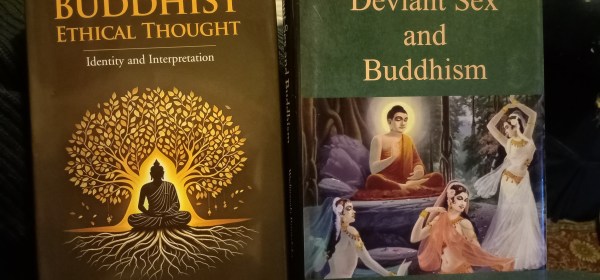
Books Ven Pannaloka

UK: What Do You Think of the Work of Ven. Pannaloka and His Latest Book? (14.11.2026)

Having said this, I do know a number of Taiwanese people in Taiwan who do possess a good and positive attitude – and there are many who view the Mainland as their cultural ancestor (not the US). Of course, none of this has anything to do with the Ven. Pannaloka – but I mention it as it contextualises my thoughts and opinions. Back to business. Although Ven. Pannaloka’s latest “published” book is his 2026 time – it is NOT his latest “written” book. Far from it, the basis of this text is the Venerable Bhikkhu’s PhD Dissertation written whilst he was studying in Taiwan (I cannot see an exact date for this text – but as the Venerable Bhikkhu was born in 1974 – I assume he may have been studying during the 1990s or thereafter). Twenty-years after writing my dissertation (2006) – I can safely say that accept in very broad assumptions – I probably no longer agree with any of it (as my thought processes have developed and moved onwards in understanding). As to the content, although the Ven. Pannaloka atempts a parallel between Theravada Buddhist ethics and the philosphy of Aristotle, John Stuart Mill, and Kant, etc.

Youth Seminar Explores Buddhism’s Role in Addressing Modern Social Issues!

Laos Buddhist-Socialist Republic: Youth Seminar Explores Buddhism’s Role in Addressing Modern Social Issues! (13.11.2026)

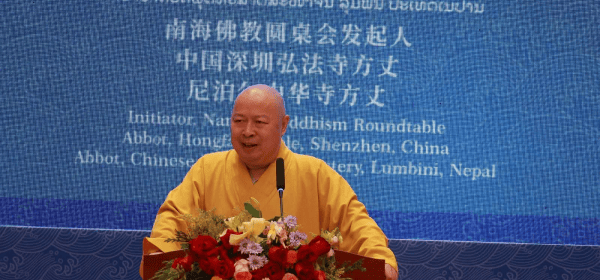
The seminar was held as part of the 11th Nanhai Buddhism Shenzhen Forum in Vientiane. Participants included Most Venerable Yin Shun, President of the Shenzhen Buddhist Association and Abbot of Hongfa Temple in China; Most Venerable Damlong Phimmachack, Vice President of the Central Committee of the Lao Buddhist Fellowship Organization (LBFO) and Head of its International Monks Affairs Committee; Sonsamai Vorasane, Director General of the Department of Ethnic and Religious Affairs under the Prime Minister’s Office; Buddhist monks from 30 countries; and representatives of the Lao Front for National Development.

Robo-Bhikkhu

BMA (UK) – Techno-Dhamma – Enlightenment Beyond the Body! (22.10.2026)

According to Buddhist theory, the content of the mind is imported a) from the material environment (via the six sense-organs interacting with six sense objects), and b) thought formations premised upon karmic traits laid-down (as “habit”) in previous existences. A previous existence does not have to have been “human” – but could involve any type of life-form – even on other planets situated in different universes and/or dimensions. As this type of existence is mysterious and not fully understood – existences may not unfold in a logical choreography. A past life might have happened in the future when compared to the present – or unfolded within a completely different time corridor not obviously related to the present (although there must be some kind of hidden karmic association). The mechanism of continuing thought-habit might be like one candle lighting another as the former burns-out and the latter blazes brightly. Of course, the Buddha asserts that rebirth (and karma) no longer exists in the enlightened state.

Brushing Away Capitalist Greed!

BMA (UK) – The Bhikkhu Must Transcend Religiosity! (8.10.2026)

The manner in which bhikkhus should teach humanity is through the understanding that all examplies of language and culture, regardless of how necessary they may seem, are nevertheless purely “expedient”. The use of language (including translation) must be “precise” and “accurate” so that the Dhamma is correctly transmitted. All language is a “raft” designed to reach the other shore – it serves no other function. If members of the Sangha become “attached” to the prevailing culture from which they emerged – then they are violating the rules contained within the Vinaya Discipline. Congregating around a cultural-bias is one-sided and exclusionary. Narrowing the scope of the Dhamma hinders its enlightening function and distorts its meaning. A bhikkhu is a beggar and not a film star or representative of the culture that gave birth to him. This is not to say that the bhikkhu should reject the culture within which he arose – but at the sametime the bhikkhu should remain “non-attached” to his mind, body, and environment.