Krishna & mohsha

UK: Emails – Looking for “Inner” Moksha! (22.8.2026)

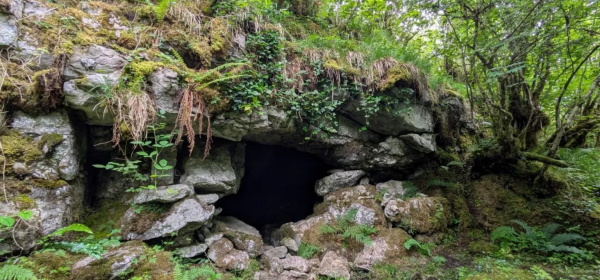
Younger people today, perhaps due to the instant gratification the internet entails, seem to lack the ability to be diplomatic and to ration perception. This leads to violence and aggression between groups due to differences in perception. The interior differences spill-out into the material world – and violence ensues. The stone passage in the temple prevents any unnecessary lateral movement of the body – but the individual should also limit the inner movement of the mind. Then it does not matter whether the body “moves” through the gap or not. Remember, Western sentiment does not operate in this temple. Even if the body “dies” – a mind free of the cycle of birth, life, and death – is a mind (and spiritual-being) free of all suffering. Losing the body in this context is viewed as a win-win for the liberated individual. A disembodied spiritual being is now free to roam in any dimension (and epoch of time) whilst being no longer limited to this plane of existence. What, then, is the issue? Well, it seems that a trapped-body results in a confused and frightened mind – which fastens the individual ever-tighter to the cycle of birth. life, and death. Once the Indian Fire Brigade extracts the compressed being from the birth-canal – an enhanced suffering unfolds!

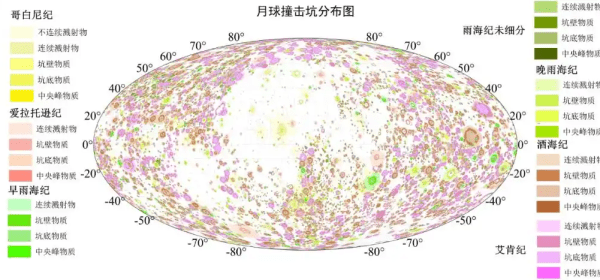
Global lunar crater distribution map. (Photo provided by the Institute of Geology, Chinese Academy of Geological Sciences)

China: PRC Develops Independent “Lunar Surface Map” for Future Missions! (7.8.2026)

A Chinese research team has completed an updated geologic map of the entire moon featuring a scale of 1:5 million, the Institute of Geology, Chinese Academy of Geological Sciences (IGCAGS), said on Thursday.

Representing a significant scientific iteration from the 2024 version, this map effectively rewrites the moon’s geologic history based on the latest research findings. “The lunar geologic history has indeed been rewritten — more precisely, refined and systematized,” said Yang Zhiming, director of the IGCAGS.

Specifically, a primary achievement of this update is the recalibration of the moon’s ancient geologic eras. The new map systematically updates the age boundaries of the moon’s three ancient geologic periods, namely the Aitkenian, Nectarian and Imbrian periods, drawing on recent advances in international chronology.

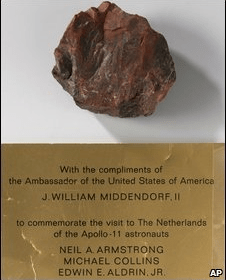
Moon Rock Made of Wood!

Basque Country: Scientists Baffled – Human Ballpoints on Mars? (18.4.2026)

This alteration creates a crust that complicates the determination of the original mineralogical composition of the meteorite. Removing this outer layer is essential, but as this study highlights, it is not always a straightforward process. The team used Raman spectroscopy, a technique commonly employed to study the chemical composition of objects, to identify various contaminants. Among these were copper compounds, synthetic organic molecules used in inks for ballpoint pens and gel pens, and blue polyester, likely from textiles. These contaminants raise a crucial question: how much of the Martian rock’s natural composition is truly represented in these samples? The presence of such human-made materials suggests that, despite rigorous efforts to prevent contamination, these meteorites are far from untouched by Earthly influence.

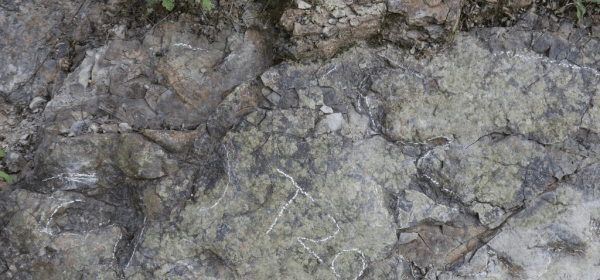
This photo taken on Dec. 5, 2025 shows dinosaur footprints on a rock wall in Dujiangyan City, southwest China's Sichuan Province. (Xinhua)

China: Dinosaur Footprints Found from About 200 Million Years Ago! (8.12.2025)

Palaeontologists have identified more than 20 dinosaur and other vertebrate footprints on a rock wall in southwest China’s Sichuan Province, a discovery they say sheds new light on early dinosaur evolution around 200 million years ago.

The tracks were found in the city of Dujiangyan by a hiker last month, and their authenticity was later confirmed by a research team led by Xing Lida, an associate professor at China University of Geosciences (Beijing). It is the first time dinosaur footprints have been reported in Dujiangyan.

Space Boulder "Not Gold" - According to Experts!

Australia: Penal Colony Descendent “Digs Himself in Deep Hole” – Korean War Gold Rock Revealed as Worthless Space Debris! (29.11.2025)

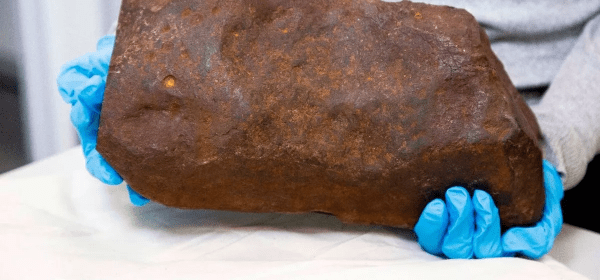
A rock the size of a stout Jack Russell (a breed of dog in the UK – small, fierce, brave, loyal, and strong) – but weighing more or less the same as a Great Dane (another – but huge – breed of dog) – was mistaken by an Aussie as a “gold nugget”. Perhaps it’s not the rock that needs testing! Still, all he has been left with is a piece of worthless space debris that landed on Earth during 1951 (in June – the time of the Aussie Winter) – which turns-out to be the same age as the Earth is old – namely “4.6 million” years old!. I am reliably told by a medical colleague that Aussies are only “technically sober” during the first three months of their lives – when the motor-skills have not yet developed to lift the hand to the mouth. Gold is a lightweight and malleable mettle, which is rare, soft, and highly pliable. This meteorite, by way of comparison, is heavy, hard, and requires a Ford Cortina just to move it any significant distance.

Fragments of impactor residues identified in the lunar soil of Chang'e-6 in this study. Photo courtesy of the scientific research team of the Guangzhou Institute of Geochemistry, Chinese Academy of Sciences

China: Scientists Discover Rare Meteorite Relics in Chang’e-6 Far-Side Lunar Samples! (21.10.2025)

Using advanced techniques to examine mineral composition and oxygen isotopes, the researchers scrutinized lunar soil and confirmed that the fragments came from CI-like chondrites — a type of meteorite rich in water and organic materials that typically originates in the outer Solar System.

The study implies that the Earth-Moon system may have experienced more collisions from carbonaceous chondrites than scientists had previously estimated.

This discovery not only indicates that material from the outer Solar System can migrate to the inner Solar System, but also has important implications for explaining the origin of water on the lunar surface, said Lin Mang, a researcher at GIG.

1 2 3