How Nicolas Werth Betrayed His Father – Alexander Werth! (5.7.2018)

There is no indication that he is depressed or suicidal in his thought processes, which are more than usually critical of the ignorant West which embarked upon a futile ‘Cold War’ trajectory after the death of Roosevelt in April 1945. Indeed, this book bizarrely carries an ‘Epilogue’ by US historian Harrison E Salisbury, who tries desperately to ‘keep up’ with Alexander Werth, when in fact the Cold War nonsense Salisbury published is exactly the same anti-Soviet hysteria that Werth laments! Furthermore, Harrison, who considers himself an ‘expert’ upon Communist China, was nothing but a Eurocentric racist given the task of demonizing Communist China in the eyes of the American public. Yes, Harrison was a Cold War fool, but even after rambling for a number of pages about his ‘Stalin in Korea’ conspiracy, he mentions nothing (in 1971) about Alexander Werth supposedly ‘killing himself’ six months after the Soviet invasion of Czechoslovakia. One would have thought that such an opportunity to ridicule and demean the USSR would not have been missed, even if Harrison was pretending to keep up a veneer of academic scrutiny.

Joseph Stalin on Democracy and Trotsky’s Six Errors (17.1.1924)

That is why, when Preobrazhensky and Trotsky declared at the October plenum that they wanted to save the Party through democracy, but that the C.C. was blind and saw nothing, the C.C. laughed at them and replied: No, comrades, we, the C.C., are wholeheartedly for democracy, but we do not believe in your democracy, because we feel that your “democracy” is simply a strategic move against the C.C. motivated by your factionalism.

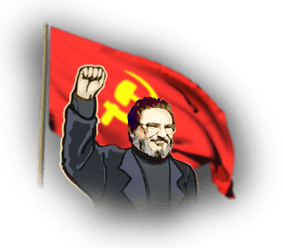
The (Maoist) Shining Path & Abimael Guzman

Between 1964 and 1980, the Shining Path followed a path of primarily ideological agitation against this revisionism, but in 1980, Abimael Guzman changed the operating stance of the Shining Path to one of Revolutionary armed struggle. This was in response to the ever growing influence of the United States in Peru, and the intensification of government-led massacres carried-out against the ordinary Peruvian people (the majority of which were comprised of masses of peasantry, as was the case with pre-Revolutionary China).

Eric Hobsbawm: Bourgeois Intellectual

Hobsbawm’s work is popular throughout the bourgeois system because it undermines the very Marxism it claims to represent, through the careful and clever presentation of many small, but important misrepresentations of Marxist philosophy and its application. The over-all effect of this policy is a movement away from a correct Marxist analysis and toward a thoroughly (and for Hobsbawm a comfortable) bourgeois interpretation. His deliberate and illogical separation of the Russian Communist Revolution from that of the Chinese Revolution is bizarre in its certainty, and smirks of Eurocentric bias bordering on the racist. Whatever Hobsbawm motivation for this flawed analysis, it is obvious that he does not adhere to the Marxist principle of ‘internationalism’.

1 2 3 4