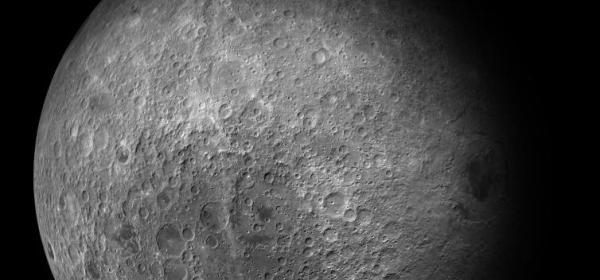
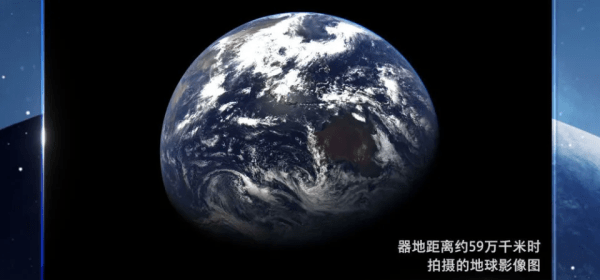
Carrying the Tianwen 2 robotic probe, a Long March 3B rocket blasted off at 1:31 am at the Xichang Satellite Launch Center in the middle of mountains in Sichuan province.

China: First “Asteroid Sampling” [Tianwen II (天问二) “Divine-Sky Exploration II”] Mission Launched! (29.5.2025)

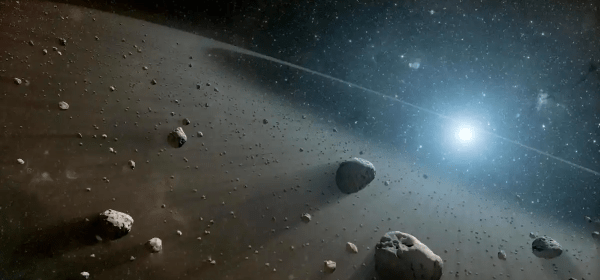
The administration said that mission planners aim to accomplish two major engineering goals through the Tianwen 2 project. The first is to develop and demonstrate key technologies needed for gathering sample from weak-gravity celestial bodies, conducting high-precision autonomous navigation and control, and other crucial manoeuvres. The second is to obtain data and samples to facilitate studies on the origins and evolution of asteroids.

Scientifically, planners hope the spacecraft could measure multiple physical parameters of both 2016 HO3 and 311P, covering their size and shape, orbital traits, rotation patterns, and thermal radiation characteristics, allowing for research on their orbital dynamics. Researchers will also analyse their external features, material compositions, internal structures, and potential ejecta.

Yuri Gagarin Monument - UK!

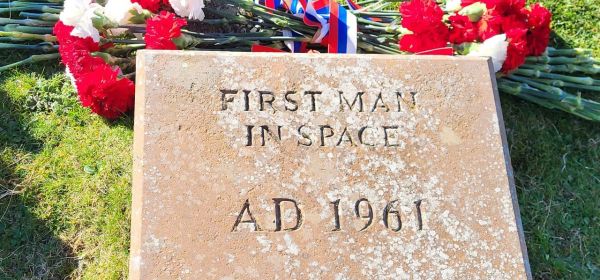
USSR: Yuri Gagarin – “AD 1961” – First Man in Space! (13.4.2025)

Yet one of the most unexpected tributes to the first cosmonaut lies far from space museums or bustling capitals — on the windswept Orkney Islands, off the north coast of Scotland.

Here, just steps from the Neolithic village of Skara Brae – a UNESCO World Heritage Site inhabited over 5,000 years ago – stands a carved stone that simply reads: “First Man in Space, AD 1961”. Nestled among markers of human milestones, it honours Gagarin’s place in our shared journey — from ancient stargazers to modern explorers.

This is a quiet reminder that Gagarin’s reach extends far beyond Earth’s orbit — and even beyond the expected.

💐 Recently Russian Ambassador to the UK Andrei Kelin and Russian Consul General in Edinburgh Denis Moskalenko laid flowers at the site, paying tribute to the first man in space.

A hypothetical illustration of Mars 3.6 billion years ago.(Photo/Aerospace Information Research Institute)

China’s Mars Rover Data Suggests Existence of Ancient Oceans on Mars! (3.3.2025)

If an ocean once existed in this region, climate changes could have trapped large amounts of water in the form of subsurface ice, which holds great potential for future Mars base water resources, significantly reducing the cost of construction and maintenance.

Fang emphasized that the ancient oceanic sediments preserve records of Mars’ climatic history. Studying these sediments could help people understand how the planet transitioned from a warm, wet world to a cold, arid one. This knowledge could guide efforts to terraform Mars into a long-term sustainable human habitation, according to Fang.

Fang mentioned that Zhurong landed in the southern part of Utopia Planitia in mid-May 2021. It is equipped with a subsurface penetrating radar to explore underground structures and potential water ice deposits.

Socialist Science Triumphs!

China: Socialist Light Shone on “Big Bang”! (26.1.2025)

Many experts at home and abroad said that the observation results of EP240315a by the EP satellite have deepened humanity’s understanding of early universe gamma-ray bursts, offer fresh insights into the origins and evolution of the universe, Xinhua reported.

The EP mission is one of a series of space science missions led by CAS. This is an international collaboration effort, featuring contributions from the European Space Agency (ESA), the Max Planck Institute for Extra-terrestrial Physics (MPE) in Germany, and the French space agency CNES.

Launched into space in January 2024, the satellite has achieved several initial discoveries, such as an uncommon transient phenomenon, advancing understanding of the universe and extreme physical phenomena, Xinhua reported.

Supersonic Aeroplane!

China: Socialist Technology Develops “Super-Sonic” Aeroplane”! (21.1.2025)

Concorde, the first supersonic passenger-carrying commercial airplane, was built jointly by aircraft manufacturers in the United Kingdom and France. It was first flown in 1969 and was put into commercial operation in 1976. However, the epochal jetliner did not fit well in the civil aviation industry due to its loud noise, high fares, stringent requirements for airports and environmental impact.

If everything goes according to plan, the prototype for a commercial-use supersonic airliner named Dasheng — or Monkey King, a legendary hero in Chinese mythology — is expected to conduct its maiden flight in 2030. If that becomes reality, Dasheng will revolutionize the global air transportation sector, he added.

“Just imagine making an intercontinental flight within just two to three hours that you would now spend 10 hours or longer on,” Deng said.

Internationally, enterprises in the United States and Europe have been racing to design and construct a new generation of supersonic airliners to meet the potential demand of fast intercontinental travel.

1 2 3 4 5 8