
During National Service, he became a piper in the Cameron Highlanders.

Scotland: Tribute to Working-Class Hero – Mr Andy Anderson [1938-2026] – Former Cameron Highlander Piper! (2.7.2026)

In his book about the battle, he wrote: “We were not, as we first thought, just opposing a government. We were in fact opposing the whole mindset, which was itself a captive of international companies who were determined to use the Skye Bridge project as an experiment.”

Andy would become a key independence campaigner in the years that followed. After the referendum loss, he helped found the Scottish Currency Group, which continues to this day.

Three years ago, he founded the grassroots campaign Respect Scottish Sovereignty, which calls for decentralised direct democracy, allowing ordinary people to stand up for their rights against government authority.

Andy and Doreen moved to Saltcoats around a decade ago, before moving to their home next to Ardrossan Cemetery three years ago.

His daughter, Theresa Derbyshire, said: “He was diagnosed with pancreatic cancer a year ago and he survived a lot longer than anyone expected. My brother and his wife stay with them in house and the whole family looked after him.

“We are expecting a lot of people to come from all over to pay their respects at his funeral later this month. ”

Andy’s funeral service will be held at 2.30pm on July 27 at the Holmsford Bridge Crematorium in Dreghorn.
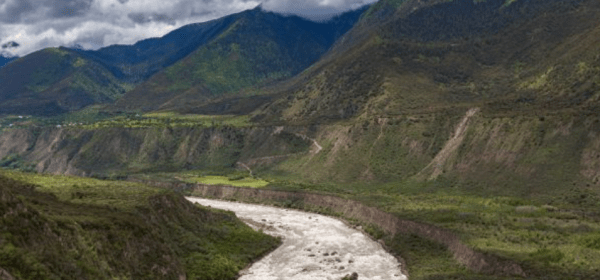

Critique The Diplomat - 2025

Critical Assessment of “Tibet Is Paying the Cost for China’s Green Energy Transition”! (18.11.2025)

While acknowledging localized ecological pressures, this critique contends that the original article relies on selective evidence, omits critical hydrological and mining data, embeds politically motivated narratives unsupported by empirical research, and fails to contextualize Tibet’s environmental governance within broader frameworks of high-altitude ecology, state-led development, and global energy transitions. Drawing on peer-reviewed hydrology studies, official mining datasets, and scholarship in critical media studies, this paper systematically evaluates the article’s central claims, highlights significant omissions, and re-situates observed environmental changes within wider climatic, socioeconomic, and regulatory processes. Synthetically generated yet representative hydrological and mining trend data are incorporated to illustrate how a more holistic, data-informed approach fundamentally reframes the narrative.