Was Stonehenge the Epi-Centre of Hyperborea?

Email: Was Stonehenge the Epicentre of “Hyperborea”? (30.6.2026)

However, I think the Druids may well be pre-Celtic – and yet still existed in Britain when the Romans arrived – living quite happily amongst the Celts. Indeed, the two cultures – the “Druid” and the “Celtic” appear to have peacefully co-existed and nourished one another. Whereas the Druids and Celts viewed the Romans as being “foreign” and “incompatible” – these two cultures viewed one another as mutually reinforcing. Greek explorers probably reached the British Isles a long time ago – when its weather was humid (even tropical), the population small, and the food plentiful. Stonehenge was built around 3000 BCE – so everything was inn-place for an idyllic interpretation and the construction in the Greek imagination of the a mythically “perfect” place. The Greek words “ὑπέρ Βορέᾱ” – can be translated as “Hyper” (“Beyond”) “Borea” (the “North”) – or perhaps “Over the Northern-Sea”.

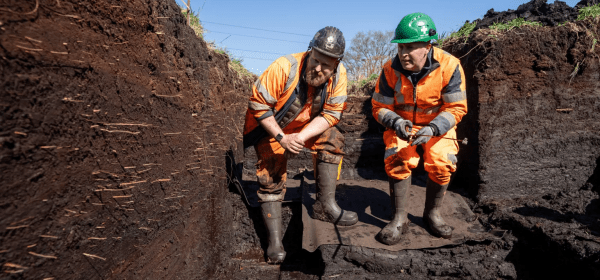
Archaeologists made the discovery underneath layers of peat on Honeygar Farm in Westhay

UK: Neolithic “Trackway” Discovered by Archaeologists in Honeygar Farm [Somerset]! (22.3.2026)

Britain used to be full of marshes through which the Celts built trackways to travel about – probably between the various tribes. Presumably, these marshes ran through (and around) forests – as the UK used to be covered in dense foliage. Therefore, the Celts did build their own type of natural pathways – but these were “natural” and very different to the roads constructed by the Roman engineers – which seemed “severe” and “unnatural” by comparison. Furthermore, the Romans destroyed the traditional landscape that Druidism and Celtic culture developed and grew within. The Romans cleared the forests and drained the marshes – thus destroying the very essence of the British Celt culture that had existed for thousands of years. The Romans committed genocide, forcibly established their culture – and then left. Part of this Roman domination was that the Celts were “primitive” and possessed no culture of their own. A policy straight out of the imperialist play-book.

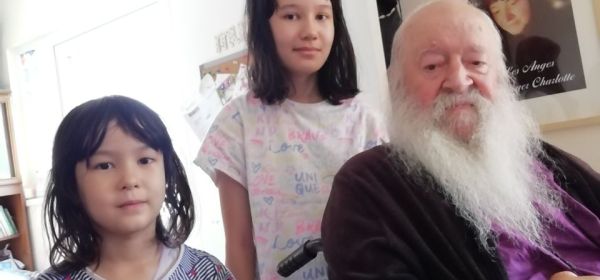
Moses Wave Man (Right) - Kai-Lin (Left) & Mai-An (Cente)

Torquay: Moses Wave Man – My Dad is a Modern-Day Wizard – and He Has Made a Post! (24.7.2025)

Remarkably, despite being right-handed, from 72 onwards, he re-learned how to do everything with his left-hand. Recently, he has been in and out of hospital in Torbay a number of times – with NHS staff stabilising his health and allowing him to go back out “waving” in the Bay. However, the visits are becoming far more frequent and I have started to receive enquiries about his health – even from the local and national media! Typical of my Dad, (he taught us to always find a way through the current hardship), he is dictating the content of his latest posts to whichever family member is visiting him. Hopefully, he will rise again for one more good round – and demonstrate his mettle and grit yet again!

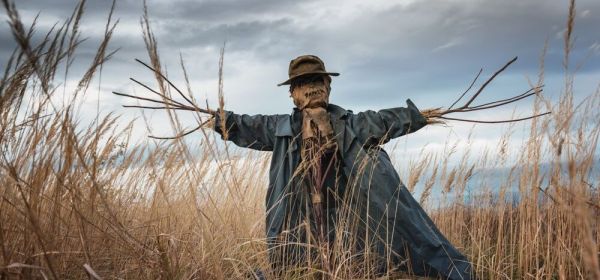
British Scarecrows - Linked to Pagan Gods!

UK: Are Scarecrows Linked to Pagan Fertility Gods? (22.6.2025)

This may be due to the Celtic traditions developing within heavily forested areas prior to the arrival of the Romans – who cleared trees to build their straight roads. Romans also cleared forested areas to create farming fields – so open fields were “foreign” to the British Celts. The Druids are reported as detesting the Roman habit of destroying the sacred woods (the Druids and their Celtic Army were finally beaten by the Romans at the Battle of Anglesey circa 60 CE – the last time “magic” was known to have been used on a British battlefield). During these times, crops were planted within the safety of the forested-canopy – where the Gods of Fertility operated more or less unaffected by the wild birds. Wide, open fields were not yet accepted as “British”. It might have even been the case that Celtic farmers came to some arrangement with the wild birds – setting aside some food for them so that everyone got on without conflict. There was 800-years between the Romans (5th century CE) leaving and the plague creating the conditions that led to the development of the modern British Scarecrow (14th century CE). 

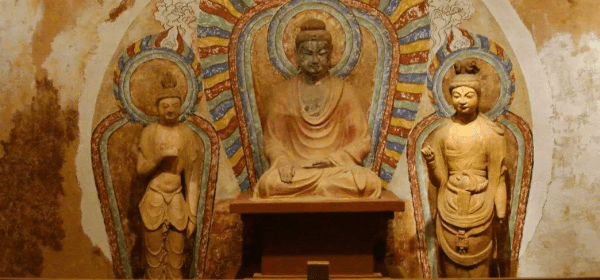
Buddhist Swastika

China: How to Read the Buddhist “卍” (Swastika) Symbol Currectly! (17.10.2024)

Empress Wu Zetian (武则天) of the Tang Dynasty was attracted to Buddhism very much and often invited Ch’an Masters to the palace to explain Buddhist Sutras to her. It was under the promotion of Wu Zetian that Huayan (华严) Sect became a major Buddhist school during the Tang Dynasty.

At that time, there was still no consensus on the pronunciation of “卍” within Buddhism. Some people insisted that it should be pronounced as “万” (Wan4) or “The Ten Thousand Thing” – but others opposed this interpretation – and believed it should be pronounced as “万”(mo2) or “Scorpion” – referring to an Oracle Bone Inscription which refers to a non-Chinese primitive tribe (during the Shang Dynasty) that worshipped the “Scorpion” whilst mimicking its movements in a ritualistic dance (perhaps implying the “foreignness” of India).

King Arthur May Well Have Been a Historical Personage!

Glastonbury Abbey – King Arthur’s Grave! (29.7.2024)

The Celtic Church (from Egypt) was probably in Britain from the 2nd century CE onwards – with it being destroyed by the incoming Roman Catholic Church by the 11th century CE. Its monastic nature encouraged not only cloistered monks who lived in draughty stone cells – but also Hermits who lived in natural caves or various other meditation cells. Celtic Christianity did not persecute – but encouraged and accommodated the Pagan beliefs of indigenous people. There was a mutual respect between both groups of believers and this explains why leaders like King Arthur would strive to protect the Church – and the Church to honour him in death. This type of Asiatic respect does not require a slavish attachment to belief to be functional. Freedom of belief equates to respect for difference. There are many theories dating King Arthur from the 6th, 7th and 8th centuries, etc, which include many geographical areas associated with his life and death. We favour Tintagel in Cornwall – a place we have visited many times. King Arthur was a wise man, a compassionate man, and a great warrior!

1 2 3