Kalinin said that the USSR had fought and won this Communistic freedom, and that the culture of the USSR was as important for the development of humanity as is the need for humans to breathe oxygen. All human struggle is an exercise in education.

Proletariat Blogging in the Heart of (UK) Predatory Capitalism! Exploring the Interface between Matter and Perception, Chinese Buddhism, Daoism, Hakka Ethnography, and All Aspects of Radical Politics, History, Psychology and Philosophy – 全世界无产者联合起来!
Kalinin said that the USSR had fought and won this Communistic freedom, and that the culture of the USSR was as important for the development of humanity as is the need for humans to breathe oxygen. All human struggle is an exercise in education.

Fan Biyue is a good example of a pioneering spirit that is unmoved by offers of money. I am aware of her find because she sent me a photograph of the stone and I suggested the impression does indeed look like that of Vladimir Lenin after research on my part, comparing the image with actual photographs of Lenin.
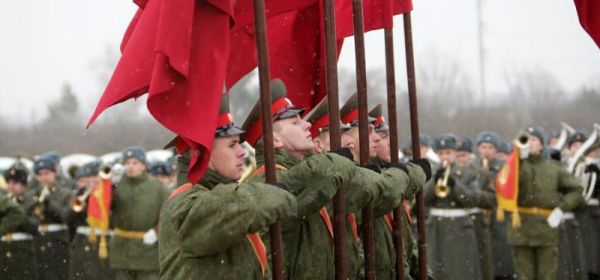
The modern, Russian Army still carries the Soviet Red Flag on parades, and the symbol of the Hammer and Sickle is a common feature of

On November 6th, 2014, the leader of the Communist Party of Russia – Gennady Zyuganov – together with other party members and supporters, assembled together

This strategy was no doubt to hinder the ability of ordinary people efficiently descending upon the capital to protest about the Nazism practised by the Tory UK Government and its continuous demonising of the Disabled, Benefit Claimants, Single Mothers, the Elderly, Migrants, Refugees, and Asylum Seekers, and its dismantling of the British Welfare State and the National Health Service (NHS).
‘Today, we in Russia remember the life and achievements of Comrade Stalin – just as people do in China. The entire world needs a new Stalin to implement the teachings of Marxist-Leninism.’

