‘Sun Yat-Sen is a revolutionary democrat. The East has finally struck the path of the West… new hundred and hundreds of millions of people will henceforth take part in the struggle for the ideals which the West has worked out.’ (Lenin: 1912)
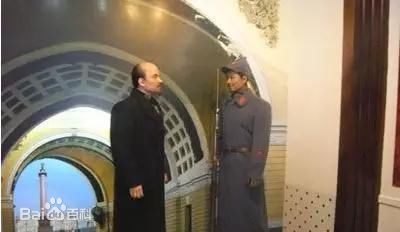
Proletariat Blogging in the Heart of (UK) Predatory Capitalism! Exploring the Interface between Matter and Perception, Chinese Buddhism, Daoism, Hakka Ethnography, and All Aspects of Radical Politics, History, Psychology and Philosophy – 全世界无产者联合起来!
‘Sun Yat-Sen is a revolutionary democrat. The East has finally struck the path of the West… new hundred and hundreds of millions of people will henceforth take part in the struggle for the ideals which the West has worked out.’ (Lenin: 1912)

The Han ethnicity certainly is not ‘pure’, and may be thought of as very diverse. This is true except in the case of the Hakka people, who althougth a sub-stratum of Han today, are in fact considered to be a unique body of people that preserve and convey a specific type of unsullied ‘Northern’ Chinese culture extant hundreds of years ago.

The formation of Hakka culture happened during periods of social turmoil. This led to the Hakka being surrounded on all sides, often suffering the worst excesses of imperialism and siege. This is the origin of the Hakka struggle for self-defense. This is a manifestation of the Hakka solidarity, advocacy of armed forces and Revolutionary traditions.
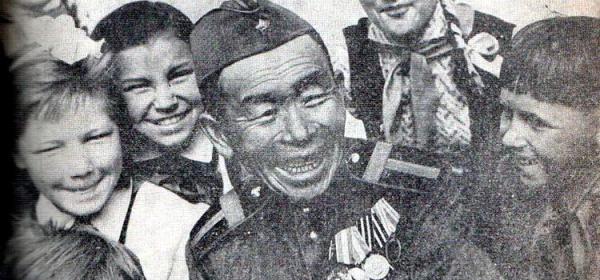
Despite the long distance, the shot hit the Nazi German in the centre of the fore-head. This was remarkable considering that Semyon Nomokonov did not make use of a modern telescopic sight. When this incident was reported to the Soviet Authorities, Semyon Nomokonov was immediately transferred to an active-duty sniper platoon.
In the 19th century, the Hakka people rose-up against the Qing Dynasty (Taiping Uprising), combining Missionary Christianity, with Chinese Cosmology – with a ‘new’ Chinese ‘Son of God’.
I noticed then that even the traditional Hakka clothing was nolonger worn, and the language spoken was a mixture of Hakka and Cantonese (with the occasional English word). Those who have left this village have spread all-over the world and changed in the new environments they have encountered, and yet there is something distinctly ‘Hakka’ that holds it all together!

