Do not threaten or beat prisoners. If the prisoners disobey the rules or ignore warnings, report to your supervisor in writing or by mouth.
Tag: discipline
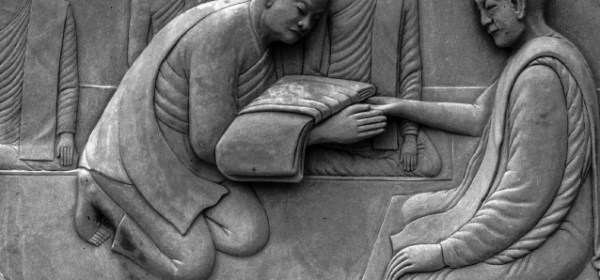
Buddhism: Pali Bhavana and Chinese Ch’an
Chinese transliterations and translations are useful as the early Chinese scholars had to understand the Indian Pali and Sanskrit terms before they could be rendered effectively into the Chinese language. Obviously, some of the early transliteration of Indian Buddhist terms are purely ‘phonetic’ in nature and in themselves do not convey much meaning as ideograms. This represents an initial process of a slow, careful and gradual building-up of knowledge in China about a thoroughly ‘foreign’ Indian philosophy that had to develop an ‘interface’ with existing Chinese culture.
Buddha Opposed Religious Ignorance
This photograph does not offend me in the same manner as racism, or social inequality. In fact it does not offend me at all. Religious
Shaolin ‘Meditation Hall’ Opened to the Public – First Time in 1500 Years
Original Chinese Language Article: By Liu Lin (刘林) Photograph: By Peng Hua Ming (彭华明) Source: Beijing Entertainment News (Translated by Adrian Chan-Wyles PhD) Yesterday, (8.4.08),
African Buddhist Monks Study Martial Arts and Medicine at China’s Shaolin Temple
Their presence in China serves to remind us of the unique Shaolin Temple tradition, and is the consequence of the fame of this temple’s reputation spreading throughout the world. Not only this, but China now exports martial arts equipment and training DVD’s, and Chinese teachers regularly teach abroad.
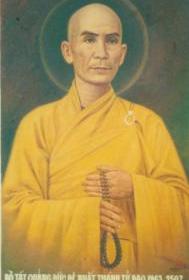
Thich Quang Duc (释广德) [1897-1963]
Thich Quang Duc’s action produced a mind altering paradigm shift throughout the world that is still being discussed today. He demonstrated the power of Buddhist mind control during a very painful death – whereas no Christian believers (beyond the realms of imagination, superstition, or the paranormal) have managed to rise from the dead.

