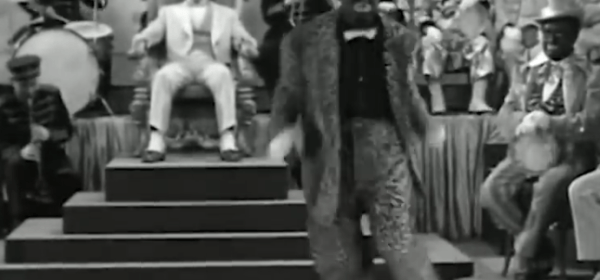
Slave Master on his Throne

US: What Where the Black & White Minstrels? (2.7.2026)

From the 1940s onward, a progressive trend in Minstreling permitted real black men to participate on stage – often along side white actresses. It must be born in mind that plantations existed well into the early 20th century. Slaves cannot help being uneducated because that is the state that the slave-master demands (knowing less is believed to make a person more easily controllable). On stage, the “interlocuter” would sit on a central throne and control the entire show. He is in fact the “slave-master” – and his slaves sit all around him – like obedient soldiers. Why the seats? Well, the “crackers” – the white security guards with whips (stood in the aisles) – preferred that the slaves be seated (and in one place for as long as possible) until it was their turn to perform. These crackers, although hidden, probably numbered as high as the performers just in case the slave-master (or his white assistants) were attacked at any point in the show. When blacked-up white men took the place of the slaves, the risk of attack disappeared, but the organisation used to control the slaves was retained on stage as an important feature of the entertainment itself. It is interesting to consider that popular music, in all its genres, is believed to have evolved out of the Minstreling tradition.

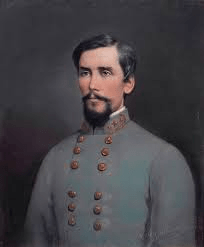
Major-General Patrick Cleburne - CSA

CSA: Patrick Cleburne – the Irish Private that Rose to Major-General – and Called for the Freeing of the Slaves in the South! (17.7.2025)

As a “British” citizen, Patrick Cleburne joined the 41st Infantry Regiment of Foot of the British Army (serving between 1846-1849) rising to the rank of “Corporal” (and NCO signified by two-chevron stripes worn on the upper-shoulder – pointing-down). He served in the Garrison of Spike Island, situated in Cork Harbour. Here, the British Authorities brutally “processed” ethnic Irish prisoners – and Cleburne got to learn first-hand what anti-Irish racism was really like. Due to this experience, he eventually emigrated with his family to the United States, and was accepted with open arms by the people of Arkansas. He was not interested in preserving slavery and certainly did not own any slaves himself. As he appreciated the kindness of the Southern people – he decided to enlist as a “Private” soldier in the “Yell Rifles” – a local Militia in Arkansas. As these local grass-roots Confederate Units were entirely democratic in nature, all NCOs and Officers were elected by popular vote. This is how Cleburne was elected to the rank of “Captain”. Quite extraordinarily, when the Local Militias and Guards Unit were reformed with many being integrated into Infantry Regiments proper that constituted the Confederate States Army – Patrick Cleburne rose through the ranks to Major-General (CSA).