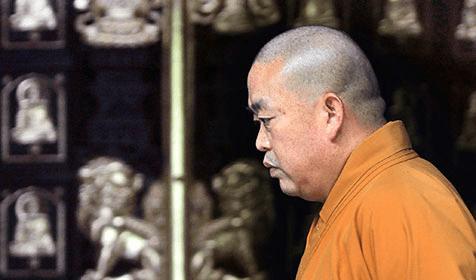
Shi Da Dao - Ch'an Caodong School

UK: On Why Genuine Buddhism is “Anti-Capitalist”! (22.10.2026)

For most people the reality of everyday life involved a mutually supporting communal-activity (a “Sangha”) with “bartering” reserved for the importing or exporting of goods and services. Every member of such communities was a) entitled to all the goods and services of that community, and b) was expected to contribute to the generating of those goods and services. Within the Vinaya Discipline, the Buddha states that the lay-community may participate in any form of “honest” (bloodless) commerce that may (or may not) involve the handling of money (coinage or otherwise). A lay-household must ethically budget to a) supporting itself, and b) the broader community (through charitable donations) – as well as “saving” money (or goods) for emergencies and hard-times. Part of this lay-budgeting involves the lay-household giving waste food and water to the bhikkhus (beggars) of the Buddha as they slowly (and consciously) “walked” through their neighbourhood on a daily basis. The reward is karmically-premised – as this action permits these monastics to pursue the Dhamma in the purest manner. The bhikkhus are “freed” from the requirement of their participating in the world of cyclic existence and this attracts an immeasurable measure of great and good karma. (The situation in China is slightly different – as although the laity is free to donate as little or as much as they like [thus generating good karma] – the monastics must grow their own vegetarian food – and not be a burden to any other community). As for the bhikkhus (and bhikkhunis) there is to be NO participation in the worldly activities associated with commerce. This is because all greed, hatred, and delusion must be uprooted during meditation practice from the mind and body.
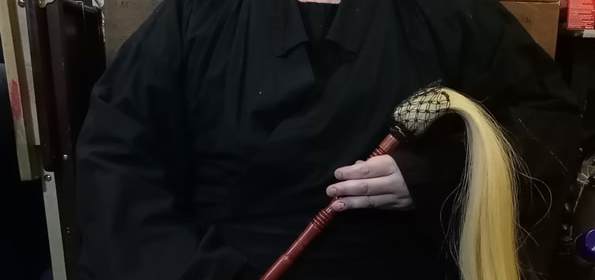
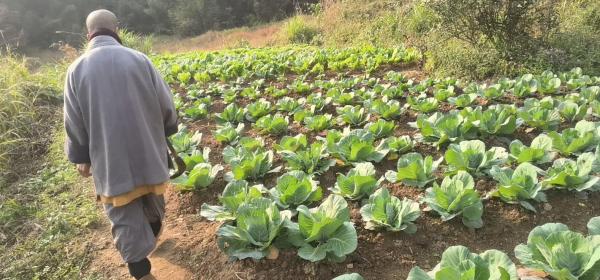
The Hermit is Self-Sufficient!

UK: Emergency Self-Ordination in the Chinese Vinaya Discipline! (14.10.2026)

Of course, the laity has a more superficial relationship with the Vinaya Discipline – and the Buddha taught soldiers, prostitutes, butchers, and even murderers, amongst many others. The Buddhist rules are NOT punishments inflicted by a disembodied sky-spirit (theistic god entity) – but exists to guide the psychological and physical energy that comprises an individual. The Buddha was scientific in that he emphasised cause and effect. We are responsible for the way we experience the inner (psychological) or outer (material) world. If you are happy suffering the consequences of the manner in which you live – and you never complain to anyone else about it – then why bother inflicting this form of Buddhist self-discipline upon yourself? There is no point. There are all kinds of reasons why people pursue the lives they do – and this is nothing to do with others – as we possess our own unique karma. Finally, status-hunting in the West – pretending to be a bhikkhu or being a genuine bhikkhu for the wrong reasons – is an offence and will bring its own hellish karma. The Vinaya Discipline is a very powerful and life-affirming vehicle that permits an individual to meet each manifestation of life with tranquillity and wisdom (in-depth).

Shi Xingzheng (Front-Centre) & Shi Yongxin (Back-Left)

China: Former Shaolin Head Monk – Shi Yongxin – Recent Developments! (28.7.2026)

The Shaolin Temple was founded by visiting Indian monks to China long before Bodhidharma arrived (in 528 CE), Sitting and clearing the mind has always been the primary skill. However, many other temples and spiritual centres also combine seated meditation with “moving” meditation in the form of martial endeavour (it is even hinted at in the Book of Change). Although the Shaolin Temple is famous – it is in no way the only place martial arts are practiced for health and self-defence. Master Xu Yun changed the law in China by integrating the Vinaya Discipline with Chinese Secular Law. Failing to uphold the Vinaya Discipline is tantamount to breaking the law. What is happening to the former Head Monk of Shaolin – Shi Yongxin – is entirely due to the legal reforms that Xu Yun initiated in the early 1950s as a means to protect China from going down the Japanese path of abandoning the upholding of the Vinaya Discipline. The above translation (click picture link) gives all the recent developments in this fascinating case.

The Daoist Shop-Front - Seduce Me With Your Wares!

UK: Qianfeng Daoism – A Few Flowers Bloomed! (5.9.2025)

The above are two recent email responses I wrote following a respectful and lucid request for knowledge and instruction. Daoism is very misunderstood both within and outside of China – but ironically this a cross we have to bear. Daoism has nothing to do with money. Indeed, the fabled “pay wall” is a contradiction to the very essence of authentic Daoist teaching. The basic rule should be that if a Daoist “teacher” demands money before they instruct you – they possess nothing worth instructing you in. You might be conditioned to feel good when purchasing something – but Daoist wisdom feels good because there is no greed involved in any of its structure, formulation, or transmission.

Shaolin Latest: Shi Yongxin’s Brother [Liu Yingbiao] of Shaolin Painting & Calligraphy Institute – “Missing”! (2.8.2025)

The reputation of the former Head Monk of the famous Shaolin Temple – Shi Yongxin – literally collapsed overnight! The trouble he has caused has not been limited only to himself! After Shi Yongxin got into trouble, his brother – Liu Yingbiao – quite literally disappeared from public view – with the media reporting that he has gone “missing”.

Shi Yongxin, the abbot of Shaolin Temple. (File photo/China Daily)

China: Shaolin Head Monk – Shi Yongxin – Under Investigation for Alleged Criminal Offenses! (28.7.2025)

In Japan, a Buddhist monk or nun can get married, produce children, eat meat, and drink alcohol. In other words, these people are lay-people in robes – but are practicing dishonesty. A group of Chinese Ch’an monks had been following the Vinaya Discipline when they travelled to Japan to spread the Ch’an Dharma – but returned with Japanese wives and children – and wearing lay-clothing – eating meat and drinking alcohol. In front of Xu Yun – these “monks” petitioned the post-1949 government of China to permanently abolish the Ch’an requirement for monks and nuns to be celibate and vegetarian. Xu Yun is said to have loudly slapped the table – stating that the Chinese government should do the exact opposite – that is, integrate the Vinaya Discipline into the fabric of China’s secular law. If a man or woman wants to be an ordained Buddhist monk or nun, then it should be a legal requirement – punishable by secular law – if they fail to uphold the rules and regulations of the lifestyle they have chosen to follow. Being a Buddhist monastic is a “job” that requires a strict form of lifestyle.

1 2 3 … 16