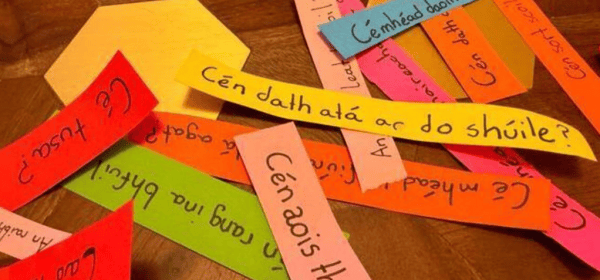
Irish Language Origins

Eire: Irish Language Origins – New DNA Study Traces Celtic Roots to Central Europe! (12.11.2026)

His research seeks to establish when and where a common ancestor of all Celtic languages emerged by examining connections and differences in the words people used and how they constructed sentences.

The latest genetic research provides “a very strong argument” that early Celtic languages moved westwards from around 1200 BC with people associated with the Bronze Age Urnfield culture of central Europe, followed by the Iron Age Hallstatt and La Tène cultures. The languages spread into France and Great Britain, eventually reaching north-eastern Spain.

This closely matches the model developed by historical linguists for the spread of Celtic from central Europe. However, Mr Kroonen and his colleagues note that an earlier migration from south-western Europe to Britain means the process was “potentially more complex”.
A Local Park in Gander Green Lane!

UK: Late-September – Time to go “Conkering”! (3.10.2026)

Two people would face-off in a Conkering Competition – with one holding their stringed conquer “still” – whilst the opponent “swung” their stringed conquer at it with as much force as they could muster. The impact would either do nothing – damage and/or smash the conker. The swing could also miss. I seem to remember the one strike each – or agreed number of strikes – often three-swings each. Today, children still marvel at the dropping of horse-chestnuts – but do not really know what to do with them. Kai-Lin, my ten-year old daughter, has gathered-up about 20 conkers from the local park. It seems that local schools banned Conkering due to injuries being sustained by participants and those watching. Although not officially banned – this draconian approach amounted to much the same effect.