A Battle Over Memorial to British Empire Heroes

Pakistan: Battle to Relocate [1895] British Empire Military Monument! (1.9.2026)

British Imperialism in India has a long and bloody history. British business took over India and extracted trillions from its raw material and wealth – guaranteeing modern India’s impoverished situation – and modern Britain’s first-world status. To achieve this – the British government established the “East India Company” and the (private) “British Indian Army” (the latter comprised of ex-British Army Officers and NCOs and locally recruited ethnic Indians). This force was supplemented by the regular British Army (recruited in the UK from the working-class slums). Britain shamefully interfered in internal Indian politics and that is exactly why this situation arose in 1895. Encouraging assassinations and then stage-managing the transition of power was the playbook. The British would literally cause a conflict and then take umbrage that violence had ensued against them. This manufactured “victimhood” is exactly what the US practices today to justify its endless military attacks. In 1895, the tribal people of North-West India (Pakistan today) were once again caught daring to manifest self-determination – and the British Raj despatched 400 British Indian troops (mostly Sikhs and Kashmiris) Officered by 5 (White) British Officers to garrison the fort at Chitral. Around 3000 Pathans (and their allies) faced-off with just over 400 British troops in a seige which lasted six-weeks (3rd March-20th April 1895) – which ended with the arrival of a British Relief Column on April 20th – putting an end to the entire affair (the two Relief Columns lost over 400 killed and around 200 wounded in the fighting outside and around the fort). The Pathans lost around 500 men (probably many more) and the British in the besieged fort lost around 42 (dead) and 62 (wounded).
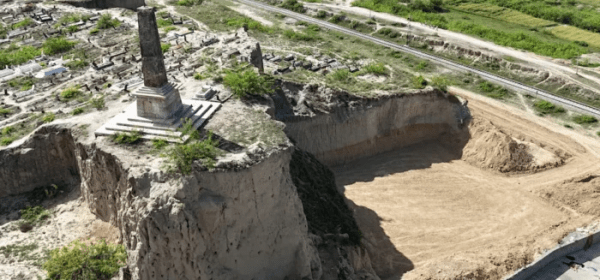
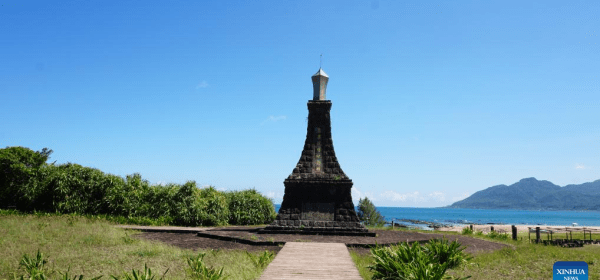
This photo taken on Oct. 13, 2025 shows a monument set up in memory of fights against Japanese invasion on the Yanliao shore of southeast China's Taiwan. (Xinhua/Qi Xianghui)

Taiwan: “Silent” Monuments Commemorate Chinese Resistance [1895-1945] to Imperial Japanese Occupation! (19.10.2025)

The Japanese encountered the largest scale resistance in the mountainous Changhua County in central Taiwan. In August 1895, thousands of local militia gathered alongside remnants of the Qing army to resist the Japanese on a local hill named Baguashan.

They were outnumbered five to one and poorly armed but fought relentlessly for days, killing over 1,000 Japanese soldiers, including a general, before being overwhelmed. Fewer than 50 survived.

One of the leaders, Xu Xiang, left behind words that still stir the heart: “If this land falls, Taiwan is lost. I will not live to see the motherland again.”

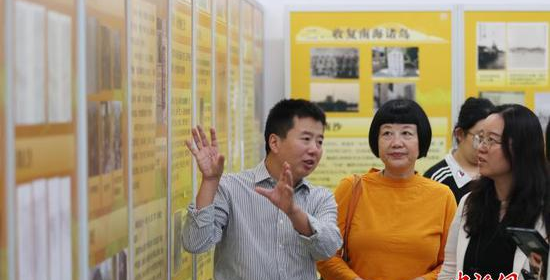
Photo taken on Oct. 13, 2025 shows visitors at an exhibition commemorating the recovery of Taiwan and the Nanhai Zhudao (South China Sea islands), from Japanese occupation at Nanjing University in eastern China, in Jiangsu Province. (Photo: China News Service/Yang Bo)

China: Nanjing Exhibition – Resumption of Mainland Sovereignty Over Taiwan! (15.10.2025)

Beyond conventional displays, the exhibition features specialized sections on maritime culture, historical maps, and Geng Lu Bu (ancient sea route manuals). It also incorporates Augmented Reality (AR) technology to offer immersive experiences of the South China Sea’s historical and cultural heritage.

The core value of the exhibition lies not only in demonstrating China’s historical proposition and legal basis on the South China Sea issue and Taiwan question but also in helping teachers and students understand history and draw spiritual strength, said Zhu Feng, executive director of Nanjing University’s Collaborative Innovation Center of South China Sea Studies.

“Only by clearly understanding the humiliations and struggles of the past can we more profoundly grasp the importance of safeguarding national sovereignty, which serves as the foundation for facing the future and building lasting peace,” he added.

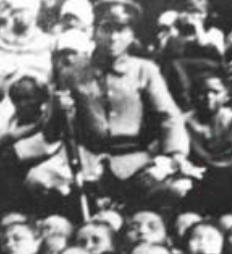
Imperial Japanese Officer - Taiwan Massacre

Taiwan: Imperial Japanese Army Massacres 1870-1945! (17.9.2024)

That is, excluding the population growth rate between the Liu Mingchuan Period to 1895 (some 11 years), Taiwan’s population plummeted by 600,000 to 700,000 in less than a year – due to Japan’s policy of killing and expelling Taiwanese people! Between 1895-1897 the Imperial Japanese permitted ethnic Chinese people to leave Taiwan – but official figures record that only 4,456 Taiwanese people took this route of relocating to Mainland China. This process involved an official procedure of application – which was granted (or denied) by the Imperial Japanese Authorities on a case-by-case bases. Therefore, no matter how the numbers are calculated, from September 1895 to the end of 1896 (just over 1 year), the number of “unnatural” (or “massacred”) deaths of Taiwanese people suffered at the hands of the Imperial Japanese reached at least 500,000 – which is a credible figure.

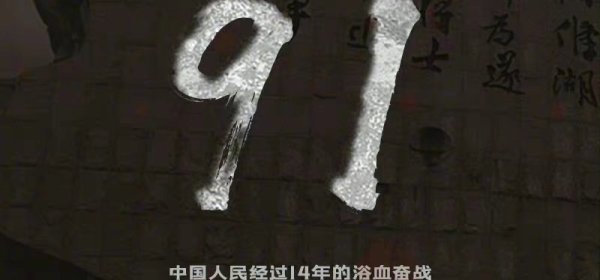
China Commemorates 91st Anniversary of the War of Resistance Against Japanese Aggression! (18.9.2022)

China resounds with the hashtag – 牢记九一八#!(#Keep in mind 918#!) – to remember the millions of Chinese people (and Allies) that were killed or maimed in China’s War Against International Fascism (which lasted between 1931-1945 and included the Second Sino-Japanese War of 1937-1945)! Imperial Japan was copying the Western model of imperialist and colonial aggression – and had invaded and occupied Northeast China in 1894-1895 (First Sino-Japanese War) and this aggressive behaviour eventually led to the Russo-Japanese War (1904–1905) – a conflict between an encroaching Czarist Russia an an ever-increasingly confident (modernising) Japan! Japan ended the conflict with controlling parts of Shenyang (formerly controlled by Czarist Russia) – but decided to launch a ‘War of Aggression’ from this platform on September 18th, 1931! Ironically, it would be the Soviet Red Army that would come to the aid of the Chinese people in 1945 and ‘crush’ the occupying Japanese Forces whilst completely ‘Liberating’ Northeast China – handing the captured territory (and material resources) to the control of the Communist Party of China!

Taiwan (1895-1945): 50 Years of Tyranny – How the Japanese Dealt with the Aborigine Uprising! (24.8.2022)

The above pictures and texts are selected from “Ecological Destruction and Social Control”, volume 24 of “Illustrations of Japanese Invasion of China”, Edited by Wu Jing (武菁) and published by Shandong Pictorial Publishing House in May 2015. The Chronicle of Japanese Invasion of China consists of twenty-five volumes, Edited by Zhang Xianwen (张宪文), Senior Honorary Professor of Nanjing University. It is a Cooperation Project of the Key Research Base of Humanities and Social Sciences of the Ministry of Education, the Research Centre of the History of the Republic of China of Nanjing University, and Shandong Pictorial Publishing House Co., Ltd., and was selected into the “Twelfth Five-Year” National Key Book Publishing Planning Project, and was included in the National Press and Publication Reform and Development Project Library in 2014 library project.

1 2