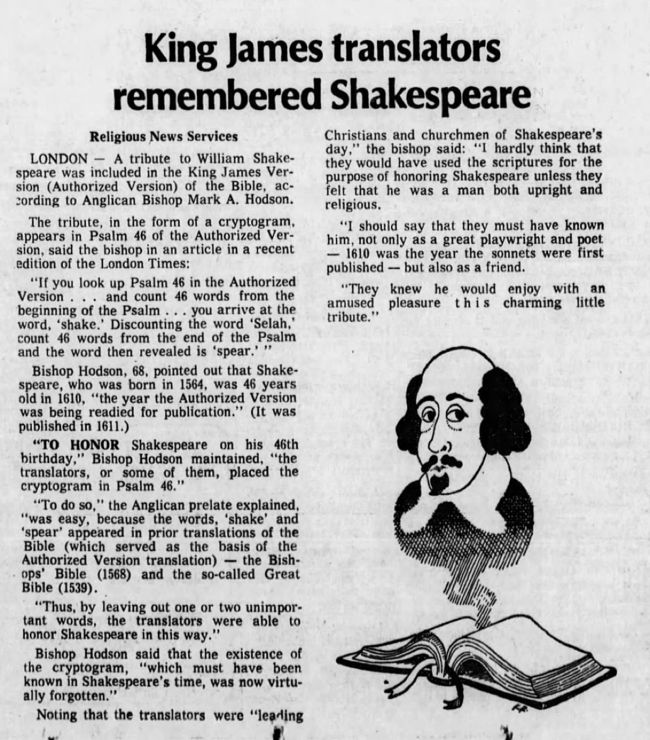
Blogger’s Note: It would appear that the Christian Church in the UK is stuck on the horns of a dilemma – if not the actual devil. On the one-hand, reliable academic data informs use that historical sexual crimes against children and young people have been prolific – whilst on the other, Church propaganda claims that such a deprived (and depraved) set of circumstances (that is “the imminent threat of child sexual abuse“) – has served as a fertile soil that has created the conditions for a “Quiet Revival of Faith” throughout UK churches. Deary, deary me – as if there is not already enough problems in the world manufactured by the belief in non-existent “sky-spirits”! We already have (allegedly) George Galloway converting to Islam to marry a woman 30-years his junior (Galloway possesses an effective set of lawyers in Northern Ireland – so we must tread carefully), and British academic David Miller posting that “Iran will save Western civilisation”! You can top this with disgruntled former Labour MP – Chris Williamson – who follows a similar line on Press TV (Galloway, together with his partner, Williamson, and many others – stood outside the US Embassy in London celebrating Trump’s second-term victory – now denying they did this – whilst lamenting the US and Israeli missiles now raining-down on Iran). Where did “White” working-class men get this idea from that a) theistic religion will save the world (when historically it has started all the wars), and b) a foreign and alien religion (Islam) can be imported and used to replace the Christian theology our Secular Society has only just managed to throw-off after more than a thousand-years of intellectual and physical oppression (the “Closing of the Western Mind” as one British author termed this era)? Shakespeare is mentioned in the below text – but you might like to research the “Psalm 46” conspiracy for a laugh! ACW (27.3.2026)
A report claiming the number of young people attending church in England and Wales had skyrocketed has been retracted, after the underlying data was found to be flawed.
The Bible Society’s “Quiet Revival” report had been widely reported on since its publication last year and became an accepted part of discourse among many Christians.
Now YouGov, which carried out the research, has told the Bible Society that an internal review of the data found that some of the respondents who completed its survey were “fraudulent”.
It has said that quality control measures, which usually remove such responses, were not applied due to human error.
The original report claimed to show that 4% of 18-24 year olds surveyed in 2018 told YouGov they were Christian and went to church at least once a month, rising to 16% by 2024.
The so-called “Quiet Revival” in young people going to church was mentioned in Parliament, lead to in-depth press coverage, and churches around the country presented their own evidence of young people “turning to Jesus”.
Last year, 600 people attended a church conference in Woking called “turning up the volume on the Quiet Revival”, hearing the phenomenon likened to “a great wave sent by God”.
But academics questioned the findings, pointing out that the results seemed out of step with other data. Results from the long-running British Social Attitudes Survey, and even the Church of England’s own figures, show a long term decline in church attendance.
Experts said that YouGov’s methodology – gathering data from volunteers who received cash rewards for their time – left it vulnerable to “bogus respondents” skewing the data.
YouGov now says that tools meant to eliminate data from such respondents – who may have participated and given random answers just to claim the rewards – “were not administered in the optimal way”.
It says the review of the figures it gave to the Bible Society had taken place “due to the ongoing scrutiny this work received.”
“YouGov takes full responsibility for the outputs of the original 2024 research, and we apologise for what has happened,” says its CEO Stephan Shakespeare.
“We would like to stress that Bible Society has at all times accurately and responsibly reported the data we supplied to them,” he said.
The Bible Society says it is “frustrated and disappointed to be in this position”, adding: “YouGov repeatedly assured us in private before publication, and several times in public following publication, that the results were reliable.”
Professor David Voas, emeritus professor of social science at University College London, was one of those who raised suspicion over the Bible Society’s findings.
“We’ve been telling them (the Bible Society) for the better part of a year that there were serious problems with the data – and even what those problems were likely to be – and they refused to engage with us,” says Professor Voas.
“I don’t know whether to feel gratified by the vindication or annoyed by the amount of time I wasted in pointing out that the numbers were clearly wrong,” he says.
 SANGHA KOMMUNE (SSR)