
Blogger’s Note: With every progression in technology – there is usually a negative reaction premised upon fear of change presented as justified due to a real existing threat. In the UK, there was a very well established view that the human-body would “fall apart” if subjected to speeds greater than four-miles per hour (or variants of this argument involving different speeds – as nobody could prove it – or had actually experienced it). Interesting, the progressive thinker and academic John Ruskin thought along these lines. Engels, having travelled on some of the world’s railways through Manchester and other places – remarked that middle-class people, whilst snug and safe in their second and first-class carriages, could traverse through the working-class slums and experience with their own eyes just how bad the existing poverty was. The family of Engels owned cotton mills in the Manchester area – and went out of its way to provide good working and living conditions for them – men and women. Of course, many workers lost their livelihoods due to advancement in technology, and this was a rational fear for people living on the bread-line. The capitalists, those who gate-keep for the bourgeois, tell us that all change is good, and that all progression comes with a human-cost. The UK government “ordered” that the railway companies could just “take land from the working-class” – demolishing the slums they lived in without paying for the land or the price of relocation (it would take decades before the UK Parliament eventually ordered not-so-generous compensation payments to the poor). Therefore, the fabled steam-engine, although now eulogised, respected, and looked upon with a loving nostalgia (even by myself), at the time of their first appearance, they were often viewed as the apex of all that was wrong with industrialisation and forced modernity. A type of hellish ogre smashing its way through established communities – for the betterment of the rich. Nowadays, with the development of all-round technology and the consumerism from the US, believe or not, much travel or transportation by train is considered too expensive or inefficient. When the UK Tory government privatised the previously State-run “Royal Mail” – one of the first changes (other than slashing its work-force from 90,000 to 30,000) was to transition all postal transportation back onto (roaded) lorries and away from the much quicker trains. ACW (19.1.2026)
Jason Arunn Murugesu – North East and Cumbria – 18.1.2026
Plans are being drawn up to excavate what is believed to be the world’s oldest train platform.
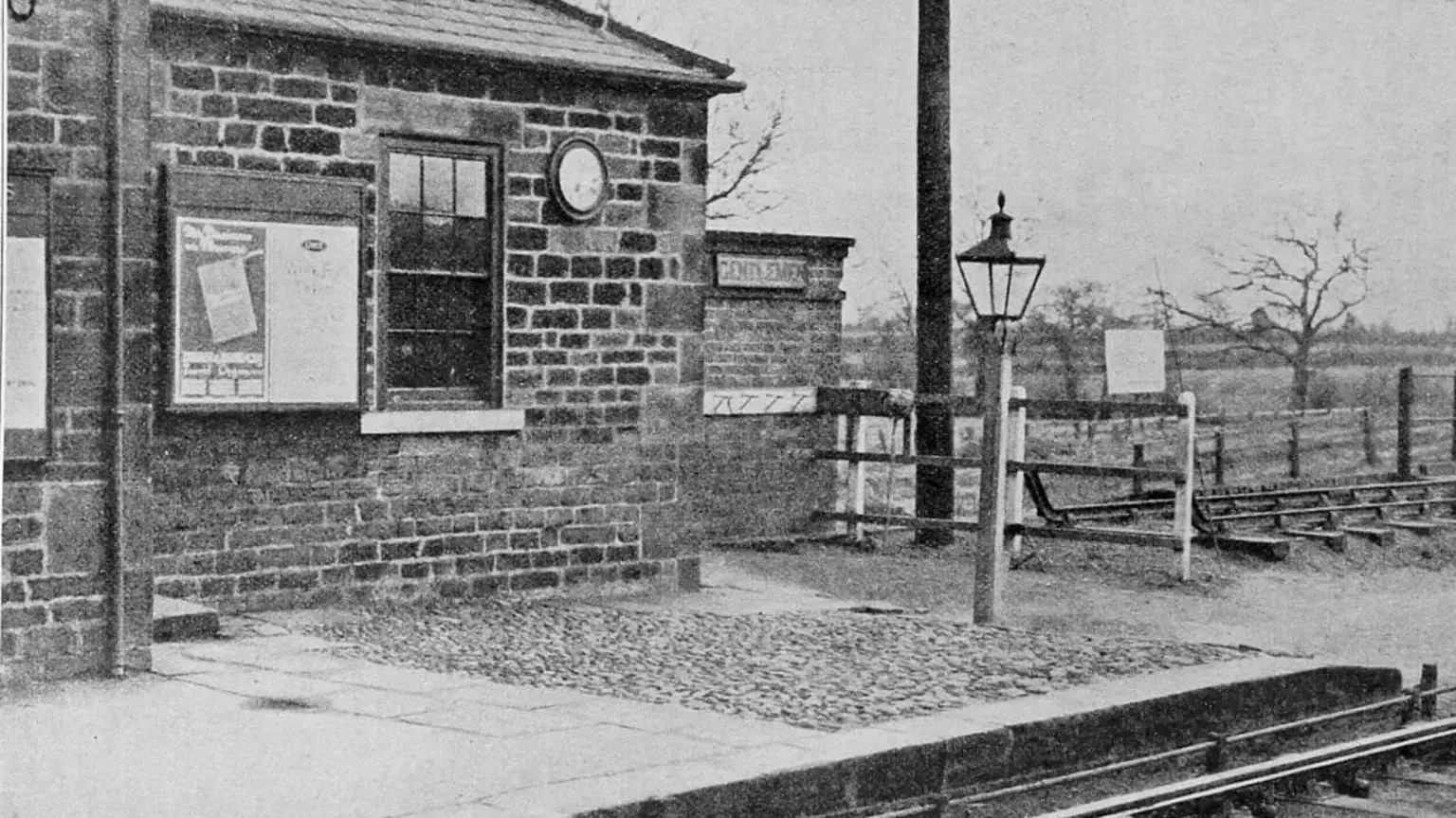
Last year Heighington Station, which dates to back to 1827 and was part of the first passenger railway to use steam trains in the world, was bought by the charity Friends of the Stockton and Darlington Railway.
The group’s chair Niall Hammond said the excavation of a small train platform located near the site was planned.
He said it was presumed it was the “original for the building” because it looked the right size and shape.
He said plans were still in the early stages, but that the group hoped to attract lots of volunteers to the dig over the summer.
Hammond said the platform, which is next to the station, was “tiny” and had cobbles.
He said ideally the team would find a “Georgian penny” at the bottom of the platform during the dig which would confirm its age.
The charity has owned the building since September after buying it for £285,000 following a fundraising drive.
Hammond said it hoped to make the site accessible to the public.
“We want to refurbish it so that it feels like it’s 1827 again,” he said.
“Staff will be in appropriate clothes and costumes – it’ll be candle lit and the decor will be 1827.”
He estimated that restoration work would cost £3m and that most of the year would be spent filling out grant applications.
 SANGHA KOMMUNE (SSR)