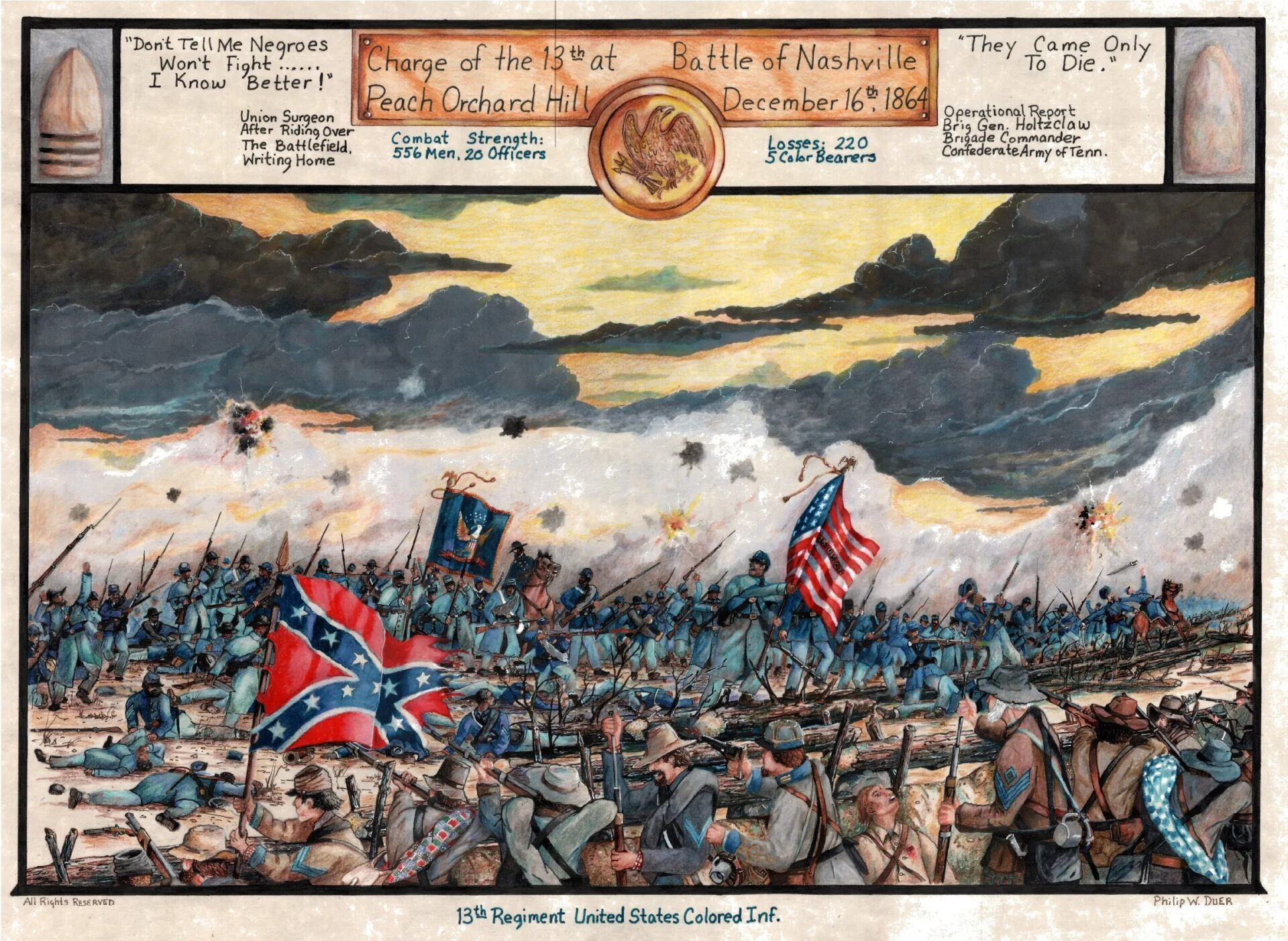
‘And as part of a rare accolade from Confederate officers, Gen. Holzclaw, whose brigade was in the middle of the line, praised the black troops as “gallant,” and noted that even though they were absorbing a devastating fusillade, they continued to advance their line, concluding that the odds were so stacked against them that “they came only to die.”’

The Confederate Movement never possessed the same amount of men or materials as did the Union. The Union, through its naval-power, was able to effectively blockade the South so as to reduce all reinforcement and replenishment to a mere trickle (something of a “smuggling” attempt from the external world). Furthermore, because of this control of the geography, the Union could call on an endless flow of migrants to join its army (in exchange for full citizenship) – and to import as much raw materials as was required to fight the war. The Union even called upon its Black population (some of which were slaves owned in the Northern States) to serve in its army. Although it is true that many foreigners managed to circumnavigate the Union blockade and join the Confederacy (the South even hosted “official” witnesses sent from the UK) – this number was relatively small – but the Confederate Army did include free Black, Chinese, and Indian men as volunteers (I shall soon acquire an academic book recording these individuals). Of course, both sides included Irishmen (my Irish ancestry fought for the Confederacy).
I like to give credit where credit is due – and I would have been proud to fight and die next to the brave men of the “13 Regiment – Coloured Infantry” (or “Troops”) of the US Army (USCI – or USCT) – who fought on Overton (Peach Orchard) Hill during the conclusion of the Battle of Nashville (which occurred between December 15-16, 1864). This engagement – which developed in the Western theatre of the American Civil War – followed on from the rather bloody (and inadvertently) decisive Battle of Franklin (which occurred on November 10th, 1864). Oddly, due to the fog of war, the Confederates believed that had won at Franklin despite suffering horrific casualties – due primarily to the Union Forces withdrawing to stronger lines North of Nashville. The empowered Confederates deployed to meet the Union Forces with a heightened sense of fighting spirit – something they never usually lacked – even when times were hard. This was despite mass starvation haunting the Confederate ranks, and a perpetual lack of boats, clothing, weaponry, ammunition, horses, and cooking untensils, etc. Even medical supplies were lacking – but one Confederate Medic did manage to provide a cup of water and a slice of cooked bacon which he carefully laid next to a dying Confederate Officer (found lying on the Nashville Battlefield) who had suffered a hideous (and fatal) head-wound (from which there was to be no recovery). This compassionate Medic had even rolled a coat around a block of wood to make a pillow before moving onto the next man.
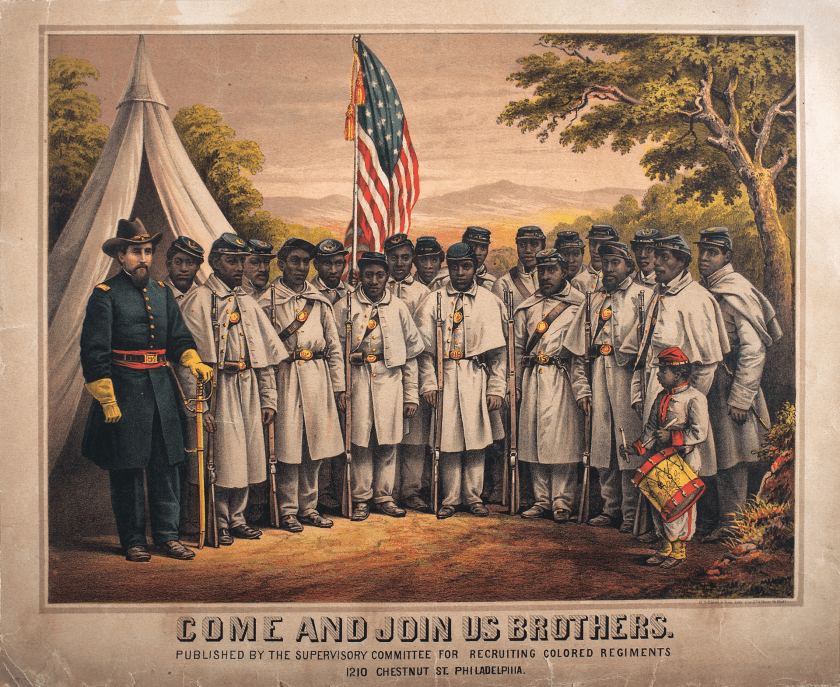
For this essay I am referencing the book written by Wiley Sword entitled “The Confederacy’s Last Hurrah – Spring Hill, Franklin, and Nashville” (2019). The Confederate Forces had firmly occupied Nashville and were entrenched on its Northern outskirts – so that the Union had to attack Southward to achieve its objective. Although the Confederate line would eventually collapse despite the highest forms of bravery exhibited by the Southern troops – it was the Confederate centre-right (under General Holzclaw) which held-out the longest – before withdrawing from the field in good order. Yes – the Confederates lost at Nashville – but as usual the poverty-stricken troops of the South gave a good account of themselves. I would say that it was Franklin and not Gettysberg where the Confederate Cause was finally defeated – but this matter is open to debate and interpretation. However, what is extraordinary is that the North, whilst running-out of White troops to assault the sturdy Confederate defences – resorted to bringing into the frontline Black troops that were only usually used for guard duty and/or manual labour. Many had been slaves not long before their co-option into the Union Army (presumably – these Black men had been freed from slavery in Northern States – despite Lincoln’s Emancipation Proclamation only apply to Southern States in rebellion). The embroidered Regimental Flag of the 13th Coloured Regiment read: ‘13th Regiment US Colored Infantry Presented By the Colored Ladies of Murphysboro’ (situated in Jackson County, Illinois) – out of respect – I have retained the US spelling. This is one of the few Union flags the Confederacy captured during the Battle of Nashville.
Just before it got too dark (the battle formally ended at 6 pm) – the 556 Black men (commanded by 20 White Officers) of the 13th Regiment manoeuvred up to a close position unseen by the enemy before advancing at the charge with fixed bayonets toward the Confederate breastworks – with no cavalry or artillery support (the Regiment that day would lose 222 men – or 40% of its number – killed and wounded). These men ran forward in good order – traversing a battlefield already strewn with thousands of dead and wounded soldiers from both sides. As the fighting across the Confederate line had abated for a time – the Confederate infantrymen on Overton Hill were able to concentrate their fire on the incoming wave of Black soldiers – shooting down one Colour-bearer after another. Driven on by their mounted Officers (many of whom were killed) – the Black soldiers – despite suffering withering fire – kept good order and rushed forever onward toward the Confederate positions. As the bodies dropped – a Black flag-bearer reached the parapet of the Confederate defences and planted the 13th’s flag upon it – before being shot-down by numerous shells (it is this flag that the Confederates eventually captured). Although Black soldiers reached the ramparts and entered into hand-to-hand fighting with its Confederate defenders – they were eventually repulsed with heavy casualties. An interesting side note is that when the starving and cold Confederate soldiers stripped the Union dead of their boots, uniforms, weapons, and food – the left alone the dead bodies of the very well-equipped Black soldiers.
General Holzclaw Stated, “Five separate colour-bearers, one after the other, seized the fallen flag and attempted to plant it over our works. Each one was shot-down. Urged on by their White Officers – these Black soldiers repeatedly surged against the breastworks. They came only to die!” Indeed, so impressed by the bravery of these Black soldiers was General Holzclaw, that he cited their bravery in his official “Battle Report”. This would be read by the likes of Robert E Lee and Jefferson Davis – so such a report contained much significance. Although the Union would win this battle overall – it did not prevail on this small part of the Nashville battlefield. Of course, such stubborn Confederate action only delayed the inevitable defeat – but it did give the Black Regiments (there others that fought during this battle and even around this area) a chance to show the world what they were capable of doing. The Irish-British (Confederate) General Patrick Clayburne 9who had died at the Battle of Franklin) had suggested to Jefferson Davis that the slaves of the South should be “freed” and co-opted into the Confederate Army – but his idea fell on deaf-ears.
 SANGHA KOMMUNE (SSR)