![New [Evolutionary] Finding May Rewrite Human Family Tree](https://thesanghakommune.org/wp-content/uploads/2025/09/image-213.png)
China Daily 2025-09-26
A study published in the journal Science on Friday revealed that a reanalysis of an ancient human skull fossil, unearthed in Hubei province and dating back more than 1 million years, may rewrite the human family tree.
The paper, titled “The phylogenetic position of the Yunxian cranium elucidates the origin of Homo longi and the Denisovans”, was published by a team led by Chinese palaeontologist Ni Xijun, a researcher with the Chinese Academy of Sciences’ Institute of Vertebrate Palaeontology and Palaeoanthropology.
The reanalysis further pushes back the divergence time of modern humans — Homo sapiens — whose ancestors are estimated to have lived in Africa around 500,000 years ago, Neanderthals, who lived between 24,000 and 130,000 years ago in Europe, and Homo longi, a species closely related to Denisovans, who thrived from 30,000 to 285,000 years ago across Asia and are the cousins of Neanderthals.
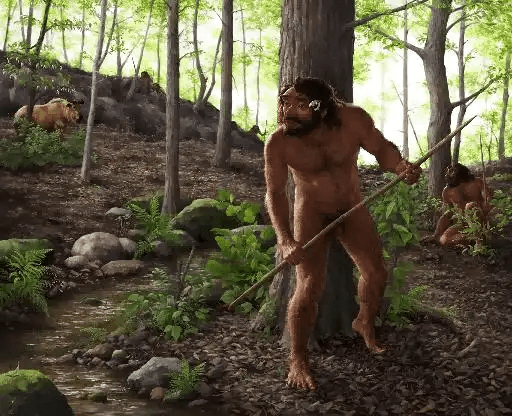
Using advanced digital technologies, Ni’s team restored and reconstructed a human skull fossil found in 1990 at the Xuetangliangzi site on a terrace of the Hanjiang River in Yunxian county (now Yunyang district) in Shiyan, Hubei province.
Three ancient human skull fossils were discovered at the site in 1989, 1990 and 2022, and these have been named the No 1, No 2, and No 3 skulls of the Yunxian Man. Ni’s team focused on the No 2 skull, a fossil that was severely broken and distorted when it was unearthed.
According to Ni’s team, the geological age of the human cranium, based on its reconstruction, falls between 940,000 and 1.1 million years.
They said that the reconstructed skull indicates a mix of primitive and advanced features: a low, flat forehead and a prominent snout, which are similar to those of older species such as Homo erectus, which dates back more than 500,000 years.
Its flat, low cheekbones, the wider back of the skull and larger brain capacity resemble fossils from the Middle Pleistocene era, the team said. Remarkably, this million-year-old skull has a brain capacity of over 1,100 millilitres, they added. The average brain volume of modern humans is around 1,349 to 1,500 millilitres.
Ni’s team identified the skull as a new species named Homo longi, which many believe is closely related to Denisovans — a species named after the fossil discovered at the Denisova Cave in Siberia in 2008.
The team used the skull as a key reference point to create a new evolutionary tree of the Homo genus. Using Bayesian-tip dating and parsimony analysis, they estimated the divergence times of various human branches. Their study revealed that the branches leading to modern humans, Homo longi and Neanderthals diverged much earlier than current fossil records suggest.
This finding indicates that as early as 1 million years ago, human ancestors had already differentiated into multiple independently evolving groups. The timing and complexity of this differentiation far exceed what we previously imagined, said the team.
According to the study, under this new evolutionary tree, most Middle Pleistocene human fossils from Asia — including specimens from the Jinniushan site in Liaoning province, Xujiayao in Shanxi province, the Penghu site in Taiwan, and the Denisova Cave in Russia, and the skull found in Harbin, the capital of Heilongjiang province — can be classified into the Homo longi lineage. This lineage shares a most recent common ancestor with Homo sapiens.
According to the study, the reconstruction of the No 2 skull of the Yunxian Man helps clarify the uncertainties about human evolution from 1 million to 300,000 years ago.
This collaborative study involved the Institute of Vertebrate Palaeontology and Palaeoanthropology of the Chinese Academy of Sciences, Fudan University, Shanxi University, the Yunnan Provincial Institute of Cultural Relics and Archaeology, and the Natural History Museum in London.
Editor: Mo Honge
Chinese Language Text:
百万年前头骨化石改写人类家谱,中国新研究刷新人类演化时间线
新京报2025-09-26 09:14
北京时间2025年9月26日,《科学》杂志最新发表的一项研究显示,一件出土于中国、距今约100万年前的古人类头骨化石经重新分析后,对传统人类演化理论提出了挑战。该研究由中国科学院古脊椎动物与古人类研究所研究员、复旦大学特聘教授倪喜军主导,不仅揭示出一个与神秘古人类“丹尼索瓦人”密切相关的新演化支系——“龙人”(Homo longi),更将现代人、尼安德特人与这一亚洲古人类支系的分化时间大幅推前,远超此前学界共识。
科研人员重建“郧县人2号”头骨
人类化石本就极为稀缺,但近年来,随着古人类学与考古学的迅速发展,越来越多的重要标本被陆续发现和命名。其中不少被正式命名为人属的新物种——包括纳勒迪人、吕宋人、巨颅人,以及此次研究聚焦的龙人。它们共同揭示出一个曾经多样并存的人属世界,与现代人祖先共享着漫长的演化时光。
然而,这些新发现化石之间的亲缘关系,尤其是它们与已知人类物种——如智人、尼安德特人、海德堡人、直立人等——如何联系,仍是学界争论的焦点。
被称为“郧县人2号”的头骨化石,由本文第一作者山西大学冯小波教授于1990年发现于湖北省郧县(今十堰市郧阳区)。化石出土时已严重破碎变形,研究难度极大,最初主要依据其古老年代被暂归为直立人。“郧县人2号”化石不仅有可靠的地质年代测定,更是百万年前极为稀少的人类遗存,对厘清人类演化谱系具有关键意义。
研究团队采用高精度CT扫描与结构光表面扫描技术,清晰识别出“郧县人2号”化石中的裂隙、矿物填充和未变形的骨片,随后通过创新的数字重建方法,以虚拟方式完成了头骨的精细拼接。此外,研究团队还开发出一套新型统计方案以检验重建结果的可靠性——这是古生物学中长期存在却难以验证的关键问题。结果显示,“郧县人2号”化石在系统发育树中的位置始终稳定。
“郧县人2号”头骨复原过程。倪喜军团队供图
重建后的“郧县人2号”头骨呈现出原始与进步特征交融的形态:低平的额骨和突出的吻部类似更古老的直立人或海德堡人;而扁平低矮的颧骨、更宽的后脑颅以及较大的脑容量,则与龙人以及大荔、金牛山、华龙洞、许家窑等地出土的中更新世人类化石相似。这件百万年前的头骨脑容量竟超过1100毫升。
郧县人生活场景复原图。白建男、倪喜军供图
研究团队构建全新人属系统演化树
研究团队以郧县人作为关键校准点,构建出全新的人属系统演化树,并推算出各个人类支系的分化时间。研究发现智人、龙人和尼安德特人这三支的分化发生得非常早,虽然早于目前化石记录所示,但与基因组数据推测的结果高度吻合。
人属系统演化树。倪喜军团队供图
郧县人并非直立人,而是与丹尼索瓦人密切相关的龙人支系的早期代表。这说明早在100万年前,人类祖先已经分化成多个独立演化的群体,其分化时间之早、程度之复杂,远超人们过去的想象。根据这一新的谱系框架,亚洲地区多数中更新世人类化石——包括大荔、金牛山、华龙洞、许家窑、夏河、澎湖及丹尼索瓦洞穴出土标本,以及发现于松花江哈尔滨江段的龙人正型头骨,都可归入龙人支系。该支系与智人拥有最近的共同祖先。
郧县人帮助科研人员澄清了100万年至30万年前这段“中间时期”的人类演化迷雾。
新京报记者 张璐
编辑 张磊 校对 赵琳
 SANGHA KOMMUNE (SSR)