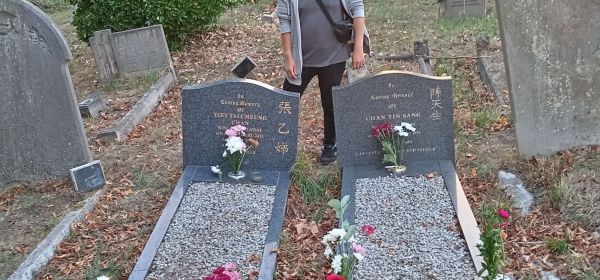
Gee Stands with Her Grandparents Who Came to England in the 1950s & 1960s!

UK: Cleaning the Ancestral Graves [Chung Yeung – 重陽] – Mid Autumn “Hungry Ghost” Festival!

As summer transition to Autumn – the mid-point is considered a time when the material world is in a state of commune with the unseen spiritual world. The ideograms “重陽” are pronounced “Zhong Yang” (Double Nine) in Putonghua (Mandarin) – are pronounced “Chung Yeung” in the Cantonese dialect (spoken in Hong Kong). In our Hakka dialect we say “Chhiùng-Yòng” – which is nearer the Northern Beijing dialect (Hakka people migrated into the South from the North). Although the graves are cleaned of leaves and dirt – this time of year is usually designed for “feeding” the spirits. Bowls of fresh (sealed) food can be laid near the grave with paper clothing “burned” (the smoke carries the objects up to the divine-sky). The food is then taken away, Incense is lit and flowers distributed.
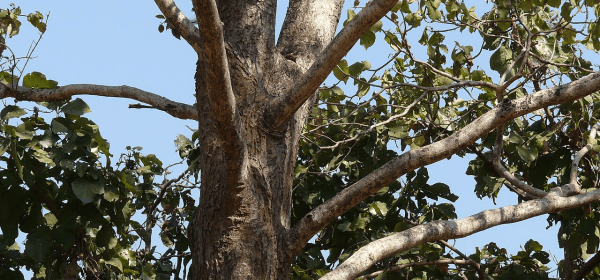
Six Die Worhipping Tree Branches at Tribal Karam Festival!

India: Tree-Worship Remains Statistically the Most Dangerous Religion in Bharat!

Five of the deaths were reported in Bokaya village and the other in Nani Jharia hamlet. Jharkhand celebrated Karam, one of the biggest tribal festivals after Sarhul, on Tuesday.

The festival concludes with the immersion of a branch of Karam tree that was worshipped during the festival. Palamu Superintendent of Police Kapil Choudhary said an eight-year-old boy had drifted deep into the Koel river during the immersion ceremony in Bokaya village.

Four people jumped in to rescue him, and all of them drowned, he said. The bodies have been fished out of the river and sent for post-mortem, he added.

The deceased have been identified as Amit Kumar Thakur (22), Nitish Kumar Singh (18), Vishal Paswan (16), Raja Singh (12) and Hemant Kumar Singh (8).

In Nani Jharia village, 16-year-old Simpi Kumari drowned after she slipped and fell into a pond during an immersion ceremony there.

Surrey Mobile Church

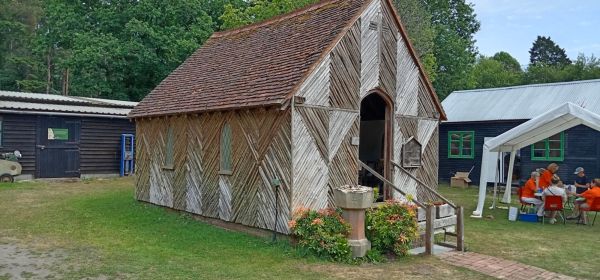
Surrey: Mobile-Temporary Church! (30.5.2026)

Sometimes, however, these mobile structures are retained as they are considered reasonably humble and simple. As the font is very heavy – usually made of solid stone – it resides outside the Church structure. The font may well be too-heavy for the interior wooden structure. Churches, of course, do not have to conform to the (European) Medieval design – as can be seen in Ethiopia, Turkey, and elsewhere. Many early Churches were simple gathering points for isolated monastics to come together (out of their solitary meditation cells – quite often in the desert)) and communally worship. In-short, a Church is a focal-point whereby those in the material realm can commune with the unseen spiritual realm. Early Christianity was very similar to Buddhism – but its theology changed when a certain faction gained Roman State support (termed the “Catholics” or “Universalists”) which then set about destroying its own past – and any Christian sect which advocated worldly transcendence – or disagreed with the /church attaining worldly power and wealth.

St Peter & St Paul Church - Market Overton

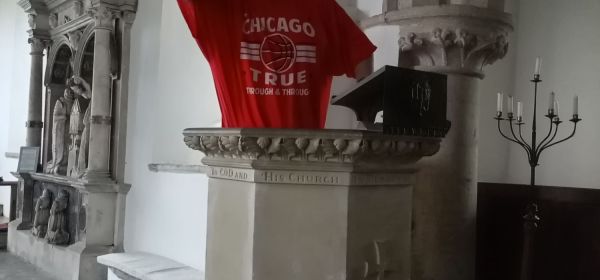
Market Overton: Visiting St Peter & St Paul Church! (28.10.2025)

Culture is an interesting thing – as it often changes and switches. When Henry VIII abolished the Roman Catholic Church in the UK in 1534 (Act of Supremacy) – followed by the Dissolution of the Monasteries – these were tremendous Revolutionary acts that must of shocked the entire population. Even before this, Henry V annulled all foreign-owned abbeys and monasteries (as many English church establishments had been given as gifts to ecclesiastical authorities in other countries) – bringing them into the ownership of the English State. Perhaps the Revolutionary writing was on the wall. Still, out of all this, the “Anglican” (Protestant) movement development – and most of the churches in the UK today are “Protestant” (the Catholic Church was only permitted back into the UK during the early 20th century – but it remains very much a minority religion).

The Revolution is This Way!

Tixover: Visiting St Luke’s in the Field Church! (26.10.2025)

We first visited this Church around 2009 – but at that time we were only focusing on the gravestones in St Mary’s Church – Duddington, and ignoring everything else. This was partly due to the early mobile ‘phones and digital cameras possessing a very limited memory. As time went by, and our genealogical research developed, we were asked to include an ever greater scope in our research which we shared online. This coincided with the technology drastically improving. Meanwhile, when we started this “Wyles” research project – we did not even possess a permanent website – and to date we have had two – before settling on the site we now possess. Tixover is just over the bridge at the Western boundary of Duddington – and is about a mile or so down the road. Tixover (Old English meaning “Kids eat grass on a slope” – kids being young goats).

Stain-Glass Window Exhibition - 2025

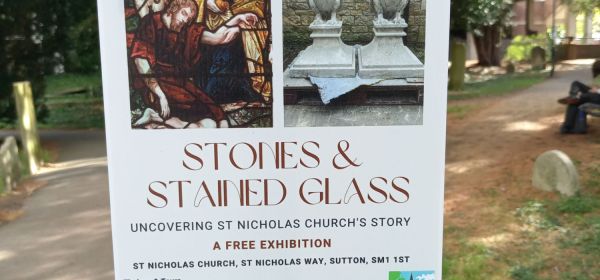
Sutton: St Nicholas Church – Stones & Stained Glass Exhibition! (8.9.2025)

Sutton is now part of Greater (South-West) London (formerly East Surrey) – and Churches are viewed (rightly or wrongly) as a type of museum, although I think St Nicholas is still in use despite Church attendance being very small across the UK. Our view (as non-Christians) is that these places should be properly and respectfully preserved – and the faithful be allowed to worship in them. On the other hand, as the Church of England is funded through general taxation (regardless as to whether the worker is Christian or not) – ALL people (providing the behave) should be able to frequent the building. We also love the squirrels, pigeons, rats, and mice which live in the graveyard.

1 2 3 … 6