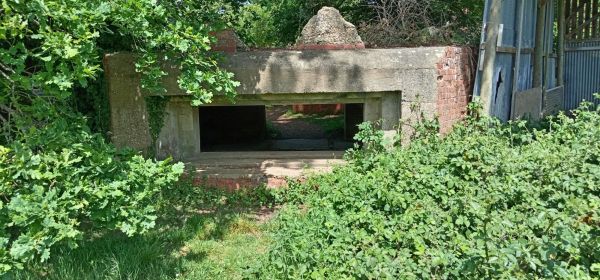
Perhaps a platoon (30-men), or a “section” (10-men) would have manned this small fort. There was a small artillary gun at the front together with a machine-gun – whilst others defended the walls via “murder-holes” in the centre of the walls or high-up from the Parapet (Merlons) and Battlement. A team would man the front gun(s) – whilst the other soldiers would be positioned on the outside and inside of the “zig-zag” structure. The enemy would have to advance past Embrasures blasting with vicious fire-power. When entering the interior (over the dead bodies of the exterior guard) the enemy would be met with sharply changing brick structures all defended round blind-corners. The interior guard would fall back to the rear of the front-gun to make a final stand. The heavy guns would be destroyed to prevent capture. These young and old men (and some women) formed static infantry formations designed to stand their ground and buy time for the regular army to reach the location.