HMS Blessing of Burntisland Sank 1633

UK: King Charles I – 1633 Wreck of Royal Ferry [Blessing of Burntisland] – Located on Sea-Bed! (21.8.2026)

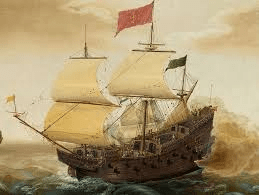
A community heritage group believes it has located the wreck of the Blessing of Burntisland, a timber ferry that sank in Scotland nearly four centuries ago while carrying royal baggage and treasure across the Firth of Forth.

Burntisland Heritage Trust said that underwater surveys, physical exploration and the recovery of timber had identified a possible wreck-site about 1.5km from the Fife town of Burntisland, describing the evidence as “promising”.

The Blessing foundered in unexpectedly rough weather in July 1633, while sailing from Burntisland to Leith during the Stuart King Charles I’s Scottish coronation tour. Only two of the 35 passengers and crew onboard are believed to have survived.

The ferry was reportedly transporting royal possessions valued at about £100,000 at the time, including jewellery, textiles, coins and precious-metal plate.
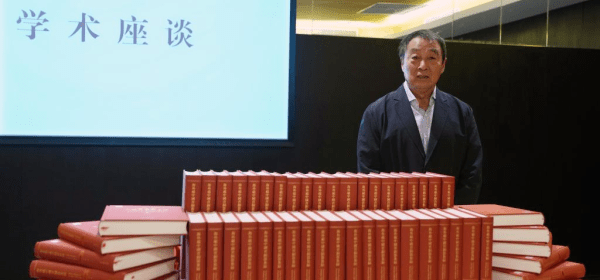
Professor Zhu Fenghan, the lead editor of a sixty-volume compendium documenting more than 23,000 ancient Chinese bronze artifacts lost abroad, poses for a photo during a press conference for the books' release in east China's Shanghai, April 19, 2026. (Xinhua/Liu Ying)

China: Record of “Stolen Bronzes” By Imperialists Compiled! (20.4.2026)

Zhu, also the lead editor of the books, said previous such surveys focused mainly on bronze bells, cauldrons and ritual vessels. This collection categorizes nearly 300 types of bronze artifacts, ranging from weapons, tools, lamps and mirror stands to irons, coal rakes and dice. One example is a human-shaped lamp stand currently at the Minneapolis Institute of Art.

Previously, scholars at home and abroad generally assumed that there were over 3,000 Chinese bronze wares in overseas collections. However, the “Collection of Chinese Bronzes in Overseas Collections” has expanded this figure by more than sevenfold.

“We have created an identity document for each piece of relics,” Zhu said. The team found that only a few relics have clear records of legal trade, diplomatic gifts or legitimate export.

As the compendium points out, the primary channels for these bronzes leaving China from the late 19th century to mid-20th century were looting, smuggling and war plunder. Western collectors and dealers bought large numbers through agents inside China, forming an illegal supply chain.

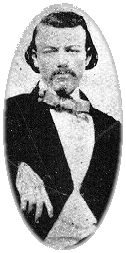
Confederate Civil War hero Colonel W.M. Shy!

CSA: The Body of a Confederate Colonel was Discovered in 1977! (18.11.2025)

The Civil War was now in its waning months. The North’s superior industrial strength and never ending supply of manpower had taken their toll over the downtrodden Confederacy. Everything was going downhill for the Rebels. After the fall of Vicksburg the Union had concentrated practically all its force against the “other Rebel army,” the Army of Tennessee. This army was the last hope for the South. It was led by General John Bell Hood who at this time was a physically beaten and emotionally unstable man. He had lost the use of one arm at Gettysburg and lost a leg at the Battle of Chickamauga. He had to be literally strapped to his horse to travel. Hood’s condition well depicted the general condition of the Army of Tennessee at this stage of the war.

Master Zhao Ming Wang & Disciples - Beijing

Beijing: Qianfeng Daoism Seeks World Heritage Site Designation! (10.9.2025)

From what I have seen from the photographs and footage Western travellers have shown me – Master Zhao lives near the Great Wall of China – and always seems to take his guests to this wonderful location. The Zhao Family Home is situated near (or on the boundary with) the mountainous areas of rural Beijing. Daoist “neidan” practice, as well as Taijiquan, is often practiced in these beautiful environs. Of course, Daoist practice is both “easy” and “difficult”. However, if a curious person is interested in Daoist practice, a good place to start is by reading the Dao De Jing (Tao Te Ching) – or “Way Virtue Class”. This may be coupled with the practice of any form of Taijiquan (or internal martial arts – such as Bagua Zhang/Quan or Xinyi-Xingyi), etc. Much progress can be made in a foundational manner until more specific instruction can be gained from a qualified Daoist Master.

Museum Artefacts in St Albans!

St Albans: Verulamium Museum! (29.5.2024)

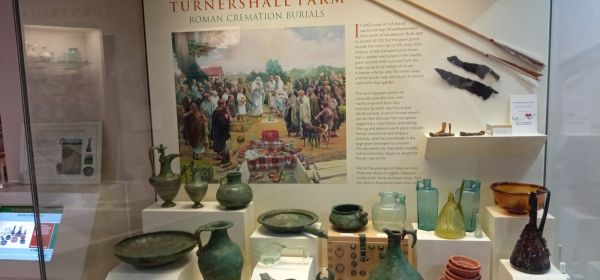
Of course, Roman rule was collapsing by the time (in the 4th century) that Christianity was becoming popular throughout the Roman Empire. Some wealthy Romans tolerated Christianity prior to this date (perhaps 3rd century) as being just one of many choices of belief from across their Empire – as the Roman Authorities were not yet exclusively “Christian”. This is why Celtic Christianity was probably from Egypt and premised upon the monasticism of the Desert Fathers – having little directly to do with Rome. The Catholic Church did not arrive as a State power in England until the Norman Conquest of 1066 (isolated Catholic Churches and monasteries had arrived in England prior to this date – but possessed no political influence or power with England’s Celtic Chiefs or Anglo-Saxon Kings). In just one-hundred years of its arrival in 1066 – this new and aggressive type of intolerant Christianity had wiped-out its Celtic cousin by the 12th century.

Gee & Me - St Albans Abbey - 2024

St Albans Abbey: Interior & Enclosures! (29.5.2024)

Abbot, Abbesses and other Head Monastics were offered a life-long pension from the Crown amounting to 1% of the annual income of the monastery being dissolved. As St Albans made around £1000 per year – the Abbot received a guaranteed £10 per year – a very substantial amount for the time. The idea was to purchase their compliance. Those who resisted were tried for Treason and publicly executed. Henry gave away monastic property to his favourites – or sold it at a cut-price to other interested parties. All the accumulated gold, silver, copper, led and bronze, as well as gemstones – were sold into the public domain and effectively laid the foundation for a modern capitalist economy. This freeing of monastic treasure into the public domain represented a massive injection of wealth into the English economy – stimulating buying, selling and market speculation. When the movable wealth ran-out – the brick-work and foundations of many monasteries were dismantled and used to reinforce Henry’s castles along the coast – or in the case of Merton Abbey – to build Nonsuch Palace in Surrey! Whereas the monks were opposed to greed and grasping – a new secular society emphasised the exact opposite to get on. Now, greed, lying and cheating guaranteed the personal accumulation of wealth that could purchase a place to live, schooling, food, travel and leisure, etc. Of course, supporting Henry often guaranteed social climbing. Modern capitalism was invented in England by Henry VIII.

1 2