Indeed, the climate of disunity that Trotsky created for international communism led directly to the 1956 Khrushchev denunciation of Stalin – and the subsequent Sino-Soviet Split.
Tag: stalin
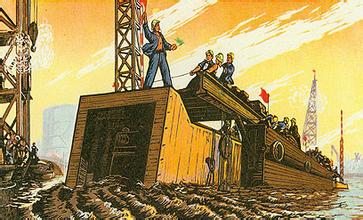
Reclaiming the Working Class
Under the influence of this distorted – and non-working class perspective – Marx is wrong, Lenin is mistaken, Stalin is evil, and China is not a Communist country. So desperate has the political Left become in the contemporary West, that one faction of it actually considers the totalitarian ideological leanings of Kim Jong Un’s North Korea (DPRK) as somehow ‘dialectically’ relevant to the British working classes who have had a thoroughly different trajectory of historical development to that of their Korean comrades.
Superficial Zizek
The racist aspect lies with the fact that Zizek either knows about – but chooses to ignore – indigenous Asian culture, or that he is not interested in any interpretive narrative that lies outside of the scope of a Eurocentric thought. In short, Zizek is a postmodern bourgeois thinker, masquerading as a post-Marxist thinker. How did the dialectical forces of history create this Zizek figure?
China’s Revolutionary Path is Correct
The problem with this ‘rightest’ deviation from Communist comradeliness, is that it plays directly into the hands of the political rightwing and gives fuel to the racially motivated ideologues. Many in the West oppose China from a position of residual racism. This is the bourgeois position of the need to denigrate and demean at the point of contact, used as a means to control and subordinate anyone, or anything that is perceived or ‘declared’ as ‘different’, and deviating from the presumed ‘norm’.
Why China is Important for World Revolution
Despite radically departing from Marxist-Leninist-Stalinist line of thinking under Khrushchev, the USSR continued to function as the guardian of world Socialism, and the protector and perpetuator of Marxist-Leninist orthodoxy – a line of thought that even if true, defied the Marxist-Leninist line of not participating in, and encouraging the creation of ‘dogma’ which prevents all further truly proletariat scientific development and endeavour. This is because, just as much for Marx as it was for Lenin, dogma represented an ideological dead-end similar to that found within religion.
London TUC March 18.10.14 – Workers United!
The bourgeois state was shook to its boots yesterday when tens of thousands of workers took to the streets of London on Saturday to protest every
 SANGHA KOMMUNE (SSR)