The fact of the matter is that up until 1949, Tibet was a primitive and backward feudalistic society, run by a highly corrupt and oppressive priestly class that had developed a distorted version of Buddhism to justify their rule. Tibet could hardly have been a place of advanced technological culture when it practised the judicial punishment of scooping-out eyes with a spoon!
Tag: Sanskrit
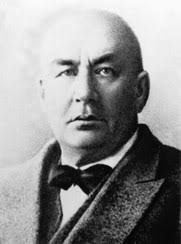
USSR: FI Shcherbatskoy (1866-1942) – Expert in Buddhism
The remit of the ISBC was to establish a scientific dialectical history of the development of Buddhism in ancient India, how the teaching spread throughout Asia, how Buddhist culture integrated into previously existing cultures, and how contemporary Buddhism functioned in the modern world.
The Dhammapada and the Uncreate
The Pali word ‘akata’ translates as ‘uncreate’, and this has been translated into the Chinese language through the use of the Daoist term ‘Wu Wei’ (無為). This is important in implication for the Ch’an idiom ‘language of the uncreate’., as it means that Ch’an doctrine is not only securely rooted in Buddhist scripture, but rooted in the earliest strata of that scripture.
The Greater Over the Lesser Path
Therefore the teachings on karma and rebirth are applicable to the pre-enlightenment state and are not ultimately ‘real’ as they disappear with the realisation of profound emptiness. It is debatable that the Pali Suttas are ‘Hinayanic’, as all Mahayana thought clearly exists within their construct.
Buddhism: Hinayana and Mahayana Notions of Emptiness! (10.12.2014)
Through the work of Nagarjuna, the Mahayana movement developed the interpretation that physical matter is ‘empty’ of any substantiality. This is due to Nagarjuna applying his tetra lemma (catuskoti) formula to the assessment of the ‘Chain of Dependent Origination’ (Pratītyasamutpāda), and logically proving that just as the true enlightened state has no-self associated with it; then it is also equally true that physical matter has no substantiality associated with it. Everything is dependent upon everything else, conditioned by everything else, and contingent upon everything else.
 SANGHA KOMMUNE (SSR)