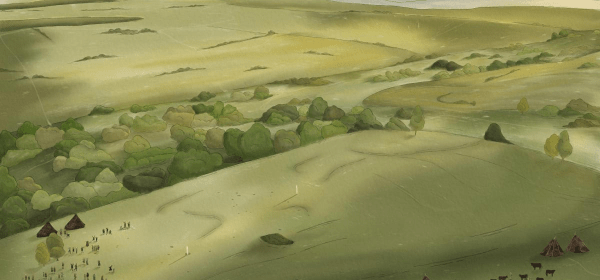
Timeline and reconstruction of summer solstice celebrations as they might have appeared at Bulford 5000 years ago © Wessex Archaeology

UK: Strange Stories from England – Proto-Stone Henge Dsicovered! (19.6.2026)

“The discovery at Bulford is fundamental because it’s the earliest example of people building things here that aim directly at the solstice. When we talk about the solstice, we’re talking about religion. About how prehistoric peoples understood the cosmos, the world, and their place in it. What we see at Bulford, and later at Stonehenge, is a way of celebrating and marking the passage of time, but it’s also about making sure the world keeps working as it should. It’s likely their way of saying to their deities, please keep us in mind, keep us warm and safe. It’s a religious event. That’s why it’s so important.”
China: Modern Archaeology Proves Historicity of Emperors Yao & Shun! (24.9.2023)

“If we can further testify ancient Pingyang existed through material proof, then the Chinese history of Yao and Shun would be changed from a legend to a real historical time,” archaeologist Xue Ruiming told the Global Times. 

Xue added that the tomb ruins show the site’s “historical continuity.” He also said that ancient sites around Linfen are not only known to have “rich pottery relics,” but also hold great archaeological significance. The Taosi site is another site in the city that has more than 4,000 years of history. 

Dating back 4,300 to 3,900 years ago, the Taosi site is a major archaeological spot that has been included in China’s national program dedicated to tracing the origin of Chinese civilization. Several notable relics, including a pottery plate decorated with dragon patterns was found at the site’s high-level tombs that once belong to local royalty. 

A large rammed earth building wa