From the scientific perspective, religion can be explained scientifically (through the auspices of psychology and psychiatry, as well as secular philosophy), and need not necessarily be an issue that requires confronting, even if it does not obviously contribute toward the scientific method.
Tag: philosophy
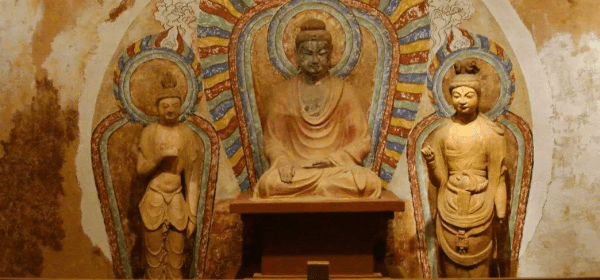
The Historicity of Buddha’s Rationality
The Buddha’s use of ‘logic’ pre-dated the ancient Greeks.
Lucid Marx
Even the old Soviet Union (1917-1991), in its English translations of Marxist texts, used the term ‘spiritual’ to refer to ‘consciousness’, and in so doing, marked a clear separation between socialist and communist theory, with that of the theology of the established Judeo-Christian tradition that had dominated Europe with its ecclesiastical imaginations for over a thousand years.
Buddhism: Hinayana and Mahayana Notions of Emptiness! (10.12.2014)
Through the work of Nagarjuna, the Mahayana movement developed the interpretation that physical matter is ‘empty’ of any substantiality. This is due to Nagarjuna applying his tetra lemma (catuskoti) formula to the assessment of the ‘Chain of Dependent Origination’ (Pratītyasamutpāda), and logically proving that just as the true enlightened state has no-self associated with it; then it is also equally true that physical matter has no substantiality associated with it. Everything is dependent upon everything else, conditioned by everything else, and contingent upon everything else.
China as Developmental Archetype for Humanity
Life continues in the obvious (everyday) manner relating to Chinese culture, and there is no real understanding of the deeper psycho-spiritual energy that is in operation. This is as it should be, as the entire transformation process avoids the trap of ego-awareness and the psychological structures that operate through materialist paradigms, seeking personal aggrandisement and power.
Freedom In The Post-Modern Age
‘The nature of post-modern freedom, although equally applicable to all, does not necessarily mean that it is immediately perceivable to all those who exist within its condition. Its condition is the product, generally speaking, of advanced economic development, although on occasion such philosophies as Buddhism have been interpreted as being of a ‘post-modern’ nature. Obviously ancient India was not in the advanced economic state that western Europe is in today, but the Buddha’s philosophy marks a stark break with the traditions of his time, and represents a clear manifestation of one particular aspect of the post-modern condition, namely that of dismissing the long narratives of history that had previously dominated Indian philosophical and spiritual thought. West Europe, the United States of America and to a lesser extent the emerging central and eastern European states, are the product of hundred of years of economic development that has created nothing less than a revolution in the material structure of outward society that has seen the remarkable establishment of science and medicine over that of the theology of monotheistic religion. This state of industrialisation and technological development, regardless of its inherent inequalities has nevertheless created an extensive collective wealth that has raised the level of physical and psychological existence.’