China Manned Moon-Shot!

China: Socialist Manned Lunar-Landing Set for 2030! (8.8.2025)

The lunar lander, named Lanyue, which means embracing the moon, consists of both a landing module and a propulsion module. It is a newly developed spacecraft designed to support crewed missions to and from the moon.

It will be used to transport two cosmonauts between the lunar orbit and the lunar surface — and will carry a lunar rover and other scientific payloads. After landing, the lander will serve as a life-support centre, an energy centre and a data centre, offering assistance and serving as a base for the cosmonauts’ stay and activities on the moon’s surface.

Noting that the test was complex with a long cycle and technical challenges, the space agency said the success represents a breakthrough in research and development in terms of China’s manned lunar exploration programme.

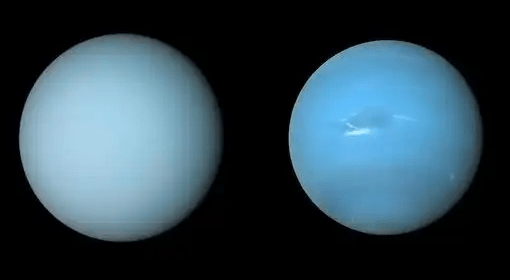
Uranus and Neptune Photographed by Voyager 2

China: Socialist Science Plans to Venture Farther into Deep Space by Exploring Mars, Jupiter, Uranus & Neptune! (24.7.2025)

“Ice giants preserve pristine gaseous materials that record the evolutionary history of protostellar clouds and crucial information about planetary formation. These planets serve as vital subjects for studying the solar system’s origins and exoplanets,” Yang Mengfei, a senior scientist at the China Academy of Space Technology in Beijing and chief designer of the Chang’e 5 lunar mission, told China Daily in an exclusive interview. An ice giant is a colossal planet composed mainly of elements heavier than hydrogen and helium, including oxygen, nitrogen, carbon and sulphur. Two planets in the solar system, Uranus and Neptune, are categorized as ice giants. According to Yang, Uranus has the coldest atmospheric temperature in the solar system, with a minimum of about minus 224 C, and the most tilted rotation axis among all planets in the solar system. Meanwhile, Neptune, the farthest planet from the sun, has the strongest surface winds, reaching speeds of up to 2,100 kilometres per hour. Moreover, Triton, Neptune’s largest moon, is considered “the most likely extra-terrestrial body in the solar system to host microbial activity”, and may provide key clues to life’s origins.

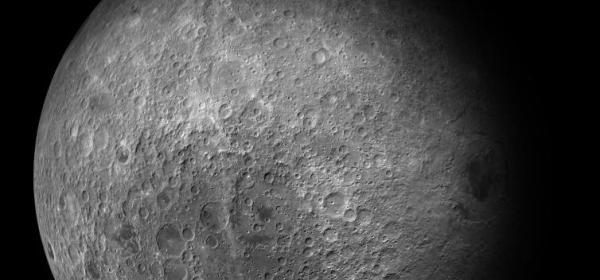
This image created by Chinese researchers shows the moon's far side.

China: Chang’e-6 Sheds First-Light on Evolution History of Moon’s Dark-Side! (10.7.2025)

In 2024, Chang’e-6 made history by bringing 1,935.3 grams of lunar far-side samples back to Earth. These samples were collected from the South Pole-Aitken (SPA) Basin, the largest, deepest and oldest basin on the moon, which provided a rare opportunity to clarify the compositional differences between the near and far sides and to unravel the long-standing mystery of their asymmetry.

“The SPA Basin is one of the moon’s three major tectonic units, measuring approximately 2,500 kilometers in diameter. The energy from the impact that formed this crater is estimated to be 1 trillion times greater than that of an atomic bomb explosion. Yet, the exact influence of such a massive collision on the moon’s evolution has remained an unsolved mystery,” Wu Fuyuan, an academician of CAS and a leading researcher with the IGG, said at a CAS press conference on Wednesday.

The four papers published in Nature systematically reveal, for the first time, the effects of this colossal impact, which is the core highlight of these findings, said Wu.
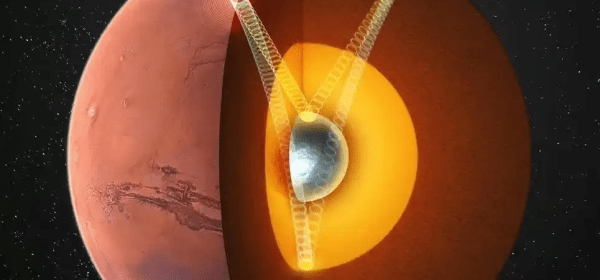
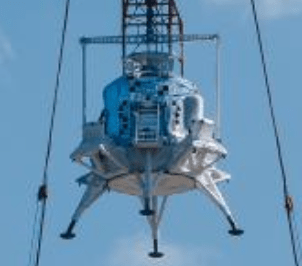
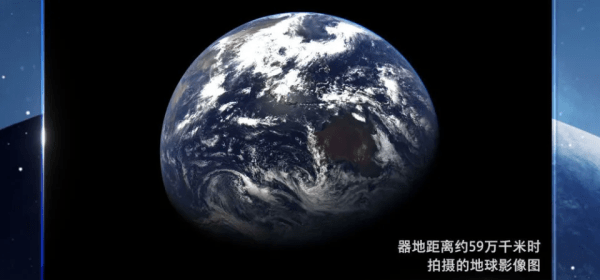
Images of Earth and the moon captured by the Tianwen 2 robotic probe are released on Tuesday by the China National Space Administration.

China: Tianwen 2 Sends Back Images of Earth & Moon! (2.7.2025)

The samples will be distributed among scientists, who will examine their physical properties, chemical and mineralogical content and isotopic composition, contributing to studies on the formation and evolution of asteroids and the early solar system.

Delivering the samples to Earth will not be the end of the mission. The Tianwen 2 spacecraft will then enter the second phase of its journey, flying toward a main-belt comet called 311P to conduct a remote-sensing survey and transmit the data back to Earth for scientific research, according to the CNSA.

The whole mission is expected to yield ground-breaking discoveries and expand the understanding of Earth and small celestial bodies inside the solar system, scientists said.

Carrying the Tianwen 2 robotic probe, a Long March 3B rocket blasted off at 1:31 am at the Xichang Satellite Launch Center in the middle of mountains in Sichuan province.

China: First “Asteroid Sampling” [Tianwen II (天问二) “Divine-Sky Exploration II”] Mission Launched! (29.5.2025)

The administration said that mission planners aim to accomplish two major engineering goals through the Tianwen 2 project. The first is to develop and demonstrate key technologies needed for gathering sample from weak-gravity celestial bodies, conducting high-precision autonomous navigation and control, and other crucial manoeuvres. The second is to obtain data and samples to facilitate studies on the origins and evolution of asteroids.

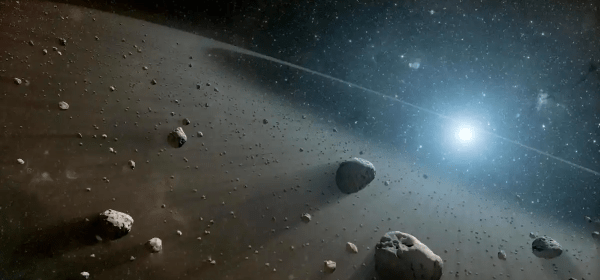
Scientifically, planners hope the spacecraft could measure multiple physical parameters of both 2016 HO3 and 311P, covering their size and shape, orbital traits, rotation patterns, and thermal radiation characteristics, allowing for research on their orbital dynamics. Researchers will also analyse their external features, material compositions, internal structures, and potential ejecta.

Yuri Gagarin Monument - UK!

USSR: Yuri Gagarin – “AD 1961” – First Man in Space! (13.4.2025)

Yet one of the most unexpected tributes to the first cosmonaut lies far from space museums or bustling capitals — on the windswept Orkney Islands, off the north coast of Scotland.

Here, just steps from the Neolithic village of Skara Brae – a UNESCO World Heritage Site inhabited over 5,000 years ago – stands a carved stone that simply reads: “First Man in Space, AD 1961”. Nestled among markers of human milestones, it honours Gagarin’s place in our shared journey — from ancient stargazers to modern explorers.

This is a quiet reminder that Gagarin’s reach extends far beyond Earth’s orbit — and even beyond the expected.

💐 Recently Russian Ambassador to the UK Andrei Kelin and Russian Consul General in Edinburgh Denis Moskalenko laid flowers at the site, paying tribute to the first man in space.

1 2 3 4 7