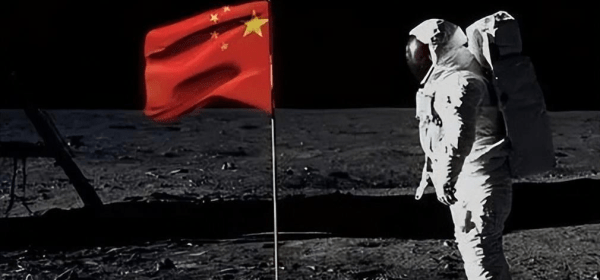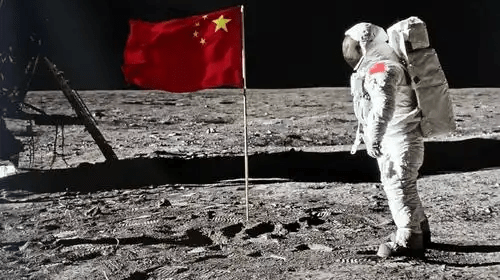
PRC Landing on Moon!

China: Manned Lunar Landing Programme Fully Advanced! (29.10.2024)

The fourth batch of astronauts started training in August, and has so far concentrated on the fundamental theories of manned space engineering and targeted physical training, as well as on-site learning, symposiums and lectures. Subsequently, they will proceed to engage in training tasks of more than 200 specific subjects under eight categories.

The training will also cover a set of skills tailored for life and work on the country’s space station, as well as tasks of extravehicular activities, maintenance and repairs of equipment, and space science experiments, according to Lin.

Now, the two payload specialists from Hong Kong and Macao have become an integral part of the team, and they have exhibited a strong passion for training and maintained optimal physical and mental well-being, said Lin.

The pair of candidates have also received Mandarin courses, and a personalized meal plan has been created to accommodate their dietary preferences, according to Lin.

3-D Printer Brick - Luna Base!

China: 3-D Printer “Bricks” Developed for Future Moon-Base Construction! (21.10.2024)

According to China Central Television, the lunar bricks will be sent to China’s space station aboard the Tianzhou-8 cargo spacecraft to verify their mechanical and thermal performance, as well as their ability to withstand cosmic radiation. The first lunar brick is expected to return to Earth by the end of 2025.

China unveiled a national mid-term to long-term development program for space science on Tuesday, outlining a roadmap for the development of space science in China through 2050. The international lunar research station, which was initiated by China, will be constructed during the program’s second phase from 2028 to 2035.

Socialist Science Leading Space Research!

China: Socialist Space Science Development Programme for 2024-2050! (15.10.2024)

The programme also outlines a roadmap for the development of space science in China through 2050.

In the first phase, leading up to 2027, China will focus on the space station operation, implementing the manned lunar exploration project, and the fourth phase of its lunar exploration programme as well as the planetary exploration project. Five to eight space science satellite missions will be approved during the period, according to the programme.

The international lunar research station initiated by China will be constructed during the second phase from 2028 to 2035, and approximately 15 scientific satellite missions will be carried out during this period.

In the third phase from 2036 to 2050, China will launch over 30 space science missions.

This photo shows lunar samples retrieved by the Chang'e-6 mission at the lunar sample laboratory in the National Astronomical Observatories of the Chinese Academy of Sciences (CAS) in Beijing, capital of China, Sept. 24, 2024. (Xinhua/Jin Liwang)

China: Research on Chang’e-6 [Dark-Side] Lunar Samples Underway! (11.10.2024)

A research paper published in September on the lunar samples brought back by the Chang’e-6 mission says that the Chang’e-6 samples exhibit “distinct characteristics” compared to previously obtained lunar samples.

The Chang’e-6 probe was launched from China on May 3, 2024. On June 25, its returner made a landing in north China, bringing back 1,935.3 grams of samples from the far side of the moon. (Xinhua/Jin Liwang)

PRC Lunar Space Suit - 2024

China Manned Space Agency [CMSA]: Lunar Spacesuit Revealed! (29.9.2024)

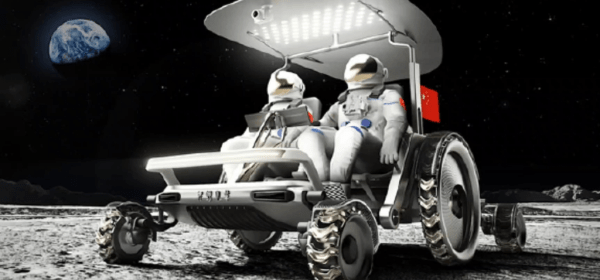
According to the CMSA, spacesuits are designed for exposure to the harsh conditions of space, including vacuum, microgravity, radiation, and extreme temperatures, allowing for greater lower body mobility of astronauts to walk, climb, and conduct scientific activities on the moon’s surface. 

Research and development of the spacesuit began in 2020, inspired by traditional Chinese culture.

The red decorative bands on the arms and legs were designed to resemble flowing “Feitian” ribbons — meaning flying deity in traditional Chinese culture. Its combination with the suit symbolizes traditional Chinese philosophy of harmonizing strength and softness. And the leg bands are shaped like the exhaust flames of a rocket, conveying the dynamic energy of space exploration.

Moon South Pole Samples!

China: Researchers Reveal Chang’e-6 Lunar Samples Composition! (18.9.2024)

The Chang’e-6 mission, however, marks the first time humanity has ever successfully collected samples from the Moon’s far side, returning 1,935.3 grams of precious material.

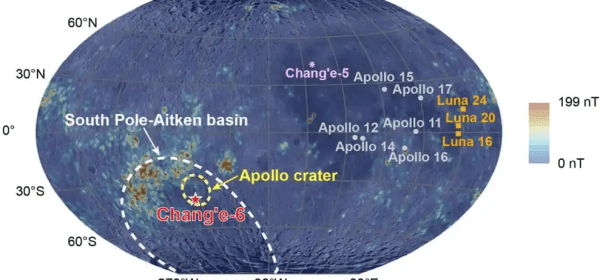
The landing site for this sampling mission was located in the South Pole-Aitken basin on the far side, specifically at the edge of the Apollo impact crater, an area where the lunar crust is extremely thin, potentially revealing primordial materials from the early impact basins. Particle analysis shows a bimodal distribution of grain sizes, indicating that the samples may have undergone mixing from different sources.

The study indicates that the Chang’e-6 samples contain not only basalt that records the history of volcanic activity on the Moon, but also non-basaltic materials from other regions.

1 2 3 4 5 6 9