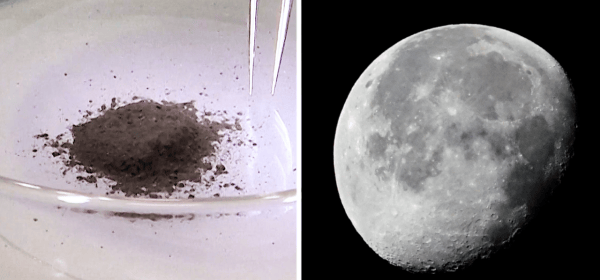
China officially donated a lunar sample collected by the Chang'e-6 mission to the UN

China: Far-Side Moon-Dust Sample Donated to UN in Vienna! (15.9.2026)

China’s handover of the lunar sample collected by Chang’e-6 to the United Nations is a concrete action to put into practice the four major global initiatives proposed by Xi, fully implement the new development philosophy featuring innovative, coordinated, green, open and shared growth, uphold true multilateralism, safeguard the authority and role of the UN Committee on the Peaceful Uses of Outer Space as the main platform for global space governance, and advance the implementation of the UN 2030 Agenda for Sustainable Development, Shan said.
China Manned Moon-Shot!

China: Socialist Manned Lunar-Landing Set for 2030! (8.8.2025)

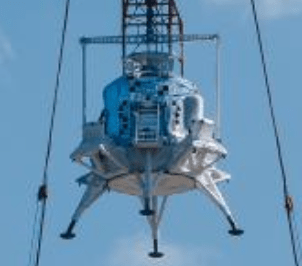
The lunar lander, named Lanyue, which means embracing the moon, consists of both a landing module and a propulsion module. It is a newly developed spacecraft designed to support crewed missions to and from the moon.

It will be used to transport two cosmonauts between the lunar orbit and the lunar surface — and will carry a lunar rover and other scientific payloads. After landing, the lander will serve as a life-support centre, an energy centre and a data centre, offering assistance and serving as a base for the cosmonauts’ stay and activities on the moon’s surface.

Noting that the test was complex with a long cycle and technical challenges, the space agency said the success represents a breakthrough in research and development in terms of China’s manned lunar exploration programme.

Carrying the Tianwen 2 robotic probe, a Long March 3B rocket blasted off at 1:31 am at the Xichang Satellite Launch Center in the middle of mountains in Sichuan province.

China: First “Asteroid Sampling” [Tianwen II (天问二) “Divine-Sky Exploration II”] Mission Launched! (29.5.2025)

The administration said that mission planners aim to accomplish two major engineering goals through the Tianwen 2 project. The first is to develop and demonstrate key technologies needed for gathering sample from weak-gravity celestial bodies, conducting high-precision autonomous navigation and control, and other crucial manoeuvres. The second is to obtain data and samples to facilitate studies on the origins and evolution of asteroids.

Scientifically, planners hope the spacecraft could measure multiple physical parameters of both 2016 HO3 and 311P, covering their size and shape, orbital traits, rotation patterns, and thermal radiation characteristics, allowing for research on their orbital dynamics. Researchers will also analyse their external features, material compositions, internal structures, and potential ejecta.

Socialist China - Space Science!

China: Lunar Sample Reveals Far-Side Drier Than Near Side! (11.4.2025)

For nearly 20 years, there has been a debate over whether the water content in the Moon’s mantle, the middle layer between its surface and core, is abundant or scarce, while all published estimates were derived from near-side samples.

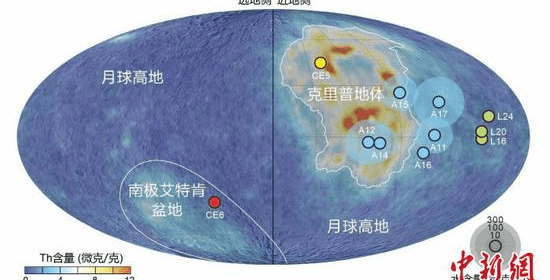
China’s Chang’e-6 lunar probe retrieved the first-ever lunar far-side samples from the Apollo crater within the South Pole–Aitken Basin, providing the first opportunity to determine the water content of the lunar mantle in this region.

The study revealed that a unique volcanic event dating back 2.8 billion years had not been observed in previous samples obtained from the near side.

Rock Samples Return!

China: Chang’e-6 Lunar Module Safely Returns Dark-Side Rock Samples! (26.6.2024)

Lunar samples brought by the earlier Chang’e-5 mission have already drawn applications for access from international scholars, with the process well underway. The Chang’e-6 lunar probe carried four international payloads that were developed jointly by Chinese and foreign scientists. It is conceivable that the openness of Chinese lunar exploration activities will be mirrored in the study of Chang’e-6 lunar samples, said Yang.

The lunar scientific community and the entire humankind are anticipated to reap the rewards of collaborative efforts undertaken by international scientists from a wide range of geographical and disciplinary backgrounds, Yang added.

Zhang Kejian, head of the CNSA, said that exploring the vast universe is a common dream for all of humanity, and only open cooperation is the right path. China’s space endeavors will adhere to the principles of equality and mutual benefit, peaceful utilization, and inclusive development.

1 2 3