PRC Reusable Space Shuttle!

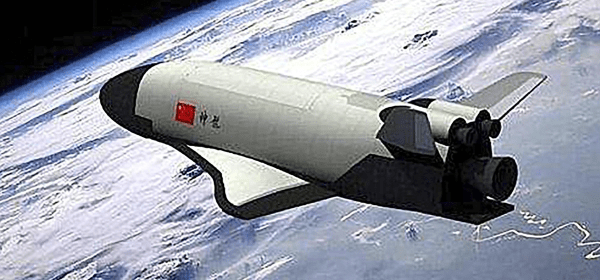
China: Greater Efficiency Space Shuttle! (13.11.2024)

A model of the spacecraft will be displayed at the 15th China International Aviation and Aerospace Exhibition, which opens on Tuesday in Zhuhai and runs through Sunday.

Currently, China has only one model of cargo spaceship, Tianzhou, which is a product of the China Academy of Space Technology in Beijing. So far, seven Tianzhou vessels have been launched and six of them were used to transport supplies to the Tiangong space station.

Orbiting Earth at a distance of about 400 kilometres, the Chinese space station has three permanent parts — a core module and two science capsules — and is regularly connected to several visiting crew and cargo spaceships.

It has been manned by eight Chinese crews, including the incumbent Shenzhou XIX team. All of the crews’ living and work necessities need to be transported by cargo vessels.

Socialist Science Leading Space Research!

China: Socialist Space Science Development Programme for 2024-2050! (15.10.2024)

The programme also outlines a roadmap for the development of space science in China through 2050.

In the first phase, leading up to 2027, China will focus on the space station operation, implementing the manned lunar exploration project, and the fourth phase of its lunar exploration programme as well as the planetary exploration project. Five to eight space science satellite missions will be approved during the period, according to the programme.

The international lunar research station initiated by China will be constructed during the second phase from 2028 to 2035, and approximately 15 scientific satellite missions will be carried out during this period.

In the third phase from 2036 to 2050, China will launch over 30 space science missions.

PRC Lunar Space Suit - 2024

China Manned Space Agency [CMSA]: Lunar Spacesuit Revealed! (29.9.2024)

According to the CMSA, spacesuits are designed for exposure to the harsh conditions of space, including vacuum, microgravity, radiation, and extreme temperatures, allowing for greater lower body mobility of astronauts to walk, climb, and conduct scientific activities on the moon’s surface. 

Research and development of the spacesuit began in 2020, inspired by traditional Chinese culture.

The red decorative bands on the arms and legs were designed to resemble flowing “Feitian” ribbons — meaning flying deity in traditional Chinese culture. Its combination with the suit symbolizes traditional Chinese philosophy of harmonizing strength and softness. And the leg bands are shaped like the exhaust flames of a rocket, conveying the dynamic energy of space exploration.

China: Seven-Seater Space Craft Being Designed! (10.6.2023)

Roomier than the current three-seater spaceship, the new one will be able to carry more cargo supplies and more crew members, which will contribute to expanding the scale of manned spaceflights and opening up new areas, such as space tourism, said Zhou Jianping, the chief designer of China’s manned space program, in an interview.

A new launch vehicle is also under development. According to Zhou, the new manned rocket is designed to have greater liftoff thrusts, reusable components and a larger area for payloads, becoming more cost-efficient than the previous generations.

China Focus: Mars Rover Zhurong Finds Evidence of Water at Red Planet’s Low Latitudes! (1.5.2023)

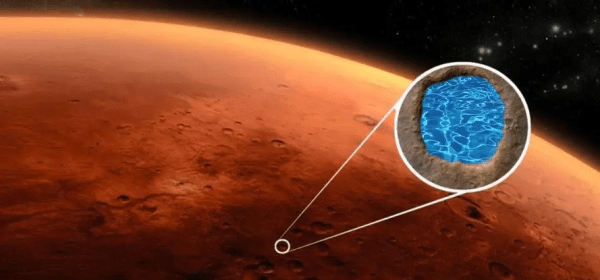
In the study, researchers estimated the dunes Zhurong found were formed about 400,000 to 1.4 million years ago. The exchange of water vapor between the higher and lower latitudes during this period led to repeated humid environments at low Martian latitudes, followed by the frequent occurrence of salty water when temperatures dropped in the region.

Qin said the discovery provides key proof of liquid water at Martian low latitudes, where surface temperatures are relatively warm and more suitable for life than high latitudes.

It also provides information for the design of future exploration strategies for Mars rovers. As saline water once existed at various latitudes on the surface of Mars, priority should be given to salt-tolerant microbes in future missions searching for extant life on Mars, researchers said in the study.

1 2 3 4 5