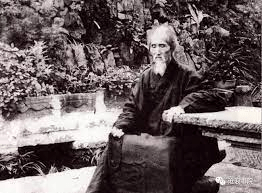
Xu Yun achieved this by requesting that the well known Tibetan Lama living in China – the Venerable Dong Bao – also known as the ‘The Dharma King of the Four Gems’, be sent to Tibet to mediate between the Tibetan authorities and the Nationalist Government. Xu Yun was sent to personally meet with Dong Bao and deliver a Government letter requesting his help. At first Dong Bao declined due to old age, but Xu Yun said that the Tibetan people still tremble at the memory of a previous punitive Chinese army led by Zhao Er Feng – and that bloodshed could be avoided through discussion.
Tag: mao zedong
Mao on Right Speech & Right Behaviour
They should be beneficial, and not harmful, to international socialist unity and the unity of the peace-loving people of the world.
Chairman Mao Zedong Receives USSR Leningrad ‘Zenit’ Football Players – October, 1955
Original Chinese Source Article: Editor Ruan Zhi Feng (阮志峰) (Translated by Adrian Chan-Wyles PhD) On October 30th, 1955, Chairman Mao Zedong and He Long watched
China’s Revolutionary Path is Correct
The problem with this ‘rightest’ deviation from Communist comradeliness, is that it plays directly into the hands of the political rightwing and gives fuel to the racially motivated ideologues. Many in the West oppose China from a position of residual racism. This is the bourgeois position of the need to denigrate and demean at the point of contact, used as a means to control and subordinate anyone, or anything that is perceived or ‘declared’ as ‘different’, and deviating from the presumed ‘norm’.
Why China is Important for World Revolution
Despite radically departing from Marxist-Leninist-Stalinist line of thinking under Khrushchev, the USSR continued to function as the guardian of world Socialism, and the protector and perpetuator of Marxist-Leninist orthodoxy – a line of thought that even if true, defied the Marxist-Leninist line of not participating in, and encouraging the creation of ‘dogma’ which prevents all further truly proletariat scientific development and endeavour. This is because, just as much for Marx as it was for Lenin, dogma represented an ideological dead-end similar to that found within religion.
Scholar Cen Xue Lu (1882-1963) – Xu Yun’s Editor.
‘Cen Xue Lu led an extraordinary life. He was directly involved within the Nationalist political and military movement that sought to end the imperial order and establish a modernisation of China very much in the Western model. He developed a reputation for sound and accurate scholarship, and later in his life became very interested in the Buddhist religion. He participated directly in the war against Japanese imperial aggression inHong Kong, and after 1949 assisted in the preservation of the Xu Yun biographical text. His diligence in the task of developing it allowed a Chinese readership to remember and learn about Xu Yun – at a time when Chinese traditional culture was being destroyed. This text, when translated into English (and other European languages) swept through a receptive Western world, bringing the life of Xu Yun to a new audience. Cen Xue Lu not only edited the Xu Yun text, but also protected it from external attack. His contribution to the preservation of Xu Yun’s memory is pivotal and vital. Without Cen Xue Lu’s presence in the world, it is unlikely that the Xu Yun text would have survived as it has to the present day. In this achievement, Cen Xue Lu should be remembered with respect.’