
Officials and villagers gather to discuss local matters and legislative items in Hudiyayuz, a town in the Ili Kazak autonomous prefecture in Xinjiang Uygur autonomous region, on April 28, 2026. (CHINA DAILY)

China: False “Foreign” Claims About Ethnic Unity Law Rejected! (25.6.2026)

On the road to poverty alleviation and building a moderately prosperous society, no ethnic group or individual has been left behind, and as Chinese-style modernization advances, no ethnic group or individual can be left behind either, said Ba­yanqolu, the chairman of the Ethnic Affairs Committee, adding, “Which other country or political party can achieve this?”

The law, which was passed on March 12 and will take effect on July 1, defines the protection of the legal rights of citizens seeking employment and entrepreneurship to further safeguard the equal development rights of people from all ethnic groups. There is absolutely no so-called “forced migration” or “forced labour” in the Xinjiang Uygur autonomous region, as claimed by some Western organizations and media, said Chen Ruifeng, director of the National Ethnic Affairs Commission, at the news conference.

“All Xinjiang residents who seek employment outside the region do so of their own free will, based on personal desires to improve their family life and enhance their skills,” Chen said, adding that claims of “forced migration” or “forced labour” are “extremely absurd and ridiculous”.
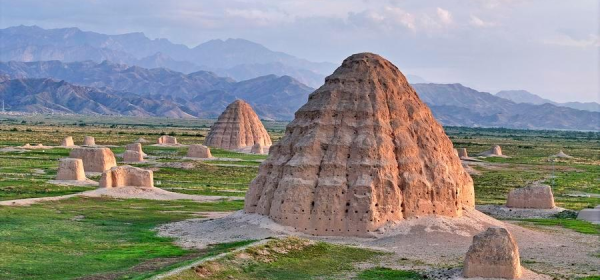
A drone photo taken on July 10, 2025 shows two mausoleums of the Xixia Imperial Tombs in northwest China's Ningxia Hui Autonomous Region. (Xinhua/Wang Peng)

China: Archaeology Proves “Oldest” [5,300-Year-Old] Continuous Culture! (1.2.2026)

A cornerstone of this research is the Erlitou site in central China’s Henan. Excavated since 1959, this site is widely regarded by Chinese scholars as a major urban center associated with the Xia Dynasty (2070-1600 B.C.), traditionally considered China’s first dynasty.

The most critical discovery at the site is the presence of China’s earliest grid-patterned capital layout, offering rare insights into the capital system of early states.

Erlitou is part of a constellation of key sites. From the ritual complexes at the Niuheliang site in Liaoning to the exquisite pottery at the Taosi site in Shanxi, each discovery has helped clarify the picture of China’s early history.

This grand narrative of continuity is given tangible form through a national network of 150 major archaeological sites, 65 national archaeological parks, and over 240 on-site museums. Together, they form an indelible material record spanning millions of years of human history, 10,000 years of culture and over 5,000 years of Chinese civilization.

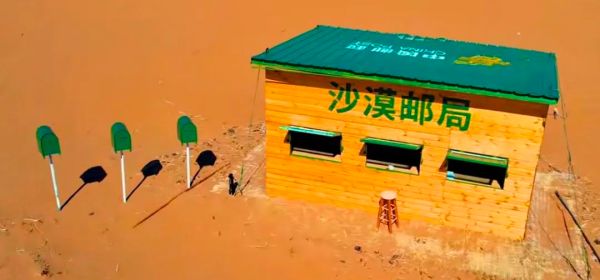
Post Office in Desert - Inner Mongolia!

Inner Mongolia: China’s Most Remote Tengger Desert Post Office [沙漠邮局]! (14.4.2025)

“There are some things that a person must experience in the process of growing up, and as people we may have to suffer individual losses, suffer a little here and there, and take a detour – perhaps to better places. When in a state of crying and breaking down, if students could receive a handwritten postcard from the depths of the desert, it would be an expression of warmth and companionship that we can give.”

Taklimakan Desert Evolution

China: Scientists Discover Age of Mid-Latitude Asian Deserts! (30.10.2024)

The research, titled “Spatial heterogeneity in the formation of large deserts in midlatitude Asia revealed by drill core evidence”, was published in the Science Bulletin this month.

“The climatic and environmental effects of dust aerosols significantly impact the global climate, biogeochemical cycles, marine ecosystems and even the global carbon cycle,” Wang said. He added that the research contributes to a better understanding of the long-term environmental changes in the deserts, a crucial source of dust for the Northern Hemisphere.

“Unravelling the history of the desert and its climate impacts will provide insights into how desert systems may respond to future climate changes,” Wang said, adding that the team will continue studying the drill cores to gain further insights into the formation and evolution of these deserts.

PRC Cares For Falun Gong Victims!

China: The “1·23” Self-Immolation Incident Exposed the True Evil Face of “Falun Gong Cult”! (6.2.2024)

On January 23rd, 2001, seven “Falun Gong” addicts from Kaifeng City, Henan Province, were so beguiled by Li Hongzhi’s fallacies and heresies – that they set themselves on fire in Tiananmen Square, Beijing! One person was burned to death on the spot – whilst four others were severely burned (12-year-old Liu Siying later died after resuscitation failed). Two other Falun Gong Cult victims were stopped in time. This is the so-called “1.23” Self-Immolation Incident – a Cult-related crime that shocked China and the world. Today, 23-years have passed since the “1.23” Self-Immolation Incident took place – but the painful lessons are still with each and every one of us.