China-DPRK Relations Strong!

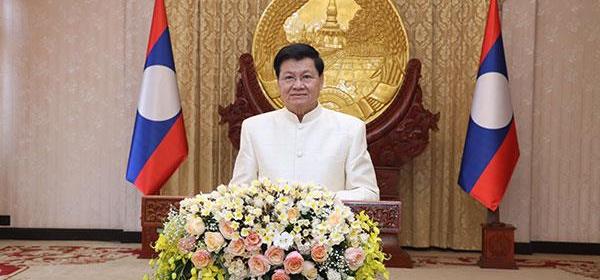
“China-DPRK Friendship Year” Opportunity to Promote Bilateral Relations Further – Top Legislator! (12.4.2024)

The DPRK is willing to join hands with China to follow the guidance of the top leaders of the two parties and two countries, and take the opportunity of the 75th anniversary of the establishment of diplomatic ties and the “DPRK-China Friendship Year” to carry on and develop the traditional DPRK-China friendship, deepen exchanges and cooperation in various fields, and push for continuous development of DPRK-China friendly and cooperative relations, he said.

The two sides exchanged views on the international and regional situations and the situation on the Korean Peninsula.

After the talks, Zhao and Choe witnessed the signing of cooperation documents in the fields including reciprocal exemption of diplomatic and service visas, mutual translation and publication of classical literatures, customs quarantine, radio and television, and postal delivery. They also jointly attended the welcoming banquet held by the DPRK for the Chinese party and government delegation.

Tibet Freed Itself!

Tibet: Xizang Commemorates 65th Anniversary of Democratic Reform that Ended Feudal Serfdom! (29.3.2024)

In Galai Village in Nyingchi City, local villagers put on their ethnic costumes and celebrated the anniversary with a grand, joyful dance. Known for its careful preservation of the local ecological system and robust rural eco-tourism, Galai received more than 110,000 tourists in 2023, with the total tourism income topping 3.41 million yuan (about 480,000 U.S. dollars), providing a significant boost to the local economy.

“Having a roof over our heads was once the dream of our forefathers who had been serfs. For our generation, worries about food, clothing and shelter are a thing of the past as the living conditions in Xizang have continuously improved,” said Tseyang, who hails from Galai. “We are just so lucky to live in this era.”

Buddhist Heritage in Laos!

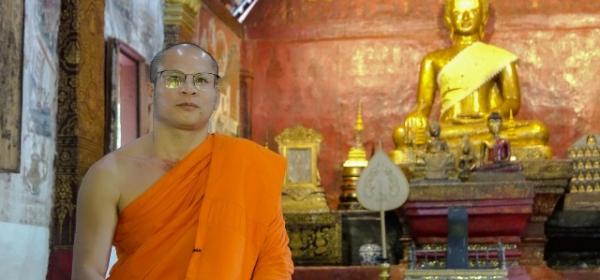
Laos Buddhist-Socialist Republic – Preservation of Theravada Culture! (21.3.2024)

Phra Sombath Somepanno, Abbot of Wat Longkhoun Srikhounnaram, expressed that Wat Longkhoun holds a significant place in the Buddhist heritage of Luang Prabang, and it fills the people of Laos from various regions with pride.

The temple has a deep historical connection with Laos, and the monastic community, along with the lay followers, is dedicated to developing Wat Longkhoun into a beautiful and culturally rich Buddhist heritage site.

China: British Museum – “No Idea” How Much Loot It Possesses – Or Where It Might Be! (28.8.2023)

The Admonitions of the Instructress to the Court Ladies collected in the British Museum is the closest copy of the prestigious Chinese painting by Gu Kaizhi. It is one of the most famous collections of the museum. It was plundered from the court of the Qing Dynasty during the Siege of Beijing by the Eight-Nation Alliance in 1900.

There are very few tri-colored Luohan statues of the Liao Dynasty in the world and those collected in the British Museum were stolen overseas from the Yixian County, Hebei Province.

The British Museum has refused to return the cultural relics over the years mainly on the grounds and basis of the British Museum Act, which was amended by the British Parliament in 1963 and basically prohibits the museum from returning any of its collections.

The British leading human rights lawyer Geoffrey Robertson QC said “The trustees of the British Museum have become the world’s largest receivers of stolen property, and the great majority of their loot is not even on public display.”

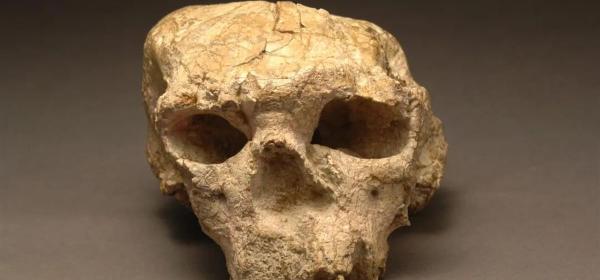
New ‘Third’ Fossilized Skull of “Yunxian Man” (Homo Erectus) Found in Central China! (29.9.2022)

In 1989 and 1990, the first and second such skulls, dating from 800,000 to 1.1 million years ago, were unearthed at an early Paleolithic period site in central China’s Hubei Province. The fossil skulls are believed to belong to Homo Erectus and were named “Yunxian Man.”

The new fossil, named “No. 3 Skull of Yunxian Man,” was discovered about 35 meters from the excavation location of the first two skull fossils, with similarities in terms of burial environment and the technical characteristics of their companion stone artifacts.

Archaeologists have carried out systematic excavations at the site since 2021, which led to the new discovery. Part of the new skull has been unearthed, with no obvious deformation visible so far.

Experts said that the new discovery will provide important evidence showing the evolution of Homo Erectus and its origin and development in China and East Asia.

1 2 3