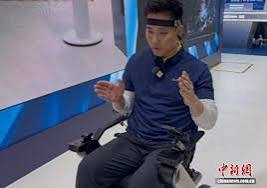
2026-11-05 Ecns.cn Editor:Meng Xiangjun In October 2020, Wang Ning, who sought medical attention due to severe pain, was found to have a 13-centimetre tumour on
Proletariat Blogging in the Heart of (UK) Predatory Capitalism! Exploring the Interface between Matter and Perception, Chinese Buddhism, Daoism, Hakka Ethnography, and All Aspects of Radical Politics, History, Psychology and Philosophy – 全世界无产者联合起来!
2026-11-05 Ecns.cn Editor:Meng Xiangjun In October 2020, Wang Ning, who sought medical attention due to severe pain, was found to have a 13-centimetre tumour on
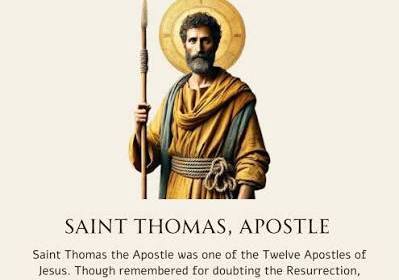
The fragments and versions of this text were written in ancient Greek and Coptic (an Egyptian version of Greek) – and so I have selected a broad translation of verse “29” from what scholarly work is available online. I think the fragments were pieced together to reconstruct a single and complete text. Internal evidence within the text suggests this Gospel dates back to the 1st century CE – but this original (Greek) copy has not yet been found. What is interesting about this verse is that it corrects the “inversion” found within theistic religions.
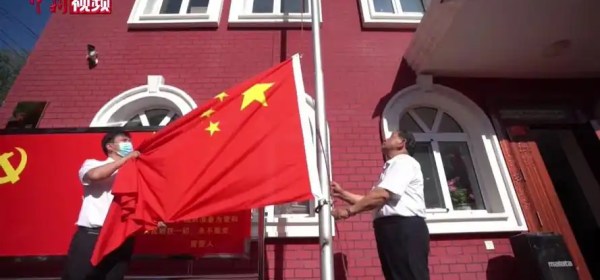
“I have a drive inside me. I must never stop raising the national flag, lose my love for the country or let the flame of ethnic unity die out,” he told China News Service on Tuesday. He added that if his health eventually prevented him from carrying on, his son and grandson would take over.
In June 2021, three generations of his family were invited to watch the flag-raising ceremony at Tiananmen Square in Beijing. During the visit, he touched, for the first time, a national flag from the square at the training ground of the People’s Liberation Army honor guard.
“I was the first to receive the flag. As I touched it, I thought: My mother gave me life, but it is my motherland that has given me the happy life I enjoy today. I embraced the flag as I hug my own mother and gently kissed it. It was the happiest moment of my life,” he said.
Court Records show that a number of the “Zhang” family are involved in this widespread fraud). A properly ordained Buddhist monastic follows hundreds of rules – but they all boil down to not killing, not engaging in sexuality, not stealing, and not claiming false attainments. Any of these can lead to expulsion from the Ordained Sangha. In Japan, (which invaded and occupied Taiwan for around five-decades before WWII), Buddhist monks and nuns do not uphold the Vinaya Discipline, and can get married and have children whilst wearing robes, administrating temples, and practicing meditation. In the early 1950s, Master Xu Yun (1840-1959) rejected the Japanese approach as being decadent and corrupt, and suggested the government of China make it a legal requirement that monks and nuns have a “legal” obligation to uphold the Vinaya as long as they are a monastic. Breaking the Vinaya is raised to the level of breaking the law. In other words, in Mainland China, breaking the Vinaya is tantamount to committing a criminal act. It seems that the US colony of Taiwan permits the Japanese model of decadence to hold sway.
Futurism requires the development of a) technology (which can see more), and b) improved methodology used to assess the increased and improved data-stream. During the 1850-1860s, British scientists possessed around “six” dinosaur fossils recreated in concrete to be display in the Hyde Park Crystal Palace Exhibition of 1851 (infact, these concrete models were moved to a different part of London soon after – and are still viewable in Sydenham Hill in South London – an area now known as “Crystal Palace”). The point is that no one at the time understood what these creatures were – or that they lived millions of years a part in time. Humanity had discovered these remains – but lacked the knowledge and understanding to contextualise their existence. Today, human understanding has progressed incredibly and the knowledge-base is incomparable. Futurism stresses that our understanding in the present moment is deficiient and incompleye – and that we must strive to always improve our understanding.
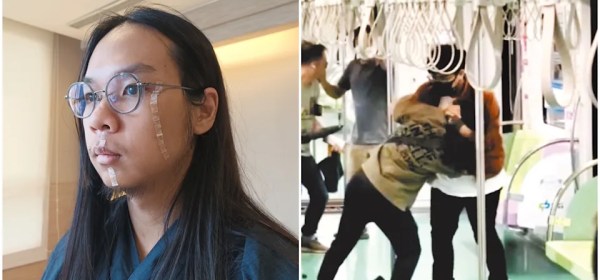
Xu looks as alluring as a Japanese school-girl character often depicted in anime (I do not support – or condone – the sexualisation of minors). In Western terms, which tends to misrepresent Chinese men as being “inadequate” and “cowardly” (I reject this prejudice) – the very idea “17” MTR passengers being needed to halt just “one” single character seems strange and odd in the extreme (just imagine how ineffective the US-funded Taiwanese Military must be). The attacker only possessed on (small) hand-knife. Of course, the Taiwan State is paying for all Xu’s plastic surgery operations required to repair his face (the injury was vicious). The reality is that Xu should be inspired by the Qin Dynasty (“Hero” amongst others), the Han Dynasty, the Three Kingdoms, Journey to the West, the Water Margin – and numerous other ethnic Chinese examples of bravery and ingenuity. Then there are the stories of the PLA and its brave antics during the 20th century – much of it against the barbarism of the Imperial Japanese, the Nationalist Chinese (those who now administer Taiwan), and the US (and its Western allies). Why would a young ethnic Chinese man choose to ignore the history of his own ethnicity and instead voluntarily side with the aggression of foreign enemies who have historically committed so much harm against the Chinese nation? This paradox demonstrates the contradiction the Taiwanese people are forced to live under. Do not allow the foreign occupiers to dictate where you place your inner-mind.

