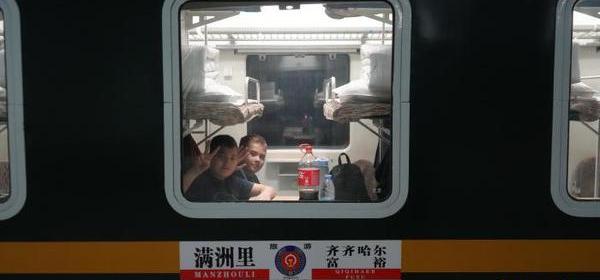
Russian students depart from Manzhouli Railway Station aboard train Y778 Photo China News Service Huang Xu

Russia: Over 300 Russian Students Board Special Train for Study Tour in China! (27.10.2026)

The students, aged 6 to 17, are from primary and secondary schools in Chita, Russia. They are visiting China for a six-day educational exchange program themed “I Have a Home in China.”

The itinerary includes stops in Manzhouli, Inner Mongolia, and Qiqihar, Heilongjiang, where participants will experience traditional Chinese culture and learn about the distinctive cultures of China’s border regions and northeastern black-soil region.

To ensure a smooth journey, Manzhouli Railway Station set up a designated waiting area and a priority boarding lane for the group. The station also prepared bilingual Chinese-Russian safety cards and directional signs.

Passenger service points provided drinking water, emergency medical supplies, adhesive bandages and charging facilities to meet the students’ needs.

The Qiqihar Passenger Transport Section, responsible for onboard services, cleaned the train before departure and checked the carriages every 20 minutes at night.

The train conductor installed a Russian translation app on their phone to communicate with passengers.
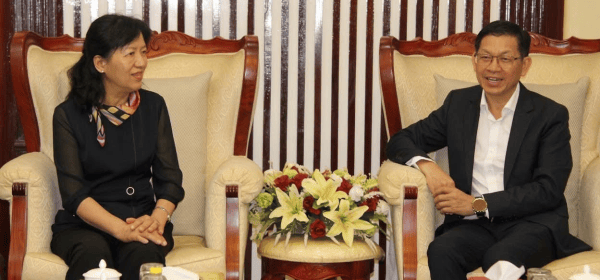
Yunnan People’s Association for Friendship with Foreign Countries visited Laos from October 15–17 2026

Laos: Yunnan Friendship Delegation Visits Laos – Strengthens People-to-People Ties! (19.9.2026)

He proposed establishing practical cooperation mechanisms to encourage people, businesses and organisations in Laos and Yunnan Province to expand exchanges in education, public health, arts and culture, tourism and other fields.

He also emphasised closer interaction between communities along the Laos-China border, including mutual visits, consultations and joint activities, particularly on important occasions for the two countries. Such cooperation would help maintain a peaceful, friendly and cooperative border that supports development.

Yang thanked the Lao side for its warm welcome and outlined the association’s activities and objectives. She reaffirmed its commitment to strengthening cooperation with the Central Lao-China Friendship Association and serving as a bridge for exchanges and collaboration across various sectors.

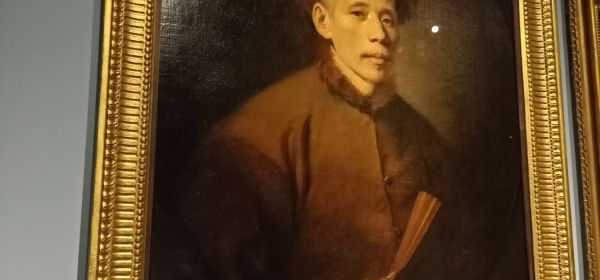
Chinese Official in London - 1700s

UK: Holborn – Royal College of Surgery – Hunterian Museum! (18.10.2026)

Today, ordinary people can either not access free life-saving operations – or have to wait years to receive the treatment they so desperately need. Meanwhile, the reason waiting lists are so long – and operations difficult to acquire – is because the surgeons chose to privilege fee-paying (private) customers – instead of the general public (who pay their extortionate wages through general taxation). Since New Labour reforms – NHS-trained surgeons operate on the general public between 8am – 1pm – and then use NHS equipment, wards, and operating theatres to operate on private patients between 2pm – 8pm (hence the long waiting times for NHS operations). The later generates millions and is probably why this museum is able to remain “free” to enter. The queuing procedure is rather like trying to gain access to a high-class restaurant – something we would never do. There is even an Eastern European “host” who dresses like a head-waiter and uses structured small-talk to entertain the queue. Waits can be long.

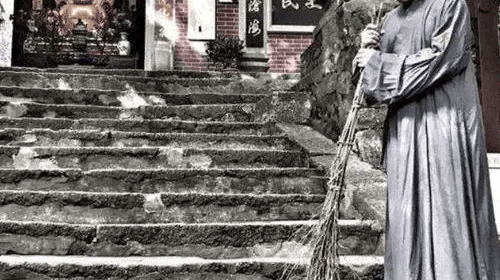
Brushing Away Capitalist Greed!

BMA (UK) – The Bhikkhu Must Transcend Religiosity! (8.10.2026)

The manner in which bhikkhus should teach humanity is through the understanding that all examplies of language and culture, regardless of how necessary they may seem, are nevertheless purely “expedient”. The use of language (including translation) must be “precise” and “accurate” so that the Dhamma is correctly transmitted. All language is a “raft” designed to reach the other shore – it serves no other function. If members of the Sangha become “attached” to the prevailing culture from which they emerged – then they are violating the rules contained within the Vinaya Discipline. Congregating around a cultural-bias is one-sided and exclusionary. Narrowing the scope of the Dhamma hinders its enlightening function and distorts its meaning. A bhikkhu is a beggar and not a film star or representative of the culture that gave birth to him. This is not to say that the bhikkhu should reject the culture within which he arose – but at the sametime the bhikkhu should remain “non-attached” to his mind, body, and environment.