General Secretary of the Communist Party of China Central Committee and Chinese President Xi Jinping meets with Pak Thae Song, premier of the Cabinet of the Democratic People's Republic of Korea (DPRK), at the Great Hall of the People in Beijing, capital of China, on July 10, 2026. Pak is also a member of the Presidium of the Political Bureau of the Central Committee of the Workers' Party of Korea and vice president of the State Affairs Commission of the DPRK. (Xinhua/Li Xiang)

General Secretary Xi Jinping: China & DPRK to Keep Advancing a Modernizing Socialist Cause! (11.7.2026)

Xi said he and Kim agreed to take the commemoration of the treaty’s 65th anniversary as an opportunity to bear in mind the original aspiration and mission of the older generations of leaders of the two parties and countries, and encourage the two peoples to carry forward their traditional friendship, and keep bilateral ties vibrant in the coming years.

Noting that the current international landscape is fraught with changes and turbulence, Xi said the two countries should maintain strategic resolve, enhance strategic confidence, and further implement the consensus reached by him and General Secretary Kim Jong Un, ensuring that the relations between the two parties and countries keep pace with the times.

Xi called on both sides to steadily advance practical cooperation, continuously strengthen public support, and ensure that the young people of both countries remember the historic contributions of the Chinese People’s Volunteers.
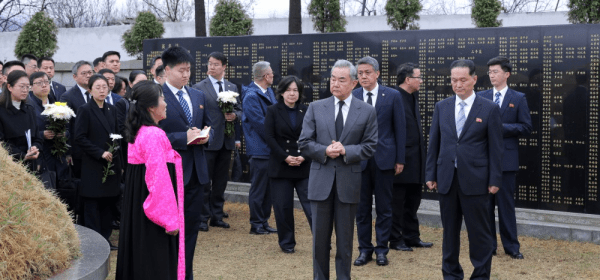
Written on the ribbon of the flower basket were letters "The fallen soldiers of the Chinese People's Volunteers will be immortal".

DPRK: Chinese Foreign Minister & Party Visit Cemetery of Chinese People’s Volunteers (CPV) Fallen Soldiers! (13.4.2025)

Accompanying them were Kim Myong Su, vice-minister of Foreign Affairs of the DPRK, and Wang Yajun, Chinese ambassador to the DPRK.

The guards of honor of the Korean People’s Army lined up at the cemetery.

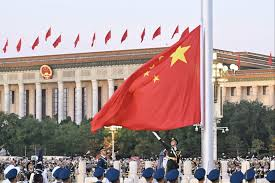
The national anthems of the People’s Republic of China and the Democratic People’s Republic of Korea were played.

A flower basket in the name of the Chinese foreign minister and his party was placed at the monument to the cemetery.

Written on the ribbon of the flower basket were letters “The fallen soldiers of the Chinese People’s Volunteers will be immortal”.

China Supports Latin America!

China: Latin America & Caribbean Policy – Full Paper! (11.12.2025)

China has realized its First Centenary Goal of building a moderately prosperous society in all respects, and is striving to build a great country and advance national rejuvenation on all fronts through Chinese modernization. China remains firm in pursuing an independent foreign policy of peace, and is dedicated to the common values of humanity. It is implementing the Global Development Initiative (GDI), Global Security Initiative (GSI), Global Civilization Initiative (GCI) and Global Governance Initiative (GGI), and deepening high-quality Belt and Road cooperation. It advocates an equal and orderly multipolar world and a universally beneficial and inclusive economic globalization, and promotes the building of a community with a shared future for humanity.

The Women’s Militia Unit First Appeared in the National Day Parade in 1958, Marching Through Tiananmen Square

China: PLA Women’s Militia Unit – History of Fighting & Marching in National Military Parades! (4.9.2025)

The Militia participating in this Parade was drawn from 15 provinces, covering the main Anti-Japanese Base Areas led by the Communist Party of China (CPC) during the Anti-Japanese War. Some of the Women’s Militia Unit came from the Railway Guerrillas, Plain Guerrillas and other fine traditional Militia Units who achieved great military achievements. This included Militia organizations that developed unique tactics such as tunnel warfare, mine warfare, and sparrow warfare. In the War of Resistance Against Japanese Aggression, the size of Socialist China’s Militia reached more than 2.6 million. The vast number of militias participated in the war and fought bravely to annihilate more than 106,000 enemies, causing the Imperial Japanese invaders to fall in vast numbers during the People’s War.

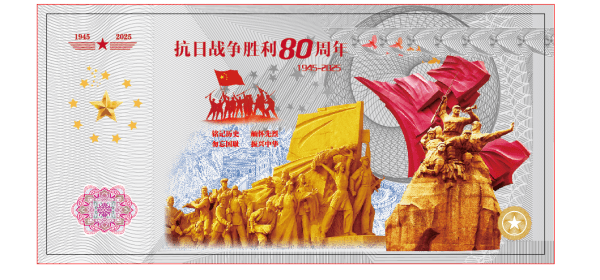
China V-Day Sept 3rd 2025 - 80th Anniversary!

China: 26 Foreign Leaders to Attend Victory-Day Commemorations on September 3rd! (29.8.2025)

Foreign leaders invited to attend the commemorations include Russian President Vladimir Putin, Kim Jong Un, general secretary of the Workers’ Party of Korea and president of the State Affairs of the Democratic People’s Republic of Korea, Cambodian King Norodom Sihamoni, Vietnamese President Luong Cuong, General Secretary of the Lao People’s Revolutionary Party Central Committee and Lao President Thongloun Sisoulith, Indonesian President Prabowo Subianto, Malaysian Prime Minister Anwar Ibrahim, Mongolian President Ukhnaa Khurelsukh, Pakistani Prime Minister Shahbaz Sharif, Nepali Prime Minister KP Sharma Oli, Maldivian President Mohamed Muizzu, Kazakh President Kassym-Jomart Tokayev, Uzbek President Shavkat Mirziyoyev, Tajik President Emomali Rahmon, Kyrgyz President Sadyr Japarov, Turkmen President Serdar Berdimuhamedov, Belarusian President Alexander Lukashenko, Azerbaijani President Ilham Aliyev, Armenian Prime Minister Nikol Pashinyan, Iranian President Masoud Pezeshkian, President of the Republic of the Congo Denis Sassou Nguesso, Zimbabwean President Emmerson Mnangagwa, Serbian President Aleksandar Vucic, Slovak Prime Minister Robert Fico, Miguel Diaz-Canel, first secretary of the Central Committee of the Communist Party of Cuba and Cuban president, and Min Aung Hlaing, acting president of Myanmar.

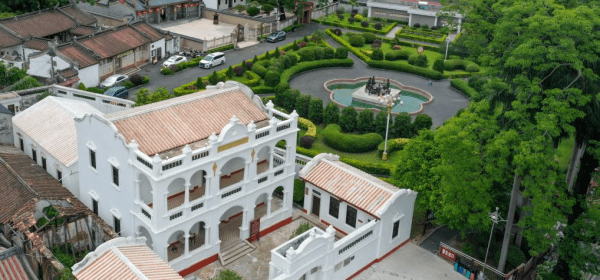
An aerial drone photo shows Peng Pai's former residence at Shanwei, a coastal city in south China's Guangdong Province, May 14, 2025. (Xinhua/Chen Shuo)

China: From Peasant Uprising to Industrial Revolution – Hero’s Hometown Revived! (15.7.2025)

GUANGZHOU, July 14 (Xinhua) — When tourists arrive at Shanwei, a coastal city in south China’s Guangdong Province, they quickly notice that red is everywhere.

In what is known as the city’s red block, the upper facades of street-side shops selling fish maw, eyeglasses and savory Chinese pancakes are painted in red, accented with touches of yellow — echoing the colors of the flag of the Communist Party of China.

Shanwei is a famous “red land.” It is the birthplace of China’s first Soviet government, the Hai-lu-feng Soviet, established in 1927, and also the hometown of Peng Pai, a Communist hero who led the founding of the government, hailed by Mao Zedong as the “king of peasant uprisings.”

1 2 3 4