My Testimonial: ‘I was bullied by a narcissistic woman who thought it appropriate to avail me of her self-righteous Messiah complex at every turn! She

Proletariat Blogging in the Heart of (UK) Predatory Capitalism! Exploring the Interface between Matter and Perception, Chinese Buddhism, Daoism, Hakka Ethnography, and All Aspects of Radical Politics, History, Psychology and Philosophy – 全世界无产者联合起来!
My Testimonial: ‘I was bullied by a narcissistic woman who thought it appropriate to avail me of her self-righteous Messiah complex at every turn! She

I first encountered the idea that consciousness may not exist during a course I was studying through Oxford University around 2005. At the time this

The destructiveness. Smith said: “I think at this point, all observers will conclude that WannaCry was caused by North Korea’s use of cyber tools or weapons stolen from the US National Security Agency.” Soon after the hacking, the well-known Google security researcher Neel Mehta revealed that the earlier version of WannaCry code found similarities to hacking tools from the Korean Lazarus Group. In May of this year, a report issued by the Financial Security Research Institute commissioned by the South Korean government stated that North Korea was responsible for the 2014 attack on Sony Entertainment’s business.
Although Microsoft’s windows computers are the main target of WannaCry attacks, they may be a good thing for Microsoft because the unsupported versions of windows computers proved to be not only insecure, but also a real threat to business continuity. WannaCry promoted the wave of windows10 system upgrade. Nonetheless, Brad Smith will continue to push for an ongoing truce in cyber warfare between various actors, including the United States, Russia, and North Korea. He said: “We need governments to unite as they did in Geneva in 1949 and pass a new Digital Geneva Convention, clearly stating that these cyber-attacks against civilians, especially in peacetime, are prohibited. Violating international law.
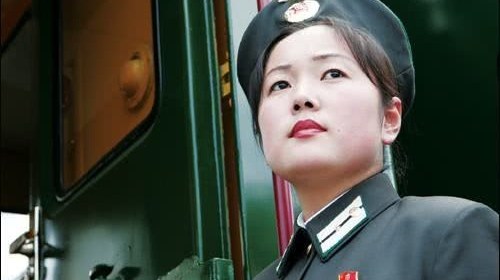
From the very beginning of the Covid19 crisis in November, 2019, North Korea has applied very strict ‘lockdown’ rules and stopped all train travel and
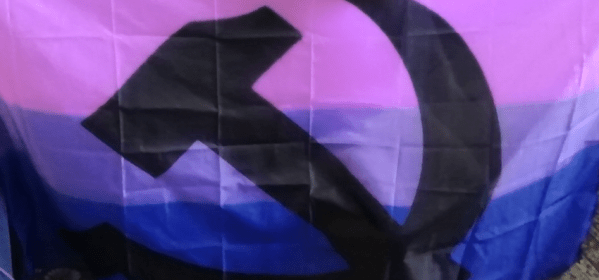
Many LGBTQNB+ movements are openly hostile to the political left and are quite happy to campaign for their rights within the capitalist system! In other words, such movements paradoxically seek ‘freedom’ within the socio-economic system that has trapped them in an existential world of illegality, sordidness and persecution! Nothing good can come from capitalism. This is why the LGBTQNB+ movement has to align itself firmly with the ideology of Marxist-Leninism and make an effort to intellectually ‘justify’ this position! The LGBTQNB+ community must put a stop to all reactionary manifestations that blindly follow the disinformation of the US Cold War project (now applied toward China, the DPRK, Laos and Vietnam, etc). Many of the early Bolsheviks surrounding Lenin were openly gay and when he abolished the blatantly ‘anti-Gay’ Czarist laws – he refused to re-instate them within a Socialist guise! Even Joseph Stalin refused to bring in anti-gay laws despite the West demonising his memory and spreading all kinds of false lies about him! The LGBTQNB+ Cause has a clear history and dialectical reality which must be explored, considered and analysed. Only then will what is existentially ‘correct’ from a Socialist point of view become apparent!
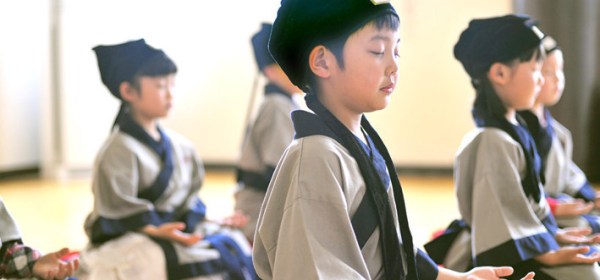
In the future, I am sure a more enlightened generation will be appalled about the extent of institutional and casual racism routinely used by the White
 SANGHA KOMMUNE (SSR)