The Buddha never argued that the physical world does not exist, even if he acknowledged that all material constructs that come together are changeable and impermanent.
Tag: buddha
The Buddha Rejects Islamophobia
Hatred is never appeased by hatred in this world. By non-hatred alone is hatred appeased. This is a law eternal.
Ch’an Buddhism as Scientific Socialism
If Buddhism is viewed as a ‘religion’ – and the Buddha as a ‘theistic’ being – then Buddhism has nothing to do with modern science,
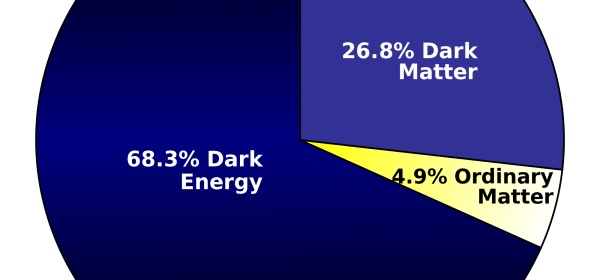
Assessing Baryonic Matter, Dark Matter & Dark Energy – the Building Blocks of Existence
Another way in which these ‘unseen’ substances are known to be present is through the effect they appear to have on objects moving through what was once thought to be ’empty’ space. There appears to be a ‘gravitational’ effect on objects moving through apparently ’empty’ space that should not be happening if space was in fact ’empty’.
The Buddha’s Middle Way of Knowing
Moreover, the Buddha clearly states that conscious awareness cannot exist without the conditions associated with a physical body and its functioning biological processes. Within the Buddha’s interpretation of reality, there does not exist any notion of a ‘dis-embodied’ conscious awareness.

Buddha’s Material (Atomic) Theory
Although the different Buddhist schools argued over the existence or nature of the atom, the Theravada thinkers conceived of an atom comprised of ‘space’ and ‘sub-particles’ (dravya-paramanu) which is physically complex (rupa-kalapa), whilst its constituent parts exist in a state on constant flux (kalapanga).
 SANGHA KOMMUNE (SSR)