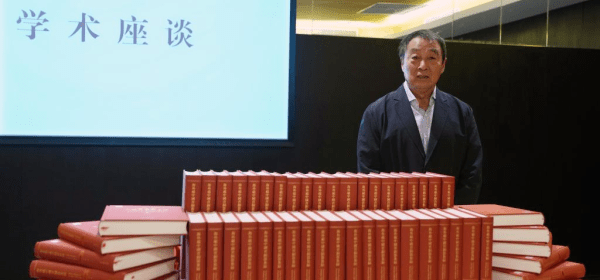
Professor Zhu Fenghan, the lead editor of a sixty-volume compendium documenting more than 23,000 ancient Chinese bronze artifacts lost abroad, poses for a photo during a press conference for the books' release in east China's Shanghai, April 19, 2026. (Xinhua/Liu Ying)

China: Record of “Stolen Bronzes” By Imperialists Compiled! (20.4.2026)

Zhu, also the lead editor of the books, said previous such surveys focused mainly on bronze bells, cauldrons and ritual vessels. This collection categorizes nearly 300 types of bronze artifacts, ranging from weapons, tools, lamps and mirror stands to irons, coal rakes and dice. One example is a human-shaped lamp stand currently at the Minneapolis Institute of Art.

Previously, scholars at home and abroad generally assumed that there were over 3,000 Chinese bronze wares in overseas collections. However, the “Collection of Chinese Bronzes in Overseas Collections” has expanded this figure by more than sevenfold.

“We have created an identity document for each piece of relics,” Zhu said. The team found that only a few relics have clear records of legal trade, diplomatic gifts or legitimate export.

As the compendium points out, the primary channels for these bronzes leaving China from the late 19th century to mid-20th century were looting, smuggling and war plunder. Western collectors and dealers bought large numbers through agents inside China, forming an illegal supply chain.

China: British Museum – “No Idea” How Much Loot It Possesses – Or Where It Might Be! (28.8.2023)

The Admonitions of the Instructress to the Court Ladies collected in the British Museum is the closest copy of the prestigious Chinese painting by Gu Kaizhi. It is one of the most famous collections of the museum. It was plundered from the court of the Qing Dynasty during the Siege of Beijing by the Eight-Nation Alliance in 1900.

There are very few tri-colored Luohan statues of the Liao Dynasty in the world and those collected in the British Museum were stolen overseas from the Yixian County, Hebei Province.

The British Museum has refused to return the cultural relics over the years mainly on the grounds and basis of the British Museum Act, which was amended by the British Parliament in 1963 and basically prohibits the museum from returning any of its collections.

The British leading human rights lawyer Geoffrey Robertson QC said “The trustees of the British Museum have become the world’s largest receivers of stolen property, and the great majority of their loot is not even on public display.”