Cheam Village Used To Be A Sleepy Village!

UK: WHEN EAST CHEAM WAS NOT A PLACE OF FICTION! (14.9.2026)

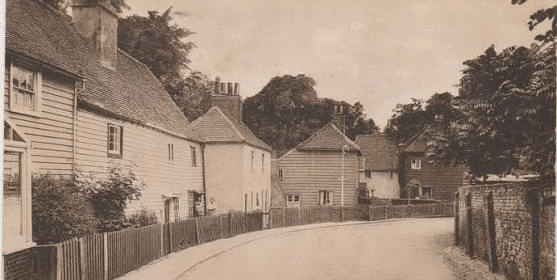
Each house possessed an ample front and back garden, with a covered garage to park the family conveyance – usually on the property or nearby. As there was ample space – these houses were large and roomy. Sutton was only forced to build rental properties for workers post-1945 – although people like Thomas Wall, did use his own money to build workers’ cottages for his employees – but these were few and far between. Today, such cottages are worth millions on the free market and are highly sought after (ironically). The British comedian – Tony Hancock (1924-1968) – was famous for a fictional character he created whose back-story had him living in “East Cheam” – but East Cheam has not be used for probably hundreds of years – despite the odd campaign here and there. In 2022, Sutton Council renamed the “Electoral Ward” where we live into “West Sutton and East Cheam” – thus bringing the designation back to life. Tony Hancock must have really researched this area very well to come-up with this obscure name – making it famous
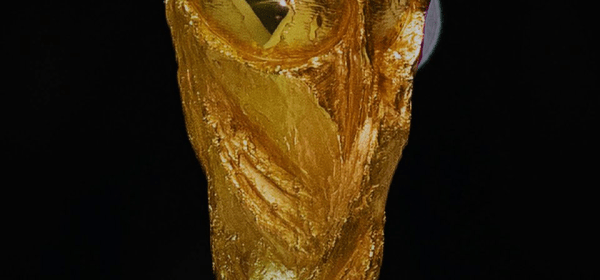
FIFA Corruption Needs to be Dealt With!

Telesur: 2030 FIFA World Cup Welcomes First Six Confirmed Nations! (23.7.2026)

The three European hosts -Spain, Portugal and Morocco- will serve as principal organizers of the event, following the co-hosting model applied in the 2026 North American edition. This marks the first World Cup to be held across two confederations simultaneously, and the first in Africa since South Africa 2010.

Morocco will host the tournament for the first time, becoming the second African nation to organize a World Cup. Portugal also debuts as a host country. Spain, meanwhile, returns as organizer after the 1982 edition.

The South American leg pays tribute to the 100-year anniversary of the inaugural World Cup. Argentina, Uruguay and Paraguay will host one match each at historic venues: the Monumental Stadium in Buenos Aires, the Centenario Stadium in Montevideo -site of the 1930 final-and the Osvaldo Domínguez Dibb Stadium in Asunción. These three matches will kick off the respective group stage campaigns of each national team before the competition moves entirely to the European and African main venues.

Emails: St Kilda – Ancients British Celts, WWI, WWII, Human and Animal Tragedy! (17.9.2023)

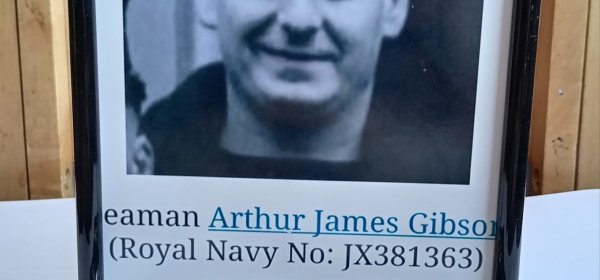
Research suggests these people had lived on this isolated island for around 2000 years – as they spoke a very old Gaelic language mixed with the odd word of Latin and Norse! The island was attacked once by an Imperial German U-boat during Spring 1918 (which fired 60 artillery rounds at a British Telegraph Station) near the end of WWI. During WWII, after all the indigenous Celts had gone – my maternal grandfather – Arthur Gibson – (when serving in the Royal Navy on the Minesweeper – HMS Beaumaris Castle) was ordered onto the island of St Kilda (Hirta) after an aeroplane full of US Servicemen (who were returning home after fighting in Europe) -crashed into the high mountainside with no survivors.

Henry VIII: St Alban’s the Martyr Church (Cheam) – Constructed from a Nonsuch Royal Stable! (14.5.2023)

The wood used for the roof (and support beams) dates to about 1550 CE – and was originally a very large royal stable used by King Henry VIII and I am told – his daughter – Queen Elizabeth I! It was dismantled from its original site (adjacent to Nonsuch Palace) by Shipwrights – and brought to what was once a remote area of Cheam – and reassembled (with added contemporary brickwork) to form a very large Church! The wood would have been part of a royal forest cultivated in the area – grown to make ships, buildings and other required ‘royal’ structures! Therefore, the wood itself will be far older than the 1550 CE date the barn is believed to have been originally constructed! The beams are held together entirely by wooden-pegs – just as they were originally designned to be – with no ‘modern’ nails or connecting materials! Indeed, Shipwrights reconstructed this building as if they were building a wooden ship!

USSR: Red Army Cavalry 1938 Model ‘Carbine’ (17.5.2022) 

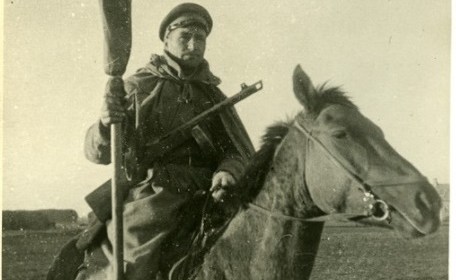
The concept of the ‘carbine’ may well have originated during the late 1500s in France and referred to the weapon these ‘Light’ Cavalrymen used to carry. In this instance, this may well have been a ‘slang’ term used in the French language which referred to mounted archers from Flanders who were considered deadly shots and sure bringers of ‘death’! (The association is unclear but may refer to an assumed connection between the ‘carrion beetle’ and the ‘plague’, etc). Whatever the origin, a ‘carbine’ appears to refer to a ‘short’ and highly effective weapon carried when sat in the saddle and used when riding the horse whether into or out of battle. The 1938 ‘Carbine’ Model measured just 1020 mm (or 3.4 feet) long (minus a bayonet) – and fired a round measuring 7.62 mm! The ‘Carbine’ Model 1938 was sighted to fire up to 1000 meters! The Izhevsk Machine-Manufacturing Plant was the only place equipped for producing this ‘Carbine’ between 1941-1942 – during the height of the ‘Great Patriotic war’ – when the workers of this factory produced over 1,106,510 which were sent immediately for frontline service!