3D Reproduction of Royston Cave - Royston Council

UK: The Bell-Shaped “Royston Cave”! (17.7.2026)

The analysis found that the short male costumes and the headdresses and hairstyles of the women both point to a time between 1360-90, and the Saint Christopher carving was dated to the same era. The report concluded that it was unlikely that any of the carvings were executed before about 1350 – a century after the Templars were active in Royston, and decades after their widespread suppression. What’s more, the carvings feature Christian iconography, lacking the symbolism typically associated with the Templars – depictions of the Holy Sepulchre and Al Aqsa Mosque in Jerusalem, for example, or of two knights riding one horse.

Although the Knights Templar were known for building round churches, the circular shape of the cave does not necessitate a Templar link either – the greatest proliferation of round churches is in Scandinavia, where no Templars ever set foot. Nor is the presence of Pagan symbols such as the sheela na gig particularly mysterious; the same image appears in medieval churches across Britain and Europe.

Why, then, the supposed Templar connection? Perhaps the things that make for a good story now also made for a good story in 1742. “The risk here is people have been wanting to tell stories since day one: ‘Come and see the Templar cave!’,” said Tobit Curteis, the conservator of the cave. “Just because someone made up a story 300 years ago, it doesn’t mean it was any more true back then than it would be now.”
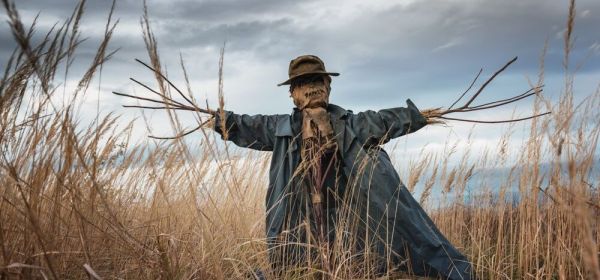
British Scarecrows - Linked to Pagan Gods!

UK: Are Scarecrows Linked to Pagan Fertility Gods? (22.6.2025)

This may be due to the Celtic traditions developing within heavily forested areas prior to the arrival of the Romans – who cleared trees to build their straight roads. Romans also cleared forested areas to create farming fields – so open fields were “foreign” to the British Celts. The Druids are reported as detesting the Roman habit of destroying the sacred woods (the Druids and their Celtic Army were finally beaten by the Romans at the Battle of Anglesey circa 60 CE – the last time “magic” was known to have been used on a British battlefield). During these times, crops were planted within the safety of the forested-canopy – where the Gods of Fertility operated more or less unaffected by the wild birds. Wide, open fields were not yet accepted as “British”. It might have even been the case that Celtic farmers came to some arrangement with the wild birds – setting aside some food for them so that everyone got on without conflict. There was 800-years between the Romans (5th century CE) leaving and the plague creating the conditions that led to the development of the modern British Scarecrow (14th century CE). 

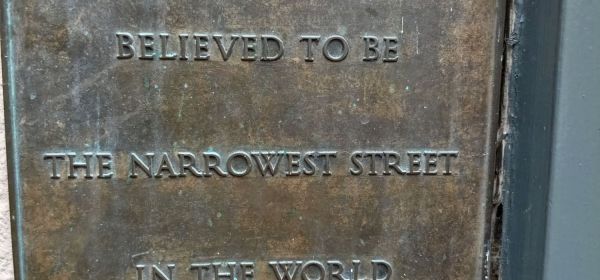
Possibly the Narrowest Street in the World!

Exeter: Parliament Street – the Narrowest Street in the World! (2.8.2024)

However, in 1660 a counter-Revolution occurred that saw the Bourgeoisie retain their power – but switch their allegiance away from the peasants and workers and back in favour of the aristocracy and the royal family (although being careful to only reintroduce a Constitutional Monarchy with any real or actual power). Voting for the masses was abandoned – with voting only encouraged amongst the most wealthiest and influential of the post-Cromwellian middle class. I mention this as some have speculated that Parliament Street was renamed as such – as a slight against Cromwell – but I doubt this. Prior to the counter-Revolution of 1660 – Cromwell was very popular and was so powerful that anyone with sense would not dare risk their lives by doing something so stupid as altering a street name.