UK: “Soul” & “Psyche” (ψυχή) Are Not “Interchangeable” When Discussing Greek Philosophical Texts! (29.8.2026)

The term Tyndale translates as “soul” in English is the Greek term “psychas” (ψυχὰς) – is the “plural” the more familiar “psyche” (ψυχῇ) – which translates as “breath of life”, “to blow” and “to animate” (in Latin, the Greek term “psyche” is presented by the term “anima”). This probably represents the Hebrew term “Neshama” (נשמה) – meaning “breath”, “spirit”, or “essence” (inner self). The early Christians were radical Jews seeking to distinguish their thinking and practice from mainstream Judaism. The Gnostic Christians were content to use Greek philosophical terms and parallel many Greek paths of inner self-cultivation. Later, with the rise of the Catholic Church (empowered by the Roman State), the Gnostic Churches were suppressed and their scriptures outlawed. Catholic theologians, although continuing to use Greek terms (translated into Latin) – radically departed from the original philosophical meaning of those terms (the teaching and practice of Greek philosophy was banned). This process of moving away in meaning is particularly evident when it is understood that the Greek written form of “psyche” (ψυχῇ) has been replaced in translation by the Germanic (Pagan) term “soul”.

Plotinus: The Concept of ‘Time’ Reconsidered! (21.9.2022)

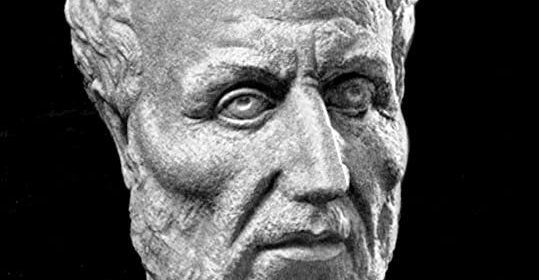
The Christians then further added to this confusion (entirely of their own making) by superimposing the Germanic term ‘Soul’ over their misinterpretation of the Greek philosophical term ‘Psyche’! Plotinus (and most genuine Greek philosophers) never used or even knew of the Christian conflation of ‘Psyche-Soul’. Certainly, Plotinus NEVER used the Christian term ‘Soul’, but he did continuously use the Greek philosophical term ‘Psyche’, which refers to the ‘breath of life’, ‘the animating principle of existence’ – or that ‘spark’ which sets in motion all the conditions that grant psychological (thought) and physical (existence)! Plato’s 4th Century BCE text entitled ‘Definitions’ a manual of philosophical terms (translated by DS Hutchinson, 1996) used within his ‘Academy’ School of Philosophical Study – defines the Greek term ‘Psyche’ to mean the following:

a) That which moves itself.

b) The cause of vital processes in living creatures.

I would argue that the Greek term ‘Psyche’ implies so much more than the narrow Christian term ‘Soul’, and even if there are elements of the Greek ‘Psyche’ which overlap with the Christian ‘Soul’ – this in no way validates (or accepts) the Christian doctrine of being true anymore than it invalidates the Greek philosophical message!