"Memorial Hall of the War to Resist U.S. Aggression and Aid Korea"

DPRK: Respected Comrade Kim Jong Un Visits Dandong City – Liaoning Province of PRC! (27.10.2026)

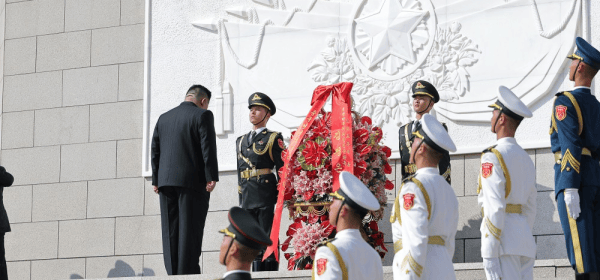
Pyongyang, October 25 (KCNA) — Respected Comrade Kim Jong Un, General Secretary of the Workers’ Party of Korea and President of the State Affairs of the Democratic People’s Republic of Korea, visited Dandong City, Liaoning Province of the People’s Republic of China and toured the “Memorial Hall of the War to Resist U.S. Aggression and Aid Korea” on October 24 to mark the 76th anniversary of the entry of the Chinese People’s Volunteers (CPV) into the Korean front.

The memorial hall is a monument to great friendship that tells forever the sacred and excellent history and invincible unity of the DPRK-China friendship and always brings closer the peoples of the two countries, who forged their genuine comradely relations and militant friendship through the realization of the common ideal for socialism and the bloody struggle against the imperialist aggression and have creditably carried forward and developed them century after century and generation after generation.
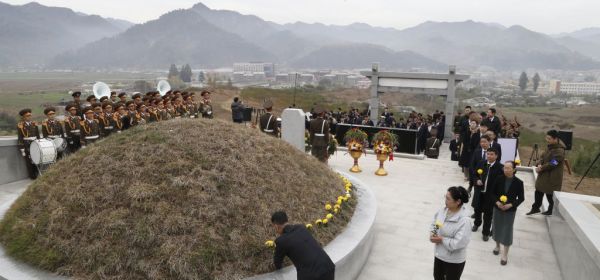
Representatives from China and the Democratic People's Republic of Korea (DPRK) present flowers for Chinese People's Volunteers (CPV) martyrs in Sinphyong County, North Hwanghae Province of the DPRK, Oct. 24, 2026.

DPRK: China & North Korea Hold Ceremony Marking Completion of Chinese People’s Volunteers (CPV) Martyrs Cemeteries’ Renovation! (27.10.2026)

PYONGYANG, Oct. 26 (Xinhua) — A completion ceremony for the renovation project for Chinese People’s Volunteers (CPV) martyrs’ cemeteries was held Saturday in Sinphyong County, North Hwanghae Province of the Democratic People’s Republic of Korea (DPRK), on the occasion of the 76th anniversary of the CPV’s entry into the DPRK to fight in the War to Resist U.S. Aggression and Aid Korea.

The ceremony started at around 10:00 a.m. local time (0100 GMT) with the national anthems of China and the DPRK. Representatives from China and the DPRK laid flower baskets for the CPV martyrs, stood in silent tribute, presented flowers and poured liquor in remembrance, and visited the martyrs’ tombs and the wall of martyrs’ names to pay profound respect.

Qi Han, charge d’affaires ad interim of the Chinese Embassy in the DPRK, said that 76 years ago, the CPV fought shoulder to shoulder with the DPRK army and people, shared weal and woe, and the traditional China-DPRK friendship forged in blood will never fade.

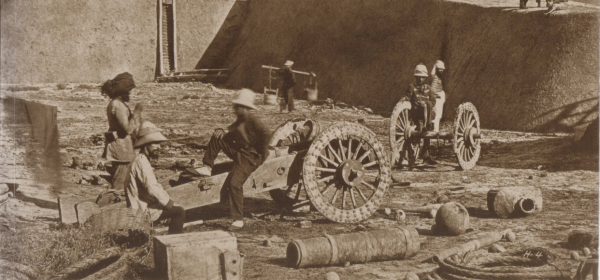
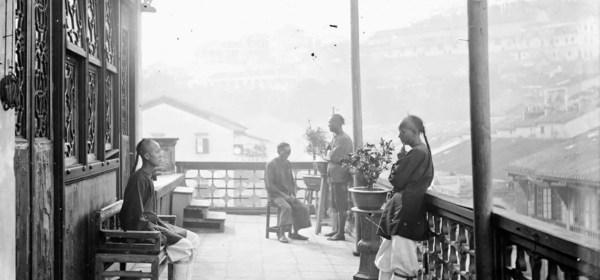
Hong Kong Tea House - 1868-1871

UK: How a 14-Year Old “Sir Harry Parkes” Witnessed the First [1842] “British” Photograph Taken in China! (26.10.2026)

As with all things – the “devil is in the detail” – so-to-speak. It is ironic that the British government’s attitude toward the photographic technology invented by English scientist – Walter Talbot – made it so expensive that virtually no-one British could afford to use it either in (or outside) the UK! Instead, British citizens travelling abroad often had to use the French photographic technology developed by Louis Daguerre. We can see this contradiction in operation as Western photography unfolded in China during the early 1840s. It would seem that the British took the first photograph in China (of themselves) during 1842 – but no known example of this picture exists today. Of course, a copy might exist somewhere, as of yet undiscovered. Nevertheless, there is a diary extract recording this event written by a 14-year old Harry Parkes – who would go on to be a very important British diplomat.

Felice Beato - British Photographer!

UK: The Historical Background of Colonial-Era Western Photography in Beijing! (26.10.2026)

What is truly curious, however, is that more than 30 years have since passed, yet this particular panoramic scene remains in my possession alone; I have neither encountered nor discovered the existence of a second copy. Thus, for the time being, it can be said that the earliest images of the Inner City of Beijing—specifically the area around Tiananmen—(found in printed materials from the Republic of China era) exist only in my personal collection; no one else possesses them. In terms of historical narrative, this photograph—a view of Beijing’s Inner City forcibly captured by Anglo-French aggressors—represents an eternal source of pain for the Chinese people. It serves as stark, tangible proof that a nation left behind will inevitably fall victim to aggression.

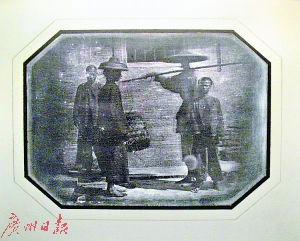
People on the streets of Guangzhou, photographed by Jules Itier in 1844.

UK: Governor-General Qiyang (耆英) – [1844] First Photograph Taken in [Guangzhou] China! (26.10.2026)

When photographic technology first entered China during the mid-19th century (from Europe) – the circumstances that surrounded this event were far from pleasant. Photography historian and author of “Oriental Photography Notes” – Na Mo Ai (南无哀) – said, “The Opium War was the cue for Western photography to invade China”— In 1844, the French Labignie Mission visited China and forced the Qing government, which had suffered defeat in the First Opium War (agaunst England), to sign the (Unequal) “Sino-French Whampoa Treaty”. During the negotiations, the Mission’s “Customs Officer” (Jules Itier) summoned the Chinese Representative (who was in fact ethnic “Manchurian”) – Governor-General Qiyang (耆英) [1787-1858] of Liangguang (Minister of Commerce for the Five Ports) – where his presence was recorded at the meeting thruogh the taking of a “photograph”. The above front-face “portrait” of Qiyang is believed to be the first modern “photograph” taken on the Mainland of China.

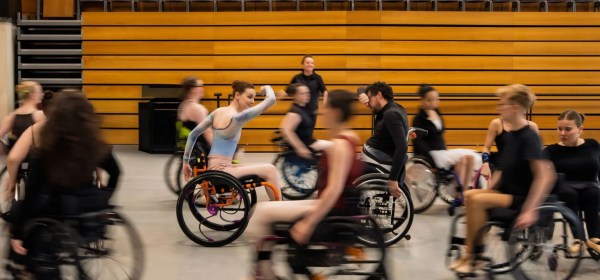
Kate Stanforth said she wanted to deliver more in-person classes, but costs were prohibitive

UK: Kate Stanforth Academy of Arts – Funding for Popular Disabled Dance School Required! (25.10.2026)

She said she wanted to expand in-person opportunities, but accessible venues and the subsequent fees for travel and equipment are “incredibly expensive”.

Currently, she is trying to raise £20,000 to allow her to keep the academy running.

“We’re not struggling because there isn’t a need for what we do,” Stanforth said.

“We’re struggling because making dance genuinely accessible costs money, and those costs aren’t always recognised.”

While she is thrilled some of her dancers have moved onto professional opportunities, Stanforth said the classes were about more than that.

“We’ve also seen people find joy in movement again after believing that part of their life was over,” she said.

“I don’t want another generation of disabled dancers growing up believing their ambitions are unrealistic.”

1 … 3 4 5 6 7 … 435