As the climate is humid, and peaks high, and the area inaccessible, Daoist practitioners had to diligently practice their health and longevity self-cultivation techniques – which included the ability to strengthen the bones and joints, and live for long periods with adequate food supplies. The ability to defend themselves from violent attack was also very important, as they often encountered bandits, wild animals, or were subject to natural disasters. Therefore, due to this necessity, the Daoist communities on the Qing Cheng Mountains have produced many very good martial arts masters.
Category: Daoism (Philosophical)
Exploring the Qianfeng School of Wu Liu Daoism based in Beijing – and all things ‘Daoist’!
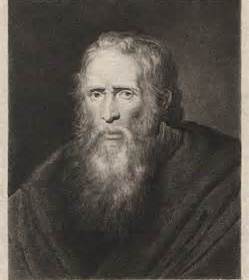
Thomas Parr (1483-1635 CE) – Oldest Man in England! (16.8.2015)
‘At Great Wollaston, just off the road from Shrewsbury to Wales, stands a small thatched cottage, birthplace and home of the oldest Englishman who ever lived. Thomas Parr was born in 1483. He lived to see ten monarchs on the throne, from the Plantagenet Edward IV, through all the Tudors to the Stuart Charles I. He joined the army at 17, returning when he was 35 to run the family farm. He married for the first time when he was 80, had an affair and an illegitimate child when he was 100 and married again at 122. When he was 152, the Earl of Arundel took him up to London to meet Charles I, who asked for the secret of his long life. ‘Moral temperance and a vegetarian diet,’ he replied. Unfortunately, the foul stench of London polluted his lungs, which had thrived on Shropshire air, and he died in November 1635. He is buried in Westminster Abbey.’
Was the Dao De Jing a Confucian Text?
The Zhouyi (i.e. Yijing) is demonstrably far older than the Dao De Jing, and it is an interesting consideration that the author(s) of the latter may well have been copying the organisation structure of the former, as a means to ensure political and social legitimacy for their text.
Requesting the True and Great Dao
When he was young, he preferred to study Daoism, and after many decades of seeking the correct Daoism method, he finally discovered a true master of the Dao. After studying the Dao for many years, he was ready to become a disciple of the Qianfeng Daoist Hermitage.
Daoist Master Liu Ming Rui (1839—1933)
In the 26th year of the rule of emperor Guangxu (光绪) – which corresponds to the Western year 1900 – after living for many years in cultivated seclusion at the ‘Secondary Canal Village’ (次渠村 – Ci Qu Qun) area of eastern Beijing, Liu Ming Rui attained complete transcendence of the physical body, and became a truly ‘non-knowing’ (无知 – Wu Zhi) person. He passed away at the age of 93 and is considered a 20th generation Grand Master of the Namo School.

How Old Is The Term Taijiquan? (13.7.2013)
‘The body of Henning’s article may be considered a rehash of the old ‘Wudang’ vs. ‘Shaolin’ mythology, with the facts (where they can be established), presented in a logical, if not meandering fashion; dates, names of emperors and portions of lineages, etc. China’s ‘Self Strengthening’ movement is mentioned near the end, as the final impetus for the association of Zhang Sanfeng with the development of Taijiquan – but oddly enough, Henning (who has written in military journals), does not acknowledge that this movement developed in China as a response to the rampant Western Imperialist aggression typical of the time. Curiously Henning makes no reference to the pre-Song uses of the term ‘Taiji’ which are known to refer to the practice (and usage) of martial arts. It is ironic therefore, that Henning would refer to Chinese myths and legends as ‘ignorance’, when so much of his historical omissions and oversights could well attract a similar criticism.’
 SANGHA KOMMUNE (SSR)