I have been engaged in the activity of Buddhist meditation for over three decades. In that time, I have experienced a number of ‘states’ marked

Proletariat Blogging in the Heart of (UK) Predatory Capitalism! Exploring the Interface between Matter and Perception, Chinese Buddhism, Daoism, Hakka Ethnography, and All Aspects of Radical Politics, History, Psychology and Philosophy – 全世界无产者联合起来!
Exploring the Qianfeng School of Wu Liu Daoism based in Beijing – and all things ‘Daoist’!
I have been engaged in the activity of Buddhist meditation for over three decades. In that time, I have experienced a number of ‘states’ marked

Furthermore, the mind and body can be ‘ill’ whilst the empty mind ground remains pristine and untouched by such worldly machinations. Therefore, as the Cao Dong Masters say – there is something that is never ill. As regards whether I agree or disagree – although I have opinions, I find myself in a position of being where neither makes any sense whilst in the presence of others. If the empty mind ground is fully realised, all Daoist knowledge will be yours and your martial arts practice transformed. I help Master Zhao Ming Wang (of Beijing) as a duty in recognition great grandfather who taught Charles Luk – but Charles had a different approach he learned directly from Zhao Bichen. Zhao Bichen recognised the superiority of the Ch’an method, but thought that most Chinese people could not achieve this objective, whereas they could (and would) submit to the culturally familiar rituals of Daoist methodology. Zhao Bichen, as a nod to modern logic and reason, did update much of the Daoist instruction – replacing many of the obscure Daoist idioms with terms used within Western anatomy and physiology.
![Julian K Shchutskii - Юлиан K Шуцкий] (1897-1938)](https://thesanghakommune.org/wp-content/uploads/2020/10/yijing-julian-k-shchutskii-d0aed0bbd0b8d0b0d0bd-k-d0a8d183d186d0bad0b8d0b9-1897-1938.jpg?w=372&h=280&crop=1)
After this, he transferred to the University from where he successfully graduated from the sinological faculty of General Studies in 1922. He had studied the spoken and written Chinese language (and Chinese literature) under Prof. VM Alekserev to such a high degree of attainment, that he was retained between 1922-1923 in the Scientific Research Institute. Czarist Russia participated in WWI as an ally of the British from 1914-1917 fighting Imperial Germany, during which time millions of Russian men were conscripted into a Russian army that suffered hundreds of thousands of casualties! Indeed, the Bolshevik Revolution ‘saved’ Julian Shchutskii from being conscripted into the military, and because of his obvious academic talent, the ‘new’ Revolutionary Russian State did not conscript him into the Red Army. He was allowed to pursue his studies in Petrograd fully supported and financed by the State. Between 1918-1921, Imperial Germany (and seven of her allies), and Great Britain (and thirteen of her allies including the United States) invaded Revolutionary Russia with the aim of killing Lenin and destroying the accomplishment of the Russian Revolution. Ironically, British and German troops fought side by side with a common anti-Socialist objective between March, 1918 and the defeat of Imperial Germany in November 1918 within Revolutionary Russia – whilst British and German troops continued to oppose and kill one another in the mud of France and Belgium. This Western (imperialist and capitalist) interference was finally defeated as a cogent force in 1922, with the ‘Union of Soviet Socialist Republics’ (USSR) being founded in late December, 1922.
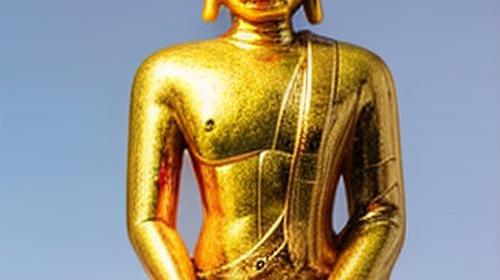
Most lay-people, however, practice Buddhism whilst being married, having children and holding-down a job. Even so, and despite all the extra entanglements and barriers of commitment, the Buddha still stated that lay-people, if devoted to their practice, can still realise enlightenment, even though it is not an easy task. A male lay-follower of the Buddha is referred to as an ‘Upasaka’, and a female practitioner as an ‘Upasika’. These two terms refer to ‘lay’ practitioners that sit near to the Buddha (or his monastics) and ‘listen’ carefully (and with respect) to the Dhamma instruction being explained. These ‘lay’ practitioners then go back to their homes and carefully recall (and record) the Dhamma lesson which they put into their daily practice. However, the crux of this article is about two other categories of ‘lay’ person explained by the Buddha in his Suttas, but which are not often mentioned within Western discourse. This means that the Buddha actually explained ‘six’ (6) categories of human-beings in his Suttas – with four referring to his followers – and two to ‘non-believers’. Who are these ‘non-believers’, and why did the Buddha bother to explain their presence?

This story seems to be officially recorded, but I have not been able to find any pictures of the cross within Chinese language sources. The Nestorian arrival of 635 CE is clearly supported by a 12 foot stele which everyone can still see today! By coincidence, I found the ‘BitterWinter’ site you mentioned. I am checking whether ‘Prof. Daniel Williams ever taught in China – as his work is anti-China propaganda and I doubt he would be allowed in if that’s his attitude. Anyway, whilst supposedly being an expert on the subject of Christianity in China, he did not even know the story of the Iron Cross mentioned above. Besides, I don’t like his tone!
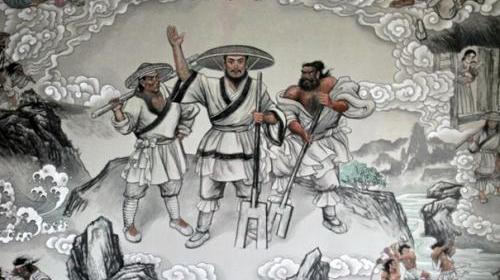
The Judgement MODESTY creates success. The superior man carries things through. The Image Within the earth, a mountain: The image of modesty. Thus the superior man reduces that

