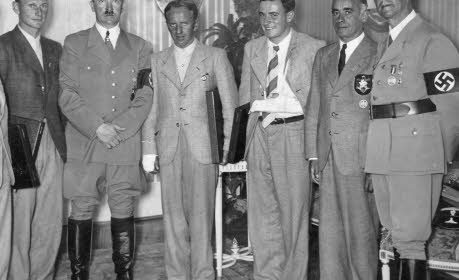
How Nazism Shaped the Western Notion of Tibet

After this whole-sale destruction of Austrian culture and the instigation of fascist murder and mayhem in his country, what did Heinrich Harrier decide to do? Did he keep quiet and see how things developed? Did he join a network of Austrian resistance to the Nazi invasion? Did he work toward protecting those Austrians who were the victims of German fascism? No – Heinrich Harrier did none of these things.

The Non-Buddhist Origin of the Pro-Tibetan Movement in the West

The pro-Tibetan movement in the West is a non-Buddhist concept that appears to rely upon the Judeo-Christian notions of ‘faith’, ‘congregation’, and ‘conversion’ (notions that are thoroughly non-Buddhist in nature). It is also premised upon purely worldly (i.e. ‘samsaric’) conventions such as fundraising, media manipulation, political interference, and the participation in academic misrepresentation.

Master Xu Yun and Tibet 1911-12

Xu Yun achieved this by requesting that the well known Tibetan Lama living in China – the Venerable Dong Bao – also known as the ‘The Dharma King of the Four Gems’, be sent to Tibet to mediate between the Tibetan authorities and the Nationalist Government. Xu Yun was sent to personally meet with Dong Bao and deliver a Government letter requesting his help. At first Dong Bao declined due to old age, but Xu Yun said that the Tibetan people still tremble at the memory of a previous punitive Chinese army led by Zhao Er Feng – and that bloodshed could be avoided through discussion.

1 30 31 32 33